
Tottenham's Ambitious Rebuild: From Survival to Top Six
Tottenham have spent the last two seasons staring down, not up. Back-to-back 17th-place finishes, a final-day scramble for survival and a fanbase living on its nerves. Europa League glory in 2024-25 brought a trophy back to the Tottenham Hotspur Stadium, but it also papered over how close this club came to disaster.
Roberto De Zerbi walked into that chaos midstream, picking up a managerial baton that had slipped from the hands of Thomas Frank and Igor Tudor. He steadied it just in time. Now the board are backing him to do far more than simply survive.
This is no quiet reset. It’s a full-scale rebuild.
Big money, big city, big questions
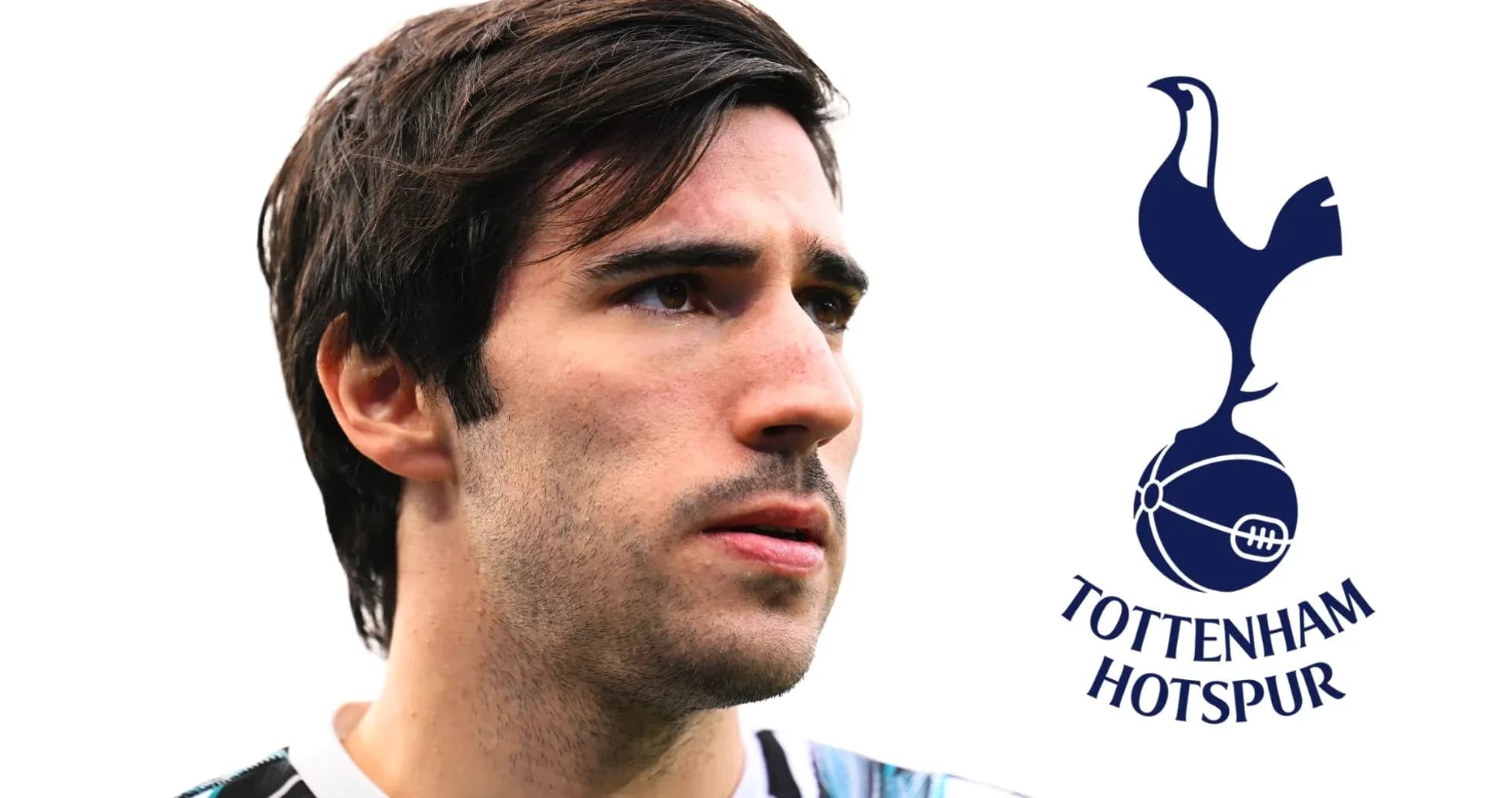
The arrivals hall in north London has been busy. Italy international Sandro Tonali has come in for huge money, Mateus Fernandes has been prised away after his West Ham stint, and Jan Paul van Hecke has swapped Brighton for Spurs. Those deals were not done in a vacuum; rival clubs circled, and Tottenham still got them over the line. That matters. It shows that, even after two grim league campaigns, the badge and the stadium still carry weight.
But why did Tonali choose Spurs?
Is he in north London because of footballing ambition, or because of geography and wages? That question was put to former Tottenham midfielder Danny Murphy, speaking to GOAL in association with BetWright football betting, and he did not dress it up.
“I think it would be naive to think that London isn't a pull for a lot of the foreign boys,” he said. “I say that through experience and speaking to them.”
Murphy’s instinct is blunt. If one of the traditional heavyweights – “Man U, Man City, Liverpool” – had pushed as hard as Spurs, both financially and in intent, he suspects Tonali might have gone there instead. Very few players, he argued, choose location ahead of trophies. London, though, tilts the scales.
He also pointed to Tottenham’s financial muscle in this particular chase. “The one advantage you have going to Tottenham, other than London, is the financial side. They've really pushed the boat out to get him. Maybe some of the other clubs who were in for him didn't push the boat out to that level.”
That’s one side of the equation. The other lives on the pitch.
The promise of being “the main man”
Murphy was keen to stress that not every decision comes down to greed or postcodes. Conversations with the head coach still matter. So does the promise of a central role.
“Maybe if there was interest from elsewhere, there wasn't a guarantee you're always going to play,” he said. He referenced past situations where players have chosen the club that assured them they would be “the main man” and start every week.
Tonali, in that sense, looks like the centrepiece of De Zerbi’s new midfield. “I would imagine the mix of being the main man in the middle of the park, phenomenal wages, and London probably was a mixture of all three,” Murphy said. “I'd like to think it was a mixture of that as well.”
He doesn’t like to see careers dictated purely by money or location, but he knows it happens. With Tonali, though, he is convinced of the footballing upside. “I think that he's a terrific signing and they've done really well to get him irrelevant of the cost and the amount of wages. I think he'll really improve them.”
That is the bet Tottenham are making: build a team around a marquee midfielder, surround him with smart Premier League-ready additions, and drag the club back towards the top end of the table.
A swollen squad and a looming exodus
The recruitment so far sends a message. Murphy calls it “a statement of intent, much needed.” Tonali, Fernandes, Van Hecke – these are not speculative punts, they are players expected to start quickly and raise the level.
But there’s a problem lurking beneath the surface.
Tottenham already have a heavy squad. They are not in Europe this season. One game a week, a dressing room full of senior pros, and only so many minutes to go around. That is a delicate test of De Zerbi’s man-management.
“When you're not in Europe, you've got to be very good at your job as a manager to be able to keep that many players happy when you've only got Premier League football,” Murphy warned. “That could become a little problematic unless we start seeing a bit of an exodus of players from Tottenham.”
Moving players on, though, is rarely as simple as it sounds. The club want to clear out underperformers from last season, but many of them are on strong contracts. “A lot of them who were poor last season, who were on good wages, how many takers have they got?” Murphy asked. That is the other half of this rebuild: not just who comes in, but who can realistically be shifted out.
He still likes the shape of the work so far. “I do like what they've done. I like Van Hecke, I like Fernandes. I think [James] Maddison coming back is going to be a big plus for them as well because we know what he brings.”
Maddison’s return from injury, allied with Tonali’s arrival and fresh legs in defence, gives De Zerbi a very different spine to the one that clung on last season.
From survival to ambition
So where does all this leave Tottenham?
Murphy is clear-eyed. This is not a side ready to leap from relegation battle to title contention in one summer. But the standards have to rise.
“I think realistically for them, top six has got to be a realistic ambition,” he said. “Top four might be a push to jump that high so quickly, but top six is realistic for them with the players they're bringing in.”
That is the new bar: swap final-day tension for Thursday-night football, not as a lifeline this time, but as a reward. Spurs have spent big, sold a project, and leaned on the lure of London to get deals over the line. Now comes the hard part.
They have the coach. They have the signings. They have the stadium and the city.
After two years of looking over their shoulder, Tottenham are out of excuses.



