Tottenham Faces Relegation Fears After 3–1 Loss to Crystal Palace
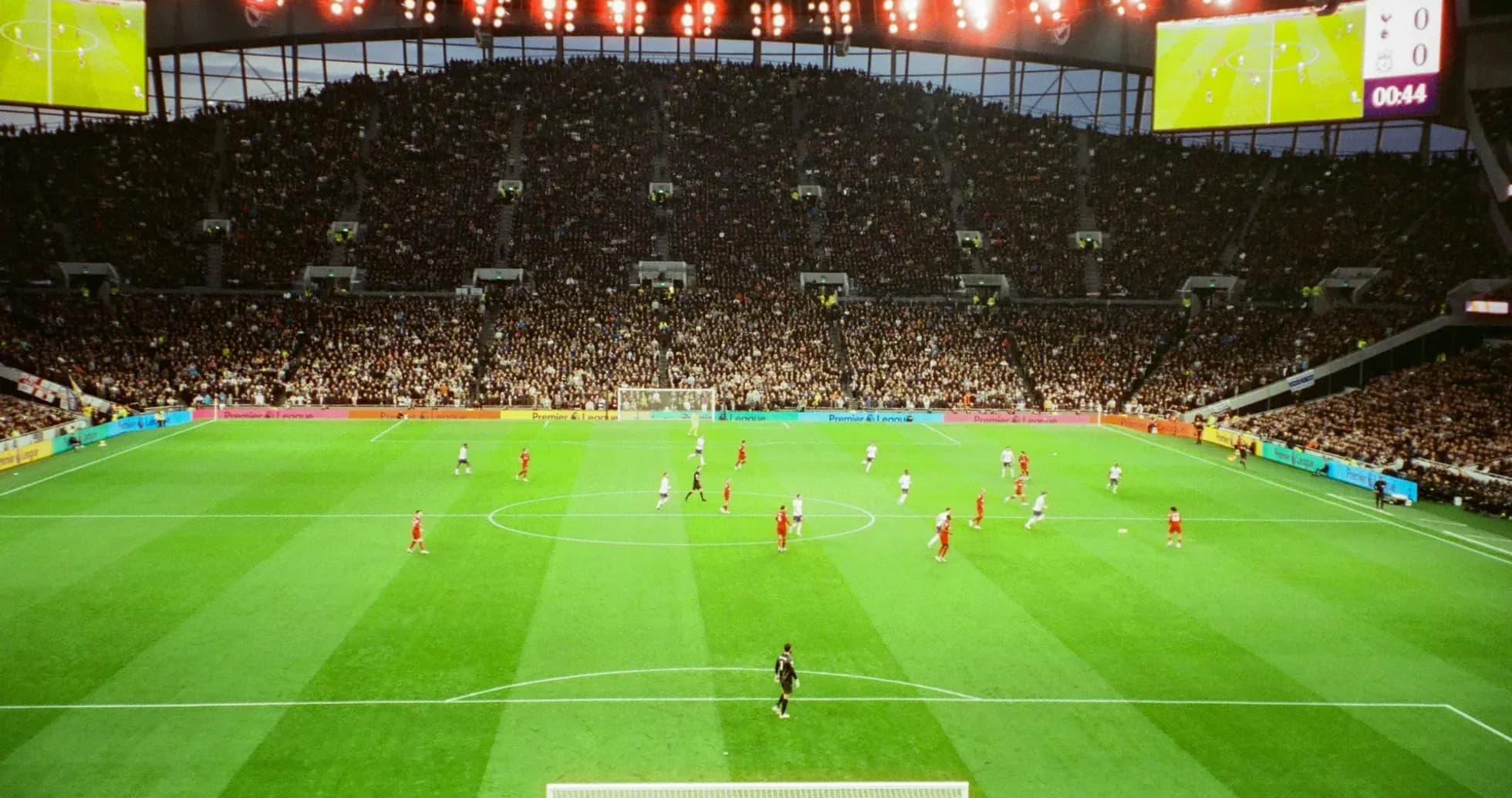
At the Tottenham Hotspur Stadium, under the lights of a Premier League Round 29 clash, Crystal Palace dismantled a fragile Tottenham side 3–1, a result that underlined the contrasting trajectories of the two clubs. Tottenham, stuck in 16th place on 29 points with a goal difference of -7, suffered a fifth straight defeat, their form line of “LLLLL” now a glaring warning sign. Palace, meanwhile, consolidated 13th place on 38 points, extending an impressive away record with another controlled, clinical performance.
First Half Analysis
The opening phase was scrappy and tense rather than fluent. Tottenham tried to press high out of their 3-4-2-1 but quickly revealed their defensive vulnerability. Early on, Souza’s yellow card for a foul on 7' set a jittery tone for the hosts in midfield.
Palace made the first structural move when Nathaniel Clyne replaced Daniel Muñoz on 14', a like-for-like switch that hinted at a minor tweak down the right flank rather than a systemic overhaul. The visitors grew into the game, and Jørgen Strand Larsen’s yellow card for a foul on 22' showed their willingness to disrupt Spurs’ rhythm off the ball.
VAR drama arrived on 32' when Ismaïla Sarr had a goal ruled out, a reprieve that Tottenham briefly capitalized on. Two minutes later, Dominic Solanke finished a move from open play on 34', converting after Archie Gray’s involvement in the build-up, to give Spurs a 1–0 lead against the run of composure.
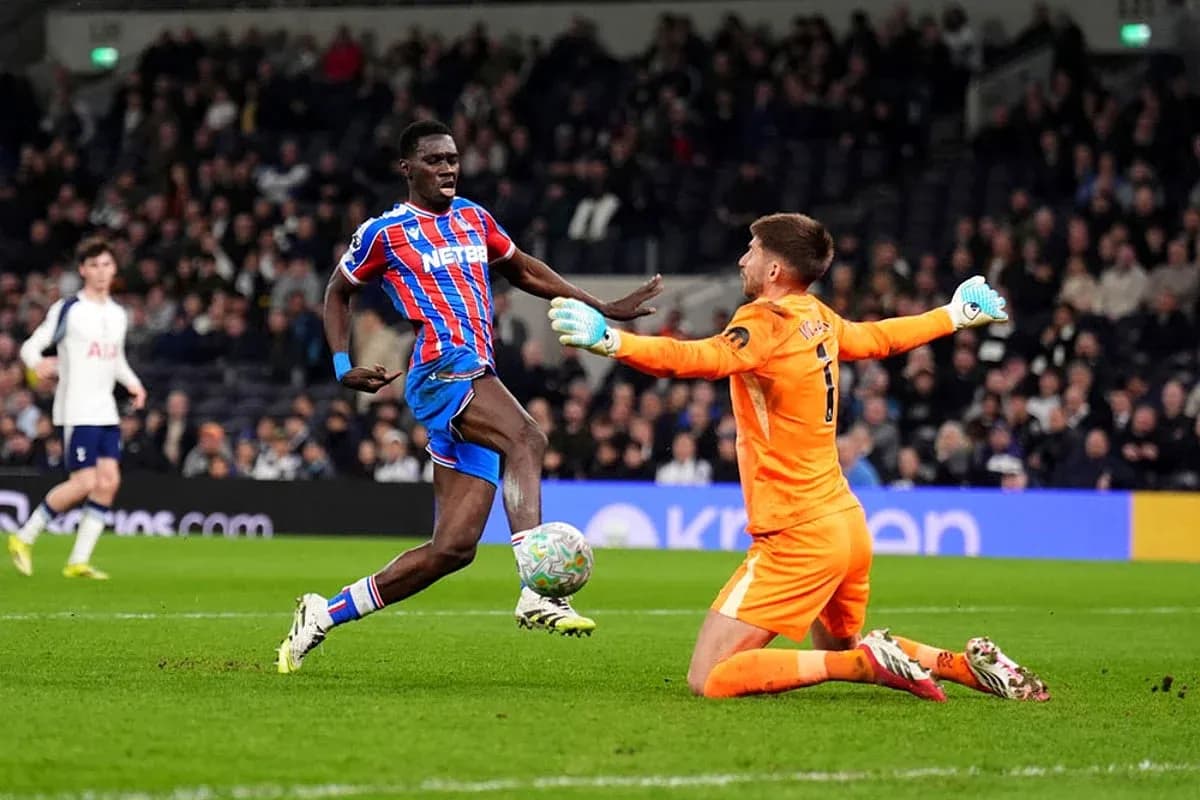
But the match pivoted dramatically on 38'. Micky van de Ven’s red card for a last-man professional foul left Tottenham down to 10 men and exposed. Palace’s response was ruthless: Sarr buried the resulting penalty on 40' to level the game.
Tottenham scrambled to reorganize on 43', sacrificing Randal Kolo Muani for Yves Bissouma and withdrawing Souza for Conor Gallagher, moving towards a more compact, ball-winning midfield. It did not hold. In a brutal spell on 45', Palace struck twice from open play: first Strand Larsen, then Sarr again, both assisted by Adam Wharton, turned a precarious 1–1 into a commanding 3–1 lead by half-time.
Second Half & Tactical Shifts
With a man down and two goals adrift, Tottenham emerged after the break focused on structural control rather than expansive possession. Their back three narrowed, wing-backs dropped deeper, and the emphasis shifted to damage limitation with sporadic counters through Mathys Tel and Solanke.
Palace, now in full control, were content to circulate the ball and pick their moments. The second half’s first major tactical note came on 67', when Brennan Johnson replaced Evann Guessand. That change refreshed Palace’s front line, adding pace to exploit the spaces behind a tiring Spurs defence.
On 74', Tottenham managerially signalled a last throw of the dice. Xavi Simons replaced Pedro Porro, and Richarlison came on for Solanke in a double change. With a midfielder for a defender and a fresh forward, this was an attacking gamble: Spurs effectively reshaped into a hybrid back four in possession, trying to get Simons between the lines and Richarlison as a more direct focal point.
Palace countered with their own energy injection on 81'. Christantus Uche replaced Strand Larsen, and Will Hughes came on for Wharton, who left with two assists and control of the midfield battle. Hughes’ arrival added composure and game management, helping Palace close out the contest.
Frustration crept into Tottenham’s play. Bissouma was booked for dissent on 82', emblematic of a side feeling decisions and momentum slipping away. Palace’s discipline was largely intact, though Clyne received a late yellow card for a foul on 90+2', the only real blemish on their game management after the break. Spurs pushed sporadically, but Palace’s defensive structure and game state awareness ensured the second half remained largely uneventful on the scoreboard.
Statistical Deep Dive
The numbers underscored Palace’s authority. With 60% possession to Tottenham’s 40%, the visitors controlled tempo and territory. Palace completed 402 of 463 passes (87% accuracy), comfortably outplaying Spurs, who managed 242 of 311 passes at 78%. Tottenham, with less of the ball, focused on structural control and counter-attacks rather than sustained build-up.
In attack, the shot profile reflected a measured but deadly Palace. Tottenham had 12 total shots to Palace’s 9, yet both sides produced 4 shots on target. Spurs’ xG of 1.09 versus Palace’s 1.78 showed the visitors fashioned the higher-quality chances, particularly around the penalty and late first-half flurry. Palace’s defence made 5 blocks against Spurs’ efforts, while Tottenham’s back line registered 3 blocks, but the hosts’ numerical disadvantage made sustained resistance difficult.
Discipline was a decisive theme. Both sides committed 14 fouls, but Tottenham’s 3 yellow cards plus Van de Ven’s red card proved catastrophic. Palace, with 2 yellows and no dismissals, walked the line more effectively. Tottenham’s dissent bookings for Pape Matar Sarr and Bissouma highlighted emotional unraveling, in contrast to Palace’s more controlled aggression.
Standings & Implications
For Tottenham, marooned in 16th on 29 points with a -7 goal difference and a form line of five straight losses, this defeat deepens relegation anxiety and exposes frailties in both discipline and defensive structure, especially at home where they have now lost 9 of 15. Crystal Palace, solid in 13th with 38 points and a -2 goal difference, continue a positive, if inconsistent, trajectory. With 7 away wins from 15, this result strengthens their status as one of the league’s more dangerous travelling sides and keeps them comfortably clear of the relegation dogfight.