Torino vs AC Milan: Season Opener Analysis
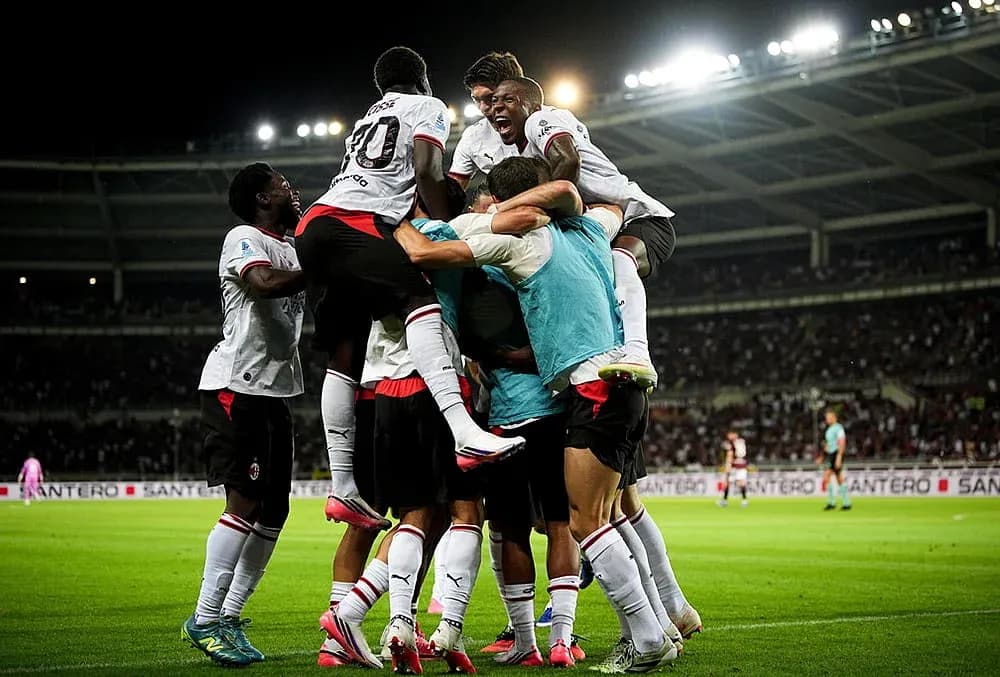
On a warm evening at the Stadio Olimpico Grande Torino, Serie A’s new season opened with two sides who mirror each other on the tactical board but not yet on the table. Torino and AC Milan both lined up in a 3-4-2-1, but the 2–1 away win leaves them starting the campaign at opposite ends of the emotional spectrum: Torino 13th with 0 points and a goal difference of -1, Milan 5th with 3 points and a goal difference of +1.
This was not a pre-season experiment; it was a statement of intent from both coaches. Ignazio Abate committed to a high-energy, vertical Torino, while Ruben Amorim brought his trademark back-three structure to Milan, even amid a cluster of absences. The shared shape created a chess match of mirrored lines, where individual quality and in-game adjustments tilted the balance.
I. The Big Picture: Structure and Seasonal DNA
Heading into this game, Torino’s numbers were a blank slate; now, their early-season identity is sharply defined. At home they have played 1, scored 1 and conceded 2, with home averages of 1.0 goals scored and 2.0 conceded. There is no clean sheet yet and no failure to score, suggesting a side that will trade. Their biggest home scoreline so far is already a 1–2 defeat, a reminder that their aggressive 3-4-2-1 can leave them exposed.
Milan arrive from the opposite angle: on their travels they have played 1, won 1, scored 2 and conceded 1, with away averages of 2.0 goals for and 1.0 against. There is no away clean sheet yet, but the balance of threat and control is clear. Their only “biggest win” entry is that same 2–1 away success in Turin, a template for how Amorim will want his team to navigate hostile grounds.
Both sides leaned into the 3-4-2-1. Torino built their spine around D. Mascardi in goal, a back three of S. Coco, A. Ismajli and P. Comuzzo, with a hard-working midfield four of M. Pedersen, G. Gineitis, K. Fitz-Jim and A. Cacciamani. Ahead of them, N. Vlasic and C. Casadei floated behind G. Simeone, tasked with finding spaces between Milan’s lines.
Milan mirrored that geometry: M. Maignan behind a trio of M. Gila, K. De Winter and S. Pavlovic; a wing-back/midfield line of S. Chukwueze, Y. Musah, A. Jashari and P. Estupinan; and a fluid attacking trident of R. Loftus-Cheek, A. Cisse and G. Ramos.
II. Tactical Voids: Absences and Discipline
Both squads entered the night with notable holes that shaped their tactical choices.
Torino were without F. Anjorin (hip injury), E. Comert (suspended after a red card), F. Israel (shoulder injury) and P. Pellegri (knee injury). The absence of Comert in particular forced Abate to trust a relatively untested back three. It pushed more responsibility onto Ismajli as the central organiser and left Coco and Comuzzo needing to defend wide spaces without the safety net of an experienced partner.
Milan’s list of absentees was star-studded: Y. Fofana (inactive), S. Gimenez (ankle injury), R. Leao (muscle injury), C. Nkunku (inactive) and F. Tomori (inactive). Without Leao and Nkunku, Amorim had to reimagine his attacking hierarchy. That opened the door for A. Cisse to start and for R. Loftus-Cheek to operate as a hybrid attacker, rather than a pure midfielder. Tomori’s absence made the choice of Gila–De Winter–Pavlovic more than rotation; it was a forced audition for a new defensive core.
Disciplinarily, the game had a clear flashpoint: Milan’s only yellow card of the season so far fell in the 46–60 minute window, a period that now accounts for 100.00% of their yellows. That caution went to Loftus-Cheek, whose combative presence between the lines always flirts with the disciplinary line. Torino, by contrast, emerge from this fixture without a single yellow or red in the season data, a curious contrast for such a high-intensity side.
III. Key Matchups: Hunter vs Shield, Engine Room Battles
The story of Milan’s attack is already being written by two names: A. Cisse and A. Rabiot.
Cisse, starting as the central forward, delivered a complete performance. With 1 goal from 3 shots (1 on target), 24 passes at 87% accuracy, and 10 duels contested (6 won), he operated as both finisher and focal point. Four fouls drawn underline how often Torino’s back three struggled to contain him when he received between the lines. In the “Hunter vs Shield” duel, Cisse tested a Torino defence that, across the league so far, has conceded 2 goals in total, all at home. The raw numbers are small, but the pattern is clear: when pressed back, this back three can be bent.
Behind him, Rabiot changed the tone from the bench. In just 34 minutes he produced 1 goal and 1 assist from a single shot on target, plus 12 passes (1 key) and a 7.5 rating. He arrived as the late-game conductor, exploiting tiring Torino legs. His presence alongside Musah and Jashari gave Milan an extra layer of control in the engine room, and his box-arrival timing made him impossible to track.
On the flanks, Chukwueze was the creative knife. Across 90 minutes he registered 2 shots (1 on target), 45 passes with 4 key passes and 1 successful dribble from 2 attempts, plus 1 assist. Operating as the right-sided midfielder/wing-back, he repeatedly targeted the channel outside Coco and behind Pedersen, an area where Torino’s structure naturally stretches.
Torino’s response came through Gineitis and, later, C. Adams. Gineitis, playing the full 90, completed 30 passes at 86% accuracy, added 1 key pass and, crucially, 1 blocked shot. That block is more than a statistic; it reflects his double role as deep distributor and emergency shield when Milan broke through. He also won all 3 of his duels and drew 2 fouls, showing a calmness under pressure that Torino will build around.
Adams, introduced from the bench, gave Torino their cutting edge. In 20 minutes he scored 1 goal from 1 shot on target, completed 11 passes at 72% and contested 3 duels, winning 1. His movement across the front line troubled Milan’s back three in ways Simeone had not consistently managed, hinting at a selection dilemma for Abate in future rounds.
Loftus-Cheek’s night was more chaotic. From his advanced role he took 3 shots, played 20 passes with 3 key passes and completed 1 of 3 dribbles. But he also committed 1 foul and picked up that yellow card, putting him on both the top yellow and top red card lists (despite not having a red). His physicality remains a weapon, yet in a mirrored 3-4-2-1, every misplaced step can leave the wing-back behind him exposed.
IV. Statistical Prognosis: Where This Leaves Them
Following this result, the numbers sketch a clear early-season prognosis.
Torino overall have played 1, lost 1, scored 1 and conceded 2. Their overall averages mirror their home figures: 1.0 goals for, 2.0 against. They have no clean sheets and have not failed to score. The data points to a side that will be involved in open, high-variance matches. With Gineitis already on the top assists list and Adams among the top scorers, there is attacking promise; the question is whether the back three of Coco, Ismajli and Comuzzo can be hardened without Comert and with limited depth.
Milan overall have played 1, won 1, scored 2 and conceded 1. Their overall averages are 2.0 goals scored and 1.0 conceded. There is no penalty data to distort the picture: they have taken none, scored none and missed none. Their only yellow card came in that 46–60 minute band, suggesting that their most aggressive phase coincides with the early second-half press.
From a tactical lens, Amorim’s 3-4-2-1 looks immediately scalable. Cisse’s presence as a reliable reference point, Rabiot’s impact as a late-game controller and Chukwueze’s creativity from the right give Milan three distinct ways to hurt opponents. If Tomori and Leao return later in the season, this structure will only gain more layers.
For Torino, the shape is sound but the margins are thin. Mascardi must grow into a commanding presence behind a young back line; Gineitis needs partners who can match his composure; and Abate must decide whether Adams’ efficiency earns him a starting role ahead of Simeone. Their home record—1 defeat from 1, 1–2 as the defining scoreline—warns that they cannot afford to be passive in Turin.
In narrative terms, this opener felt like a preview of the season’s themes. Milan, even with key absences, already resemble a Europa League contender with a clear identity and multiple match-winners. Torino, brave and structured, are searching for balance between their promising front line and a defence still learning to suffer together. The 2–1 scoreline may be narrow, but in the fine print of roles, duels and emerging leaders, it hints at two very different trajectories.