Milan's Dominance: A 3-0 Victory Over Lecce
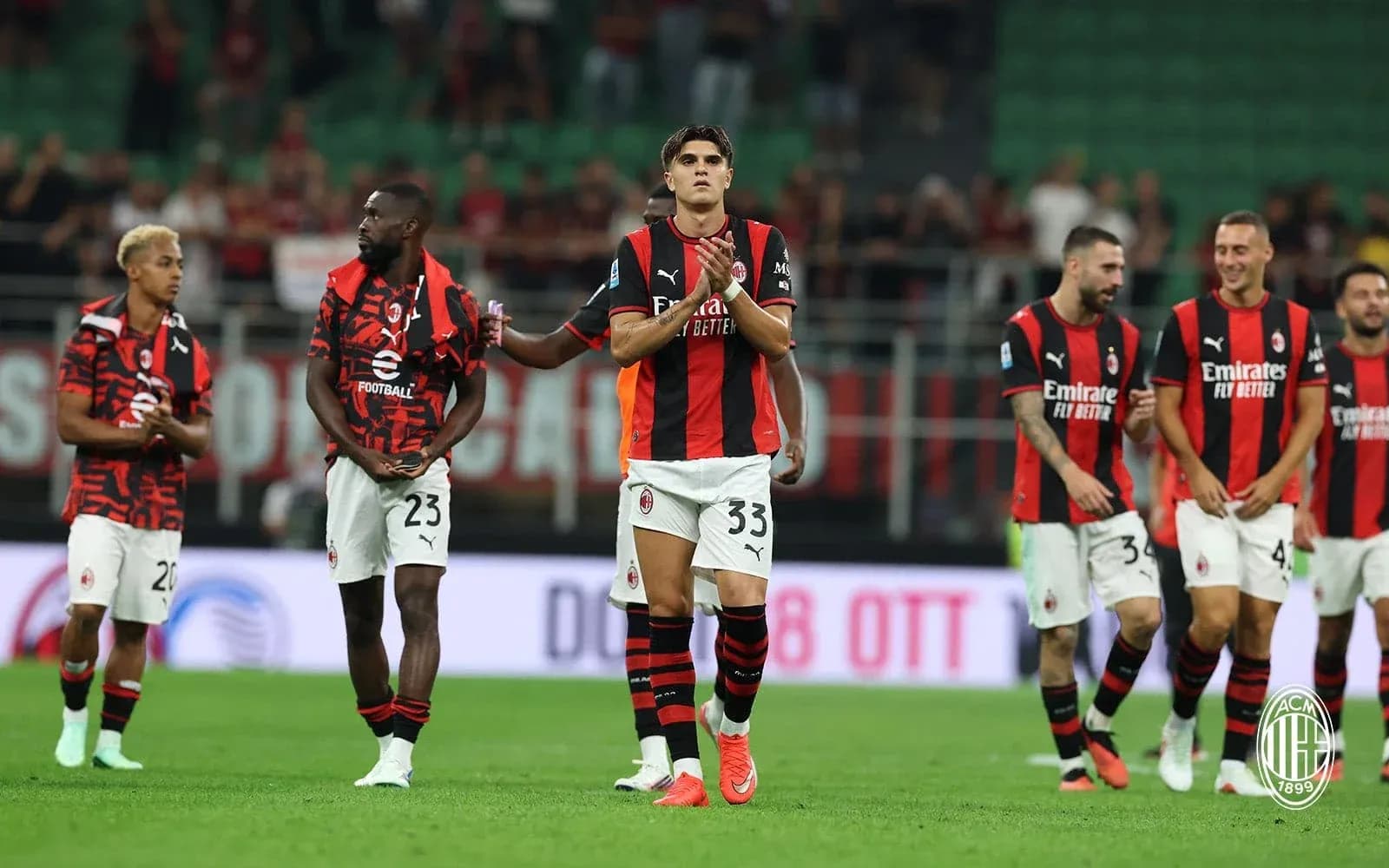
Under the San Siro lights, this was Ruben Amorim’s Milan fully stepping into their new identity. A 3-0 win over Lecce in Serie A’s Regular Season - 5 was not just a scoreline; it was a statement from a side that, following this result, looks every inch a Europa League contender and perhaps more.
Milan came into the evening with a clear statistical backbone. Overall this campaign they had played 5, winning 3 and drawing 2, with 10 goals scored and 4 conceded. That gives them an overall goal difference of +6 (10 scored minus 4 conceded), a figure perfectly mirrored in the standings. At home, they had been ruthless: 2 wins from 2, 5 goals scored, none conceded, averaging 2.5 goals for and 0.0 against at San Siro. Lecce arrived as a more volatile proposition: 2 wins and 3 defeats in total, 5 scored and 10 conceded for an overall goal difference of -5. On their travels, they had 1 win and 2 defeats, 2 scored and 4 conceded, averaging 0.7 goals for and 1.3 against away from home.
I. The Big Picture: Amorim’s Structure vs Di Francesco’s Gamble
On the tactical board, the clash was stark. Milan stayed loyal to their 3-4-2-1, a shape they had used in all 5 league games so far. Mike Maignan anchored a back three of M. Gila, K. De Winter and S. Pavlovic, with the Serbian centre-back already one of Serie A’s standout defenders: 13 tackles, 2 blocked shots and 1 interception in the league underline his defensive authority, while 374 passes at 92% accuracy show how integral he is to Milan’s build-up.
Ahead of them, the wing corridor belonged to S. Chukwueze on the right and P. Estupinan on the left, with L. Modric and A. Rabiot knitting everything together inside. The twin creators behind striker G. Ramos – C. Pulisic and A. Saelemaekers – gave Milan a fluid front three, constantly rotating and attacking Lecce’s full-backs.
Eusebio Di Francesco answered with a bold 4-3-3. W. Falcone started behind a back four of D. Veiga, K. Gaspar, J. Siebert and A. Gallo. The midfield trio of S. Pierotti, I. Ilic and Y. Maleh tried to form a technical core, while the front line of L. Coulibaly, N. Stulic and J. Monteiro was designed to break quickly into the spaces behind Milan’s advanced wing-backs.
II. Tactical Voids and Absences
Lecce’s squad sheet carried quiet warning signs. Four players were confirmed out: M. Berisha (lacking match fitness), O. Gandelman (inactive), W. Geubbels (ankle injury) and Tiago Gabriel (injury). Geubbels’ absence in particular stripped Di Francesco of a vertical, pace-heavy option that would have been ideal against a high Milan line.
Discipline-wise, the pre-match data painted contrasting profiles. Milan’s yellow cards had been spread evenly across the second half and stoppage time, with 25.00% of their cautions arriving in each of the 46-60, 61-75, 76-90 and 91-105 minute windows – a sign of a side that defends aggressively but in a controlled manner across the game’s decisive phases. Lecce, by contrast, had a more erratic pattern: yellow cards popping up in early, middle and late phases, including 20.00% of their cautions in the 31-45, 46-60, 76-90 and 91-105 minute ranges. Danilo Veiga embodied that edge, with 3 yellow cards already and 8 fouls committed across 5 appearances.
III. Key Matchups – Hunter vs Shield, Engine Room vs Enforcer
The “Hunter vs Shield” duel was layered. On Milan’s side, the most lethal finisher in Serie A so far has been Diego Moreira, a substitute here but the club’s top league scorer with 3 goals from just 4 shots and a 7.8 average rating. Even when not starting, his presence on the bench alters how opponents defend late in games. Up front from the first whistle, G. Ramos led the line, benefiting from the creative currents behind him.
Lecce’s main offensive reference was L. Coulibaly, surprisingly listed as a forward in this lineup despite his midfield profile in the season data. With 2 goals and 1 assist, 5 shots (3 on target), and 50 duels contested – 27 of them won – Coulibaly arrived as Lecce’s battering ram, tasked with testing Pavlovic and De Winter in the channels.
The true battleground, however, was the “Engine Room”: A. Rabiot and L. Modric versus I. Ilic and Y. Maleh. Rabiot has been one of the league’s most complete midfielders this season: 2 goals, 2 assists, 209 passes at 88% accuracy and 4 key passes, plus 3 tackles and 1 blocked shot. He is both Milan’s breaker of lines and their late-arriving runner into the box. Alongside him, Modric offered tempo and angles, giving Milan a double pivot that could both circulate and penetrate.
For Lecce, Ilic was the creative brain. With 2 assists, 141 passes at 89% accuracy and 3 key passes in the league, he is the conduit between buildup and final third. But he and Maleh were often forced backwards, more concerned with tracking Rabiot’s surges and Modric’s positioning than dictating themselves.
Out wide, Chukwueze versus A. Gallo and Veiga was always going to be decisive. The Nigerian had already delivered 2 assists in Serie A, with 10 key passes and 14 dribble attempts (8 successful). His capacity to isolate full-backs and then feed cutbacks into the box was perfectly aligned with Milan’s home attacking profile: 5 goals scored at home this season before this match, with an average of 2.5 goals at San Siro.
On the other flank, Veiga’s dual identity as both creator and disciplinary risk framed Lecce’s dilemma. He had 3 yellow cards and appears in both the yellow and red card leaderboards, yet he also contributed 1 assist, 15 tackles and 2 blocked shots. Against Pulisic and Estupinan, he had to defend aggressively without tipping over the edge.
IV. Statistical Prognosis and Tactical Verdict
From a statistical lens, this fixture always leaned towards a Milan-controlled contest. Overall, Milan averaged 2.0 goals for and 0.8 against per game heading into the match, while Lecce’s overall numbers sat at 1.0 scored and 2.0 conceded. At home, Milan’s clean-sheet record – 2 from 2 – and 0.0 average goals conceded suggested that Maignan and his back three were well placed to absorb Lecce’s sporadic counters.
Lecce’s away profile told its own story: only 0.7 goals scored on their travels, failing to score in 2 away matches overall this season, and conceding 1.3 goals away from home. Against a Milan side that had never failed to score in the league so far, and had a biggest home win of 3-0 already in the campaign, the probabilities leaned heavily towards a multi-goal home performance and another clean sheet.
Without penalties in the season for either side – both clubs showing 0 penalties taken, 0 scored and 0 missed overall – the outcome was always going to be decided in open play and structured possession. That played directly into Milan’s strengths: a settled 3-4-2-1 used in all 5 league games, a defensive unit marshalled by Pavlovic, and an attacking network where Rabiot, Chukwueze and Pulisic connect the lines.
In the end, the 3-0 full-time scoreline felt like the logical crystallization of the numbers and the tactics. Milan’s seasonal DNA – high control, multi-source goals, and a watertight home defence – met Lecce’s fragility on their travels and their disciplinary volatility. The result was not just three points; it was a confirmation that this Milan, with its blend of structure and stardust, is building something formidable at San Siro.