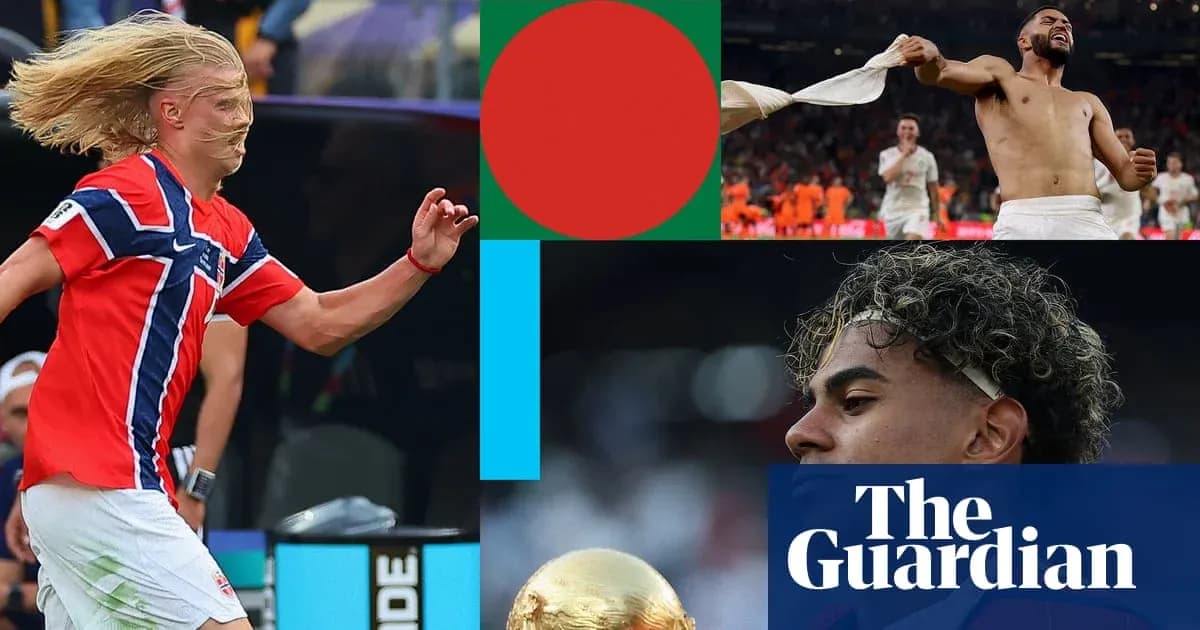
Top 10 Teams Poised for Success in the 2030 World Cup
The 2026 World Cup felt like a curtain call. Lionel Messi, Cristiano Ronaldo, Luka Modric, Neymar, James Rodríguez, Guillermo Ochoa – giants of a generation – walked away with tears in their eyes and jerseys clinging to tired shoulders.
By 2030, anyone on the wrong side of 32 will be fighting time as much as opponents. This next cycle belongs to nations whose core is already in its prime, not those scrambling to replace a once-in-a-lifetime figure. These are the 10 teams with the strongest foundations and the clearest path to a quarter-final in 2030.
1) Spain – Champions, Hosts, and Still Hungry
The defending champions get home soil and a squad that looks nowhere near its ceiling. Spain will go into 2030 as the team to beat, not just because they lifted the last trophy, but because their age profile screams “dynasty.”
Unai Simón (32), Joan García (29) and David Raya (34) could easily reprise their roles as the goalkeeping trio. In front of them, Marc Pubill (26), Eric García (29), Pedro Porro (30) and Pau Cubarsí (23) offer continuity and calm. That’s a backline that already knows the demands of tournament football.
Midfield is where Spain start to look frightening. Dani Olmo (32), Gavi (25) and Pedri (27) should all be back, with Rodri (33) still the metronome at the base. Nico Williams (27) and Lamine Yamal (22) will hope for better luck with injuries, but when they were fit, they tilted games on their own. Ferran Torres (30) remains a dangerous option off the bench.
And that’s just the title-winning core. Dean Huijsen (25) and Cristhian Mosquera (25) can step in as Aymeric Laporte (36) fades. Fermin López (27), Pablo Barrios (26), Javier Guerra (27), Marc Bernal (23) and Jesús Rodríguez (24) have already earned Luis de la Fuente’s trust. If Samu Aghehowa (26) or Gonzalo García (26) solves the long-term striker question, Spain’s possession machine could become even more ruthless.
As hosts and holders, they don’t just look like contenders. They look like a looming problem for everyone else.
2) France – Zidane’s Second Act
France don’t lack talent. They lack closure. A semi-final collapse against Spain in 2026 ended the Didier Deschamps era and opened the door for Zinedine Zidane to take over a squad still stacked from back to front.
Mike Maignan (34) should remain a commanding presence in goal. In front of him, Dayot Upamecano (31), Ibrahima Konaté (31) and William Saliba (29) give Zidane a powerful, athletic core to build around. Midfield looks just as secure: Manu Koné (29) and Aurélien Tchouaméni (30) are already proven, while former omissions Eduardo Camavinga (27) and Khéphren Thuram (29) bring depth and versatility.
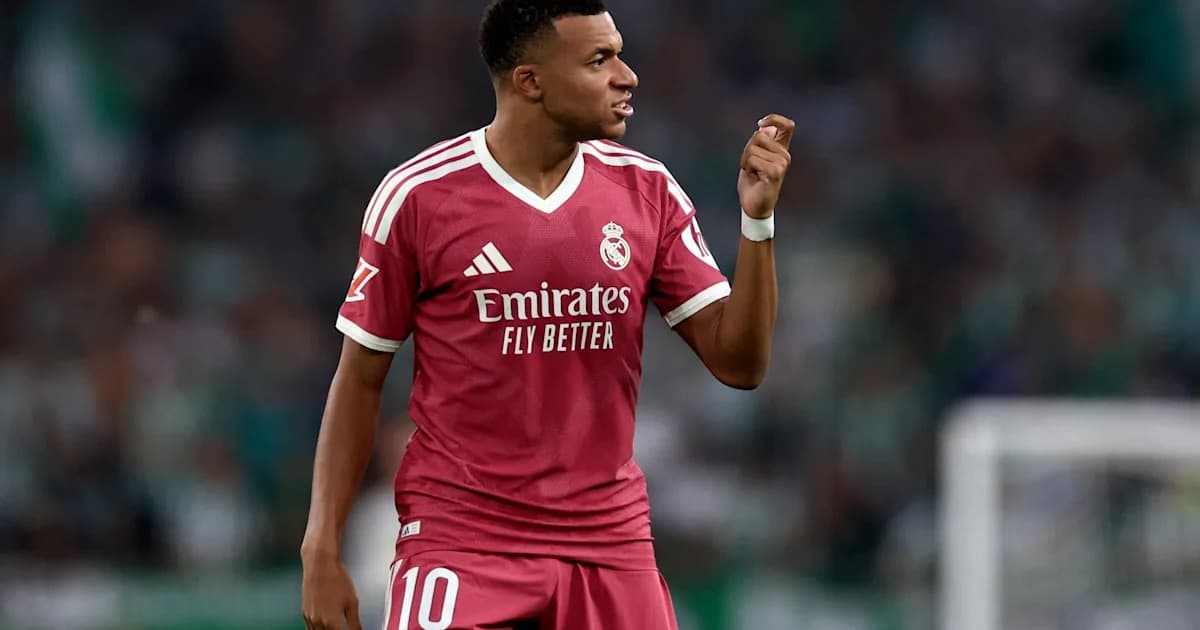
Up top, Kylian Mbappé (31) will be chasing records and ghosts, still the face of the project. Michael Olise (28) and Désiré Doué (24) add incision and creativity around him.
The question isn’t whether France have enough quality. It’s whether Zidane, a master of man-management at Real Madrid, can find a structure that holds up under World Cup pressure where Deschamps’ finally cracked.
3) England – A Golden Chance, With a Shadow Up Front
England’s World Cup ended in anguish, again. A wild win over Mexico, a comeback against Norway, and then that semi-final against Argentina – 2-0 up, and still they fell. The scars will linger, but the squad is built for another run.
Marc Guéhi (29) looked every inch an elite center-back. Djed Spence (29) finished the tournament in blistering form. In midfield, the combinations are almost endless: Declan Rice (31), Elliot Anderson (27), Jude Bellingham (26) and Kobbie Mainoo (25) give any manager tactical freedom. On the flanks, Bukayo Saka (28) and Anthony Gordon (29) carried threat and work rate.
The problem sits at center-forward. Harry Kane will be 36 in 2030. Can he still be a 90-minute solution? England haven’t yet found an obvious heir to their all-time leading scorer. The goalkeeper spot is also far from settled.
Yet the depth is undeniable. Lewis Hall (25), Cole Palmer (28), Adam Wharton (26), Alex Scott (26), Phil Foden (30), Rio Ngumoha (21) and Ayden Heaven (23) all missed out on Thomas Tuchel’s 2026 squad and still form an outrageous supporting cast.
England look primed for a serious response at Euro 2028 and beyond. Whether they arrive in 2030 with a fully formed No. 9 could define this generation.
4) Morocco – Co-Hosts With a Cause
Morocco have turned momentum into identity. Back-to-back quarter-finals, a historic semi-final, an Afcon 2025 title, and now co-host status in 2030. The pieces are in place for something bigger.
Achraf Hakimi (31), Chadi Riad (26), Anass Salah-Eddine (28) and Noussair Mazraoui (32) give them a strong, flexible defensive unit. In midfield, Ayyoub Bouaddi (22) should only grow after his breakout World Cup, while Azzedine Ounahi (30) remains a vital link between defense and attack.
Ismael Saibari (29) was a constant threat before injury cut him down, and he’ll be joined again by Bilal El Khannouss (26), Gessime Yassine (24) and Brahim Díaz (30) – a set of players who can unpick any defense.
The next wave is already knocking. Morocco’s U-20 World Cup triumph showcased forwards Othmane Maamma (24) and Yassir Zabiri (25), plus goalkeeper Ibrahim Gomis (25). If Yassine Bounou (39) can somehow stretch his peak years just a little longer, they become a nightmare draw, especially on African soil.
5) Argentina – Life After Messi, Whether They Like It or Not
Argentina’s 2026 run underlined what everyone already knew: Messi wasn’t just their best player; he was the system, the heartbeat, the obsession. You don’t replace that. You learn to live differently.
They’re not starting from scratch. Julián Álvarez (30) has grown into a genuine leading man and will again share duties with Lautaro Martínez (32), still one of the most lethal finishers in the game. Enzo Fernández (33), sent off at a crucial moment in 2026, has a point to prove and the talent to anchor the midfield.
At the back, Nahuel Molina (32), Cristian Romero (32) and Lisandro Martínez (32) will be seasoned veterans. Emiliano Martínez (37) remains a specialist in the dark arts of knockout football.
The pipeline keeps flowing. Argentina finished runners-up at the last U-20 World Cup, with midfielder Milton Delgado (24), left-back Julio Soler (25) and goalkeeper Santino Barbi (24) all pushing for senior roles.
The era of Messi is over. The expectation in Argentina is not.
6) Portugal – A Generation That Might Have Peaked Too Soon
Portugal leave 2026 with a nagging regret: what if they’d had a more mobile, natural No. 9 leading the line instead of stretching one last tournament out of Cristiano Ronaldo? He has already ruled out playing at 45, and the question now is whether Roberto Martínez has let a golden window slip.
The talent remains high. Diogo Costa (30) is among the world’s elite goalkeepers. Gonçalo Inácio (28) and Nuno Mendes (27) provide a strong defensive base. António Silva (26) will try to relaunch his promising career, seemingly at Bournemouth, and could yet become a cornerstone.
In midfield, João Neves (25) and Vitinha (30) would walk into most national teams. Up front, Gonçalo Ramos (28), João Félix (30) and Francisco Conceição (27) bring goals and flair.
But the clock is ticking. Bruno Fernandes (35), Bernardo Silva (35) and Rúben Dias (33) will all be edging past their peak years by 2030. Portugal will still be dangerous. Whether they’ll still be decisive is another matter.
7) Norway – Haaland’s Window
Norway arrived in 2026 as dark horses and left as one of the stories of the tournament. A quarter-final run, a tight-knit squad, and a culture that turned neutrals into admirers. The core will be back – including the main attraction.
Erling Haaland (29) looked like a man on holiday and on a mission at the same time, tearing into defenses with a grin. There’s no reason to think he’ll be any less terrifying in four years. Around him, Andreas Schjelderup (26), Antonio Nusa (25) and Oscar Bobb (26) offer clever movement and technical quality.
Martin Ødegaard (31) will hope his body holds up so he can pull the strings again. The back line and goalkeeping positions will need fresh faces and careful rotation, but the equation is simple: if Haaland is fit and firing, Norway are live in any knockout bracket.
8) Côte d’Ivoire – The Elephants Are Charging
Côte d’Ivoire emerged from a tricky Group E with wins over Ecuador and Curaçao before bowing out to Norway in the last 32. It felt less like an ending and more like the start of something serious.
Yahia Fofana (29) is a calm, reliable presence in goal. In front of him, Ousmane Diomande (26), Odilon Kossounou (29) and Wilfried Singo (29) form a rugged, athletic defensive unit that can cope with any style.
The attack is overflowing with options. Amad Diallo (27), Oumar Diakité (26), Elye Wahi (27), Yan Diomandé (23), Simon Adingra (28) and Ange-Yoan Bonny (26) give Emerse Faé, if he stays, the kind of “good problems” every coach wants.
Midfield is the one area of concern. If Franck Kessié (33) can no longer start every three days, someone will need to step into that leadership and physicality. On paper, though, with an Afcon 2023 title and a first World Cup knockout win already banked, Côte d’Ivoire look like a team ready to move from promise to expectation.
9) Germany – Klopp’s Rebuild
Jürgen Klopp stepping into the Germany job after 2026 feels like a reset button for a country stuck in a post-2014 hangover. He has four years to rip up the script, build his culture, and impose a new system. The big unknown is whether the player pool matches his ambition.
The timing of injuries hasn’t helped. Lennart Karl (22) missing the World Cup on the eve of the tournament hurt their plans, but the Bayern playmaker should be central to Klopp’s vision. Kai Havertz (30) will still drift into dangerous spaces and score important goals. Florian Wirtz (27) and Jamal Musiala (27) will be expected to arrive in better form and fitness, and to finally dominate a major tournament.
Nathaniel Brown (26) looks tailor-made for the wing-back role over multiple cycles. Joshua Kimmich (35) has already dismissed talk of retiring before Klopp’s tenure truly begins, a vital boost given the looming turnover in defense.
Germany have the coach. Over the next four years, we’ll find out if they still have the players to match the badge.
10) United States – A Bruise, Not a Breakdown
The “Balogun Affair” took the shine off what had been the most promising men’s World Cup showing in US history. Internal friction and uncertainty around Mauricio Pochettino’s long-term status cast a shadow, but the football itself told a different story.
A core group of players, largely in the same age bracket, stepped up in 2026 and look set to form the spine of the next cycle. Their run to the last 16 wasn’t a fluke; it was a marker.
If the federation can stabilize the touchline and manage the dressing room politics, the United States won’t just aim to qualify and compete in 2030. They’ll arrive expecting to matter deep into the tournament.
The old guard has gone. The stage is clear. Who grabs it over the next four years will shape the next era of international football.