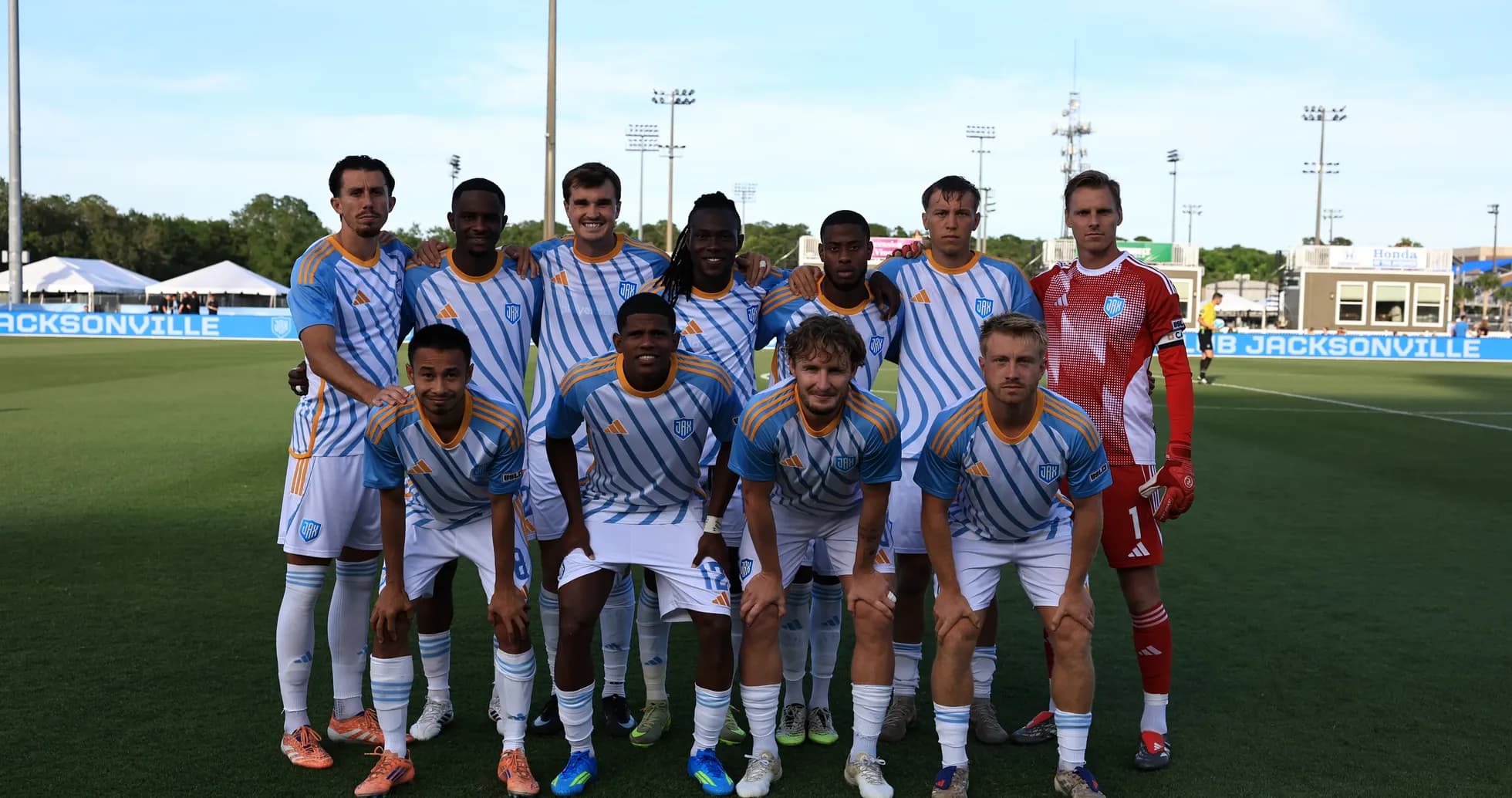
Tampa Bay Rowdies Dominate Sporting JAX in USL League One Cup
Under the lights at Hodges Stadium, the Group Stage of the USL League One Cup offered a stark study in contrasts. Sporting JAX, still trying to sketch out a coherent Cup identity, ran into a Tampa Bay Rowdies side that already knows exactly what it is. The 2–0 away win for Tampa Bay, sealed by a ruthless first half and controlled game management thereafter, did more than settle a single fixture – it underlined the gap between a side still learning the rhythms of knockout-style football and one already playing at playoff tempo.
Pre-Match Context
Heading into this game, the standings framed the narrative. Sporting JAX sat 3rd in Group 7 on 4 points, with a negative goal difference of -3 built from 4 goals scored and 7 conceded overall. At home, their record was especially troubling: 2 matches, 0 wins, 0 draws, 2 defeats, 0 goals for and 3 against. Hodges Stadium had not yet felt like a fortress; it had felt like a proving ground.
Tampa Bay, by contrast, arrived as group leaders and the benchmark. They topped Group 7 with 9 points, a goal difference of +7 (8 scored, 1 conceded overall), and a perfect record. On their travels, they had been even more devastating: 2 away games, 2 wins, 6 goals scored and only 1 conceded. The Rowdies’ seasonal DNA in this Cup was clear – front-foot, efficient, and defensively miserly.
Lineups and Tactics
The lineups told their own tactical stories. For Tampa Bay, coach Dominic Casciato leaned into depth and familiarity. J. Waite anchored the side from goal, with A. Rodriguez, L. Wyke, B. Schaefer and N. Dossantos forming a spine of defensive reliability. In front of them, the likes of C. Ostrem, M. Schneider and L. Perez offered legs and balance, while S. Cruz and M. Micaletto knitted play together. At the tip, M. Myers carried the weight of finishing moves, supported by a bench stacked with options: R. Cicerone, E. Conway, Mattheus, Pedro Becker and others ready to shift the game’s tempo if needed.
Sporting JAX’s XI had a different feel – more experimental, more searching. J. McGuire started in goal, shielded by W. Ackwei, A. Gomez, E. Dudley and E. Rito. In midfield, W. Kuzain and B. Soumaoro were tasked with both protecting and progressing, while T. Rose and J. Evans tried to provide width and running lanes. Up top, E. Jaaskelainen and K. Sadlier were asked to solve a defense that, heading into this game, had allowed only 1 goal in 3 Cup matches overall and just 1 in 2 away outings.
Tactical Challenges
The tactical voids for Sporting JAX were less about missing personnel and more about structural fragility. Their season numbers painted a worrying picture: overall they had scored only 3 goals with an average of 0.8 per match, while conceding 5 at an average of 1.3. At home, the contrast with their away form was brutal. At Hodges Stadium, they had yet to score, averaging 0.0 goals for per home game and conceding 1.5 on average. On their travels, they averaged 1.5 goals for and 1.0 against – evidence that the team paradoxically looked more liberated away from home, and more inhibited in front of their own supporters.
Discipline and Card Distribution
Discipline added another layer. Sporting JAX’s yellow card distribution showed a clear pattern of turbulence after the break. Heading into this game, 55.56% of their yellows came between 46–60 minutes, with a further 22.22% in the final 76–90 stretch. This was a team that often lost control just as the second half opened and again in the closing stages. Tampa Bay’s card map was more evenly spread, but with a late-game spike: 33.33% of their yellows between 46–60 and another 33.33% between 76–90. Both sides tended to play on the edge after half-time; the difference was that Tampa Bay did so from a position of scoreboard strength.
Matchup Dynamics
From a “Hunter vs Shield” perspective, the matchup was always going to be severe on Sporting JAX’s attack. Tampa Bay’s overall goals-against average of 0.3 per game, with only 1 goal conceded across 3 Cup fixtures, underpinned a defensive unit that travels exceptionally well. Away from home, they allowed just 0.5 goals per game while scoring 3.0 – a devastating ratio that puts enormous pressure on any home side to be almost perfect in both boxes. For a Sporting JAX front line that had failed to score in 2 home fixtures and had already “failed to score” in 2 matches overall this Cup, the Rowdies’ back line was less a shield and more a wall.
Midfield Battle
In the “Engine Room” battle, Sporting JAX leaned heavily on W. Kuzain and B. Soumaoro to disrupt Tampa Bay’s rhythm and connect with T. Rose and J. Evans in transition. But Tampa Bay’s midfield cohort – Schneider’s industry, Perez’s link play, Cruz’s movement, and Micaletto’s intelligence – had the advantage of playing inside a winning structure. With a team form of “WWW” and a biggest winning streak of 3, the Rowdies’ central players could trust the system around them; Sporting JAX’s “LWLL” form demanded improvisation and risk.
Statistical Analysis
Statistically, any xG-based prognosis before a ball was kicked would have tilted heavily toward Tampa Bay. Their goals-for average of 2.7 overall suggested they consistently generated high-quality chances, while their defensive record implied they suppressed opponents’ xG to very low levels. Sporting JAX’s 0.8 goals-for average and 1.3 goals-against overall, combined with their complete lack of home goals, pointed toward a game in which the hosts would struggle to create enough volume or quality of chances to trouble Waite.
Post-Match Reflection
Following this result, the narrative feels almost inevitable in hindsight. Tampa Bay’s squad depth and structural clarity allowed them to dominate the key phases, especially the first half where the scoreboard damage was done. Sporting JAX’s inability to translate away sharpness into home potency remained unsolved, and the psychological weight of Hodges Stadium as a difficult stage rather than a sanctuary only grew heavier.
For the Rowdies, this was another data point in a Cup run built on ruthless efficiency and defensive control. For Sporting JAX, it was a lesson in the unforgiving nature of group-stage football: against a side this well-drilled, moments of disorganization or ill-discipline – particularly in those volatile early second-half and late-game windows – are punished without mercy.