St. Louis City II Dominates North Texas 2–0 at CITYPARK
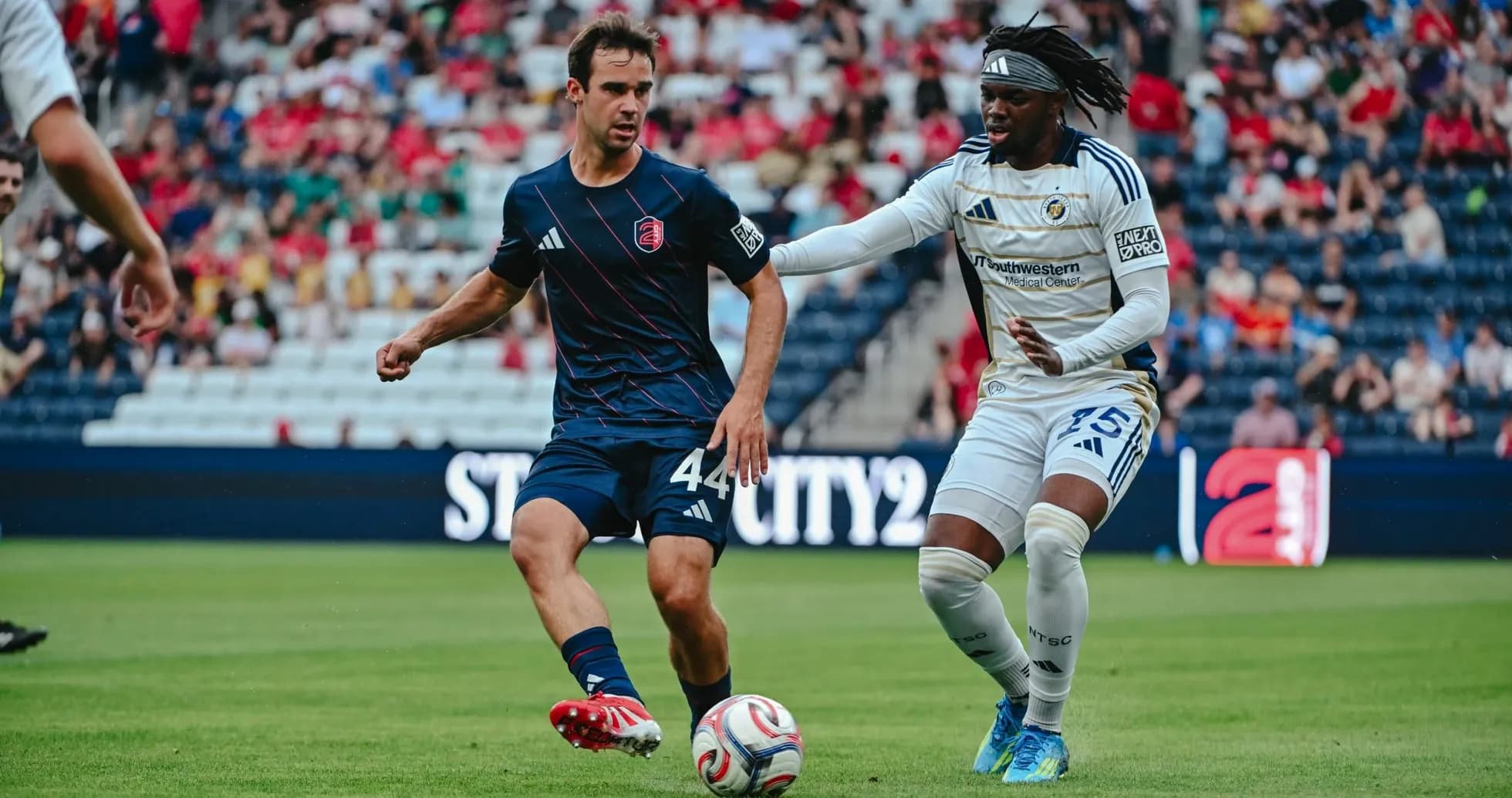
On a warm MLS Next Pro night at CITYPARK, St. Louis City II leaned into their season-long identity: ruthless at home, direct in their pressure windows, and unbothered by the absence of star names. The 2–0 full-time score over North Texas did more than settle a single fixture; it reaffirmed why St. Louis sit as a promotion contender in the Eastern Conference, ranked 2nd with 27 points and a goal difference of 8 following this result, while North Texas remain a volatile but dangerous mid-pack side, 9th in the conference on 18 points and a goal difference of 3.
I. The Big Picture – Two Different Football Identities
Heading into this game, the numbers already hinted at a clash of philosophies. St. Louis City II had built their season on home dominance: 6 wins from 7 at CITYPARK in the standings, backed by season statistics showing 7 home fixtures played and 6 wins. At home they average 2.6 goals for and concede 1.3, part of an overall attacking profile of 2.1 goals per game in total and 2.6 at home, with 18 home goals from 27 overall. Their goal difference overall stands at +8 in the standings (25 scored, 17 conceded there; 27 scored, 19 conceded in the broader stats snapshot, still a +8 margin).
North Texas, by contrast, arrived as a streaky, high-variance side. In total this campaign they average 1.8 goals for and 1.6 against, with a curious split: 2.6 goals scored at home but only 1.4 on their travels, and 1.5 conceded away. Their away record in the standings shows 3 wins and 5 losses from 8, 10 goals scored and 11 conceded, underlining a team that can explode in moments but lacks control over 90 minutes.
The match itself, finishing 2–0 to St. Louis, fit those patterns neatly: the home side’s structure and timing overwhelmed a North Texas team that lives on surges rather than sustained dominance.
II. Tactical Voids – What Was Missing, What Was Risked
There were no listed absences in the data, so both squads appeared close to full availability. The tactical voids, then, were structural rather than personnel-based.
For St. Louis City II, the lineup offered a glimpse of their internal hierarchy. C. Welsh anchored things from the back, with a defensive core featuring R. Lynch, C. Pearson and A. De Gannes. Ahead of them, the blend of A. Gbadehan and J. Wagoner hinted at a midfield designed less for slow circulation and more for vertical jumps into the final third. In attack, the presence of O. Jorgensen, J. Barclay and P. Ault suggested a front line built to exploit those explosive scoring windows St. Louis have leaned on all season.
North Texas’ starting group – including E. Dymora, J. Gibson, Alvaro Augusto, L. Goncalves and J. Torquato in the deeper band, with the likes of E. Nys, D. Garcia and N. James higher up – looked more fluid but also more fragile. Their season-long card profile underlines that fragility: 23.33% of their yellow cards come between 16-30 minutes and another 23.33% between 46-60, with red cards clustered at 46-60, 61-75 and 91-105 (each 33.33%). They are a team that tends to lose emotional control in the very phases where St. Louis’ attacking surges arrive.
St. Louis themselves are no saints in the disciplinary ledger. Their yellow cards are heavily concentrated between 31-45, 46-60 and 61-75 minutes (each 24.14%), with red cards spread across 46-60, 61-75 and 76-90. This is a side that plays on the edge, particularly as intensity spikes after the break.
III. Key Matchups – Hunter vs Shield, Engine Room vs Chaos
The “Hunter vs Shield” dynamic in this fixture wasn’t about a single striker; it was about collective timing. St. Louis City II’s goals-for minute distribution is striking: 25.00% of their goals arrive between 46-60 minutes, with 20.83% in the 16-30 window and another 20.83% in the 76-90 period. They are a team that loves the restart after half-time and late-game surges.
North Texas’ defensive minute distribution matched up ominously. On their travels and in total, they concede in waves: 21.05% of goals against in each of the 31-45, 46-60 and 61-75 windows, plus 15.79% in the 76-90 period. The critical intersection is obvious: St. Louis’ biggest attacking spike at 46-60 runs straight into one of North Texas’ softest defensive phases, with further overlap late on when St. Louis push again and North Texas’ concentration wanes.
In the “Engine Room” battle, St. Louis’ midfield cohort – with A. Gbadehan and J. Wagoner supported by M. Joyner and E. Carlock – set the tone. This is a side that rarely plays for draws; in total they have 9 wins and 4 losses, with 0 draws, and their under/over profiles show 9 matches over 1.5 goals and only 4 under. They seek to tilt games into chaos on their own terms.
North Texas’ midfield group, including C. Swann, I. Charles and R. Louis, tried to respond with verticality of their own. Their goals-for distribution shows 31.82% of their goals in the 31-45 window and 27.27% in the 76-90 period – a team that can punch before the break and in the dying stages. But away from home, with only 1 clean sheet and 4 total matches in which they failed to score on their travels (5 in total), their margin for error is slim: if they don’t hit those bursts, they rarely grind out sterile stalemates.
IV. Statistical Prognosis – Why 2–0 Felt Inevitable
Even without explicit xG figures, the season-long patterns give a clear expected-goals narrative. Heading into this game, St. Louis averaged 2.6 home goals for and 1.3 against, while North Texas on their travels averaged 1.4 for and 1.5 against. Overlay that with St. Louis’ strong over-0.5 (12 of 13 games) and over-1.5 (9 of 13) scoring profile, and the probability of the hosts finding at least two goals was high.
Defensively, St. Louis’ most vulnerable window is 61-75 minutes, where 38.89% of their goals against arrive. North Texas do have some offensive presence there (13.64% of their goals between 61-75), but their sharper edges are earlier and later. Once St. Louis navigated that danger zone without conceding, the clean sheet – already supported by 3 home shutouts in the season stats and 4 in total – became more likely.
Following this result, the story is coherent: St. Louis City II continue to weaponise CITYPARK, turning their timing windows into territorial and statistical dominance, while North Texas remain the same volatile equation – capable of flurries of goals, but too often undone by defensive lapses in exactly the moments their opponents are at their strongest.