In Portugal they say green is the colour of hope, and that hope is the last thing to die. At Sporting, those aren’t phrases for tea towels. They are a working model.
Humiliated 3–0 by Bodø/Glimt in Norway in the first leg of their Champions League last‑16 tie, Sporting were supposed to bow out quietly. No drama, just resignation. Instead, under the glare of 50,000 believers in Lisbon, they ripped up the script, tore into the Norwegians and walked off with a 5–0 win and a place in the quarter‑finals for the first time in 43 years.
Now Arsenal arrive. So does an old question: is this just a club clinging to romantic notions, or has hope become Sporting’s most dangerous weapon?
The ghost of Gyökeres – and the man who replaced him
The storyline last summer felt predictable. Viktor Gyökeres, the hulking Swede who had bulldozed his way to 97 goals in two seasons and dragged Sporting to back‑to‑back titles, left for Arsenal. A record, a talisman, gone. The consensus was simple: you don’t replace that.
Sporting did not accept the consensus.
Gyökeres’s exit left scars. The manner of it – effectively forcing his way out – turned a hero into a villain for many supporters. The goals were missed on paper, but the affection was not. That helped. So did the club’s response.
They bet on Luis Suárez.
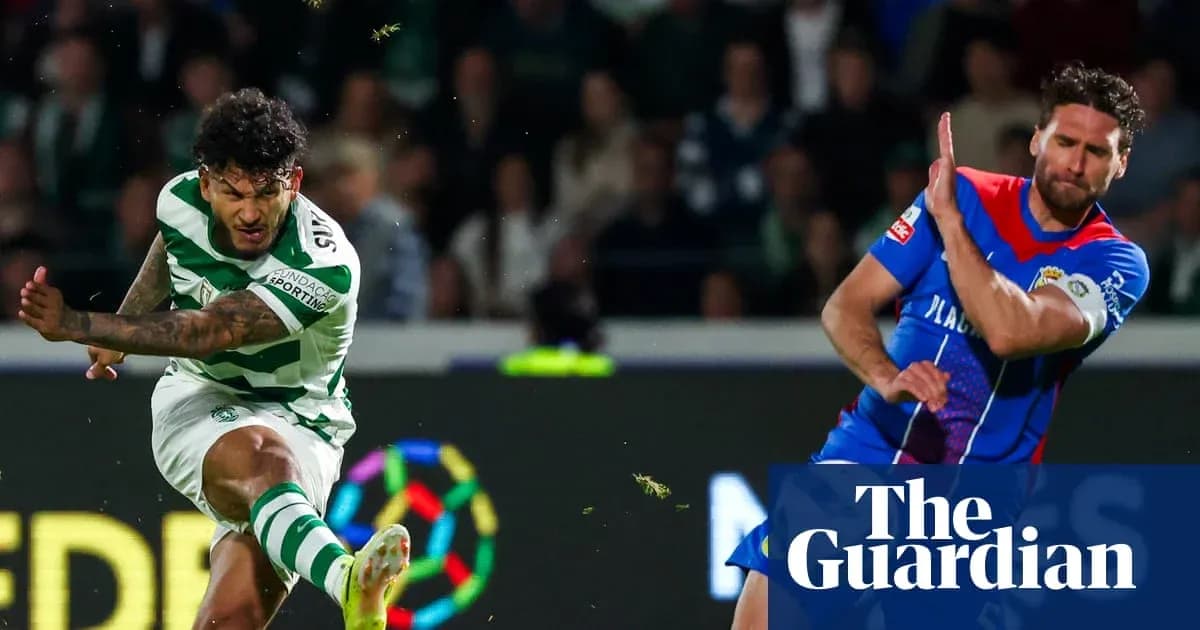
Not the Uruguayan legend, but the Colombia international who had terrorised Spain’s second tier with 31 goals for Almería in 2024–25. He arrived without fanfare, without the aura, and started writing his own script in stoppage time. Late winner after late equaliser, he kept dragging matches back from the brink, one goal at a time.
“Luis has shown the ability to score very important goals, even after people stop believing it’s possible,” says Ricardo Sá Pinto, former Sporting coach, player and club icon. “Replacing Gyökeres is never easy. Historically, South American players rarely make a strong impact in their first year in Portugal. Thankfully, with all the confidence shown by the manager and his teammates, he has been very important.”
Suárez is not a Gyökeres clone. Far from it. Where the Swede thrived on raw power – bullying centre-backs, attacking space, turning every long ball into a duel – Suárez plays as a connector. He drops in, links moves, dictates traffic around the box. He is smoother on the ball, more involved in the buildup, less of a wrecking ball and more of a scalpel.
He is also scoring. With 33 goals in 42 appearances, the 28‑year‑old leads the Portuguese scoring charts and has done something that once looked impossible: he has made supporters stop pining for the man who left.
Sá Pinto’s memories and a club chasing history
Sá Pinto knows what a European run feels like at Alvalade. He was on the touchline in 2012 when Sporting knocked out Manchester City in the Europa League last 16 and then saw a final slip away with an 88th‑minute goal conceded to Athletic Bilbao in the semi‑final. Pain lingers in those margins.
In the European Cup, the club’s last venture this deep dates back to 1983. They have never gone further. This quarter‑final is not just another tie. It is a door they have been trying to kick down for generations.
“The fact that Sporting beat Arsenal not too long ago helps the players believe it’s possible,” Sá Pinto says, recalling the Europa League last‑16 win on penalties at the Emirates in 2023. “Anything can happen in football, even when teams are theoretically uneven.”
That night in London, Pedro Gonçalves lobbed Aaron Ramsdale from 50 yards and etched his name into the club’s modern folklore. Arsenal remember. Sporting certainly do.
Borges, a new shape and an old belief
A different man now stands in the technical area. Rui Borges inherited a mess last season: Ruben Amorim’s abrupt departure to Manchester United, João Pereira’s brief and bumpy stint as caretaker, and then the loss of his star striker to Arsenal. What he did not lose was the spine of the squad.
He changed the frame. Out went Amorim’s trademark 3‑4‑3, in came Borges’s 4‑2‑3‑1. The message was clear: control the middle, own the ball.
In the league, especially against smaller sides, Sporting often advance like a chess player, shifting the ball with slow, deliberate circulation, moving pieces until a gap appears. It has made them the most prolific attacking side in Portugal.
Yet the table tells a harsher story. Porto, built on defensive rigour, sit five points clear, though Sporting hold a game in hand. Porto’s slip at home to Famalicão last Saturday cracked the door open again. Another injection of hope.
Borges’s challenge is to translate domestic dominance into European nuance. Arsenal will not allow leisurely passing patterns. They will press, squeeze and pounce on any loose touch in dangerous zones. One misstep in midfield, one stray pass, and the punishment could be immediate.
The spine: Hjulmand, Gonçalves and the dead ball threat
Morten Hjulmand, the Danish captain, is central to everything Borges wants. He patrols in front of the defence with relentless intensity, snapping into duels, then launching transitions. At set pieces he becomes a different kind of weapon, a target for corners and free‑kicks.
Sporting, like Arsenal, lead their domestic league in goals from dead balls. It is no coincidence. In tight Champions League ties, when patterns break and nerves fray, a single corner can decide a season.
Around Hjulmand, the artistry comes from Gonçalves. Still best known globally for that audacious strike at the Emirates, he remains one of Sporting’s most influential players. Borges gives him freedom. He drifts wide to exploit weak full-backs, then drops deep to collect and turn, always looking for the seam between the lines.
When Gonçalves finds those half‑spaces and Suárez starts to slide across the front line, Sporting’s attack hums. They do not simply rely on crosses or hopeful long shots; they try to unpick defences with angles and movement, with the Colombian often the final touch rather than the first out ball.
Arsenal, space and the test of Sporting’s courage
Arsenal will almost certainly dictate the tempo for long stretches. That is their nature now: dominate the ball, compress the pitch, force mistakes. The tie may come down to how well Sporting manage the very spaces they usually enjoy in Portugal.
At home they are used to controlling the ball and the terms of engagement. Against the Premier League leaders, they will need to be comfortable without that luxury, choosing when to press, when to sit, when to spring. Misjudge that balance and the contest can unravel quickly.
Yet this is a club that just turned a 3–0 deficit into a 5–3 aggregate win. A club that has already stared down Manchester City and Arsenal in recent seasons and walked away with scalps. A club that clings to its proverbs and keeps finding fresh evidence for them.
So the question lingers as Arsenal come back to Lisbon and the stadium fills with green again. Is this Sporting side simply surviving on hope, or are they about to prove that hope, in their colours, is a competitive edge no one should underestimate?