
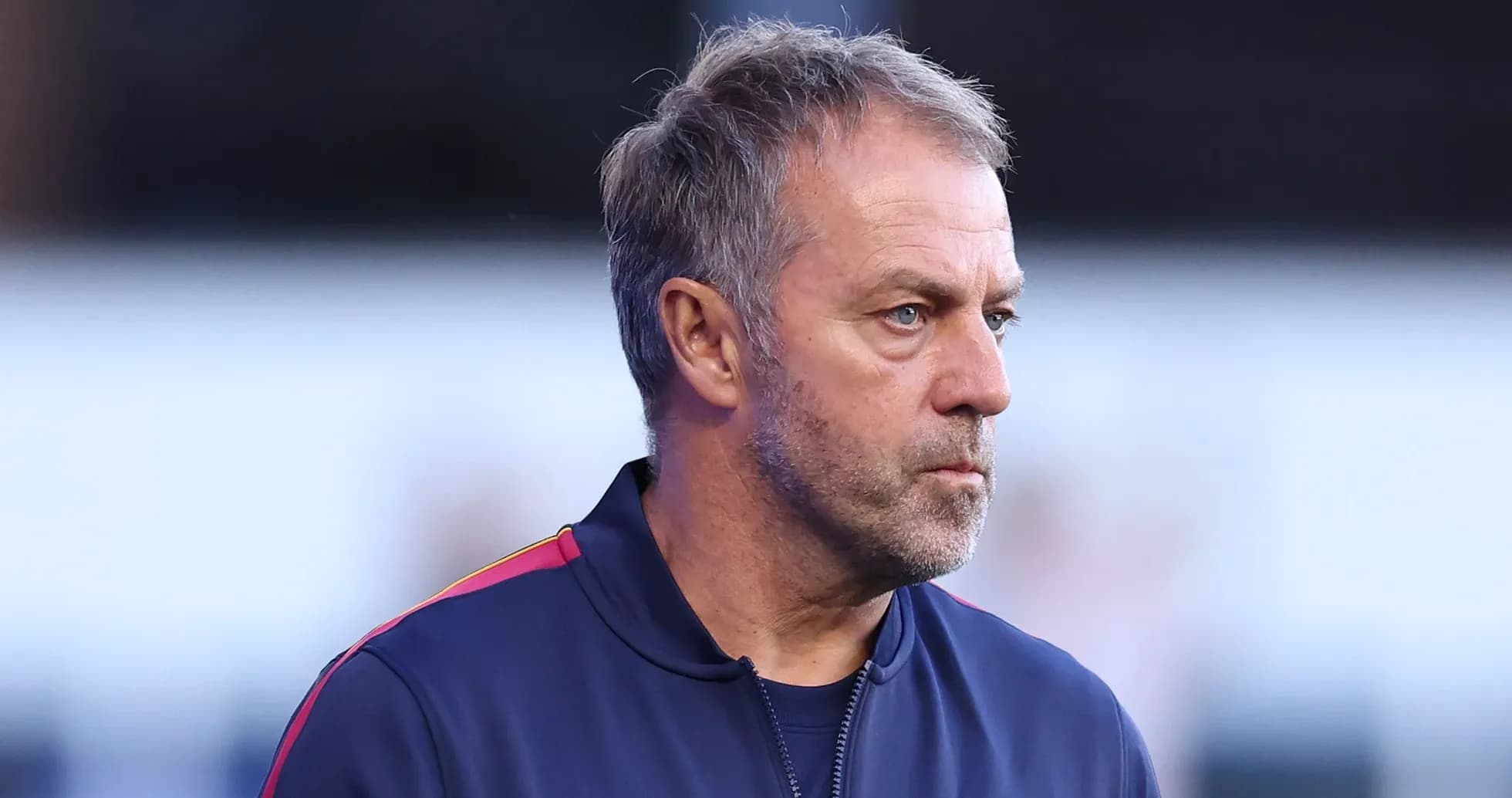
Spain’s World Champions Return to Barcelona: Flick’s Challenge Ahead
Spain’s World Cup win is still echoing around the country, but in Barcelona the noise is already being channelled into something else: expectation.
A few weeks ago, Spain edged Argentina 1-0 in a final that felt like a chess match played at full speed. Tackles flew, tempers simmered, and chances came in bursts rather than waves. Then, deep into extra time, Ferran Torres stepped out of the shadows.
The Barcelona forward, sent on as a second‑half substitute, seized his moment in the 106th minute. One touch to set, one ferocious strike, and Spain had their second World Cup, 14 years after Johannesburg. A single swing of his right foot, and Torres carved his name into Spanish football history.
That goal did more than win a trophy. It completed a rare sweep of major international honours for Spain and sent a core of Barcelona players back to Catalonia as world champions. Joan Garcia, Eric Garcia, Pau Cubarsi, Gavi, Pedri, Dani Olmo, Lamine Yamal – and Torres himself. A Blaugrana spine at the heart of the world’s best national team.
For some clubs, that might trigger a quiet fear: what happens when players feel they’ve already climbed the highest mountain?
Hansi Flick is having none of it.
Flick Welcomes the Champions’ Ego
The former Bayern Munich coach sees opportunity where others might see a problem. A dressing room packed with freshly crowned world champions could easily tilt towards complacency or ego. Flick is betting it tilts towards hunger.
“Champions never stop. They know how to win titles and that is important. This title should give them more confidence. When you work hard and focus every day, it becomes something special. That's what we want to achieve this year,” he said at Saint George’s Park, leaning into the idea that winning breeds more winning, not comfort.
The spotlight on Barcelona has rarely been sharper. A club wrestling with financial constraints now has a squad dotted with players who have just conquered the international game. Flick’s task is to turn that glow into fuel, not a distraction.
He insists he is ready to manage the egos, the expectations, the sudden elevation in status. Confidence, in his view, is a resource to be mined, not a threat to be contained.
A Gaping Hole at Number Nine
Yet for all the celebratory mood around the returning champions, Flick cut through the noise with a blunt assessment of his squad’s flaws.
Robert Lewandowski is gone. Contract finished, era closed. With him went a guaranteed source of goals and a true reference point at centre-forward. The void is obvious, and it has not been filled.
Barcelona have moved to strengthen out wide, adding pace and creativity in the flanks. But the pure ‘number nine’, the specialist who lives between the posts and defines big games with a single touch, is still missing. It is not a tactical nuance; it is a structural concern.
Flick knows it. The staff know it. The market knows it.
Complicating matters is the uncertainty around Ferran Torres himself, fresh from his World Cup heroics and now the subject of interest from Paris Saint-Germain. His future could shape Barcelona’s attack almost as much as any incoming signing.
“It depends on the team. We have to wait. I have complete confidence in Deco and we know we have to do something. It also depends on Ferran. We'll see what we do,” Flick admitted, placing the situation squarely at the intersection of sporting need and transfer reality.
If Torres stays, he offers versatility and a streak of ruthlessness that shone brightest in that World Cup final. If he leaves, Barcelona’s attacking puzzle becomes even more complex.
Disrupted Pre-Season, Unshaken Coach
Preparation for the new season has been anything but smooth. A scheduled friendly against Preston North End was scrapped when the English club couldn’t field enough players. For a coach trying to imprint ideas and test combinations, losing a full match of data and rhythm is no minor irritation.
Then came another setback: Frenkie de Jong’s injury. The Dutch midfielder’s absence opens a clear gap in the heart of midfield, the very area where Flick likes his teams to control games, dictate tempo, and suffocate opponents.
Many coaches would respond by banging the table for a replacement. Flick has taken a different line. Rather than racing into the market, he is looking inward. The emphasis is on internal solutions, on promoting development from within and reintegrating those returning from international duty.
The message is consistent: trust in the squad, trust in the work.
Flick’s belief in his methods is unmistakable. His language rarely strays far from the same core principle: daily focus, daily intensity, daily improvement. “When you work hard and focus every day, it eventually becomes something special,” he said, echoing his earlier point and underlining how central that idea is to his vision.
The Real Examination Awaits
For now, it is all theory. Training-ground patterns, fitness drills, tactical meetings, and the glow of a World Cup triumph. The real judgment will arrive when competitive football returns and Barcelona must turn all this promise into points and trophies.
Flick faces a delicate balancing act. He must harness the swagger of world champions without letting it slide into comfort. He must rebuild an attack without a classic striker, possibly without Ferran Torres. He must navigate injuries, financial limits, and structural issues at a club that demands titles as a minimum.
The World Cup has given Barcelona’s dressing room a new status. What happens next will decide whether that status becomes a platform for a new era – or just a glorious footnote to a season that never quite catches fire.



