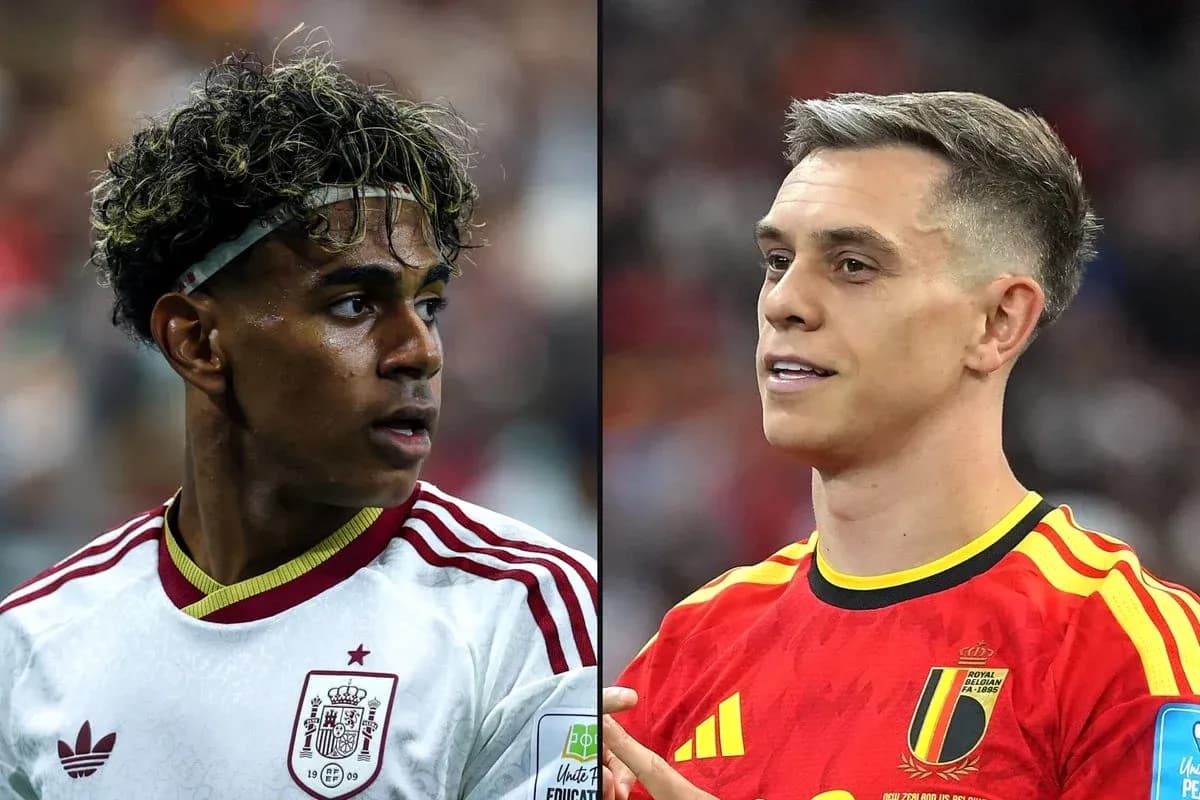
Spain vs Belgium: A Quarter-Final Clash of Styles
The SoFi Stadium in Inglewood has staged big nights before. None quite like this. Spain, the only team yet to concede a goal at this World Cup, walk into a quarter-final against a Belgium side that has rediscovered itself by tearing up its own hierarchy.
The prize is brutal and simple: beat the other, and France await in Arlington on Tuesday.
Spain: control, clean sheets… and a question up front
Spain have glided into the last eight without ever needing to hit their top gear. Luis de la Fuente’s side topped Group H with seven points, opening with a goalless draw against Cape Verde, then brushing aside Saudi Arabia 4-0 and edging Uruguay 1-0.
The knockout phase has only hardened their aura. Austria were swept away 3-0 in the round of 32. Portugal were suffocated in the last 16, undone at the death by Mikel Merino’s stoppage-time header in a 1-0 win.
The constant thread: defensive perfection. Unai Simon has five clean sheets. Spain have gone 609 minutes of World Cup football without conceding, stretching back to 2022 — an all-time tournament record. Aymeric Laporte and Pau Cubarsi have patrolled the back line with a calm authority, but the real shield lies higher up the pitch. Spain hog the ball, press in packs and win it back before opponents can breathe. Eighteen offsides drawn, 36 possessions won in the final third — both tournament highs. This is a team that defends by strangling space.
The flaw, if there is one, lies in attack. Mikel Oyarzabal has flashed hot with doubles against Saudi Arabia and Austria, then gone quiet when the margins narrowed against Uruguay and Portugal. The patterns are there, the territory is theirs, but the cutting edge has flickered rather than burned.
Lamine Yamal sits at the heart of that tension. The Barcelona winger, still only 18 and turning 19 on Monday, has shown hints of the outrageous talent that lit up the Euros two years ago, but not yet the full show. Nuno Mendes and then Nelson Semedo kept him in check against Portugal. Against a Belgian defence that has wobbled at times, this feels like a stage built for a breakout. If he chooses to take it.
De la Fuente’s biggest dilemma is the No 10 role. Dani Olmo has been quietly effective and was one of the few bright attacking sparks against Portugal. Merino, though, came off the bench to decide that game in stoppage time. Behind them, Pedri has not found his rhythm, opening the door for Fabian Ruiz to come in from Paris Saint-Germain. On the left, Alex Baena’s steady, industrious form should keep him in the XI.
Out wide, Spain are relentless. Yamal and right-back Pedro Porro combine to overload flanks, while Marc Cucurella and Baena mirror that pattern on the opposite side. The result: repeated runs in behind and a steady stream of low crosses — three chances created from those cut-backs, joint-most in the tournament.
This is not yet the Spain that dazzled Europe, but it is one that suffocates you, waits, and trusts that one of its technicians will eventually land the decisive blow.
Belgium: a team reborn by ruthless choices
Belgium arrived in this World Cup looking like a side stuck between eras. The group stage backed that up: draws with Egypt (1-1) and Iran (0-0), then a 5-1 thrashing of New Zealand that felt more like a release than a statement.
Their tournament truly began when it was almost over. Two goals down to Senegal with five minutes of normal time left in the round of 32, Rudi Garcia tore up the script and, with it, the old hierarchy. Jeremy Doku went off for Dodi Lukebakio. Kevin De Bruyne made way for Nicolas Raskin, a Rangers midfielder known more for tackles than through balls.
On paper, it looked conservative. On the pitch, it changed everything. Romelu Lukaku and Youri Tielemans dragged Belgium level, forcing extra time. Tielemans then buried a late penalty to seal a 3-2 comeback that will live long in Belgian folklore.
That reset has stuck. Garcia kept faith with the new structure against the United States in the last 16 — and was rewarded with a 4-1 win that sent the co-hosts out and Belgium surging into the quarter-finals. De Bruyne and Doku, the poster boys of the previous cycle, started on the bench. De Bruyne did not even come on.
The shift has been brutal but logical. Belgium had become too individualistic, too static to press and too loose to mop up second balls. Raskin, Tielemans and Amadou Onana gave them legs and bite in midfield. Onana’s anterior cruciate ligament injury against the U.S. — just 21 minutes into his first start of the tournament — was a cruel twist, but Hans Vanaken stepped in and the structure held.
Garcia has discovered a team that looks more solid, more cohesive, and far better suited to suffer without the ball before unleashing its stars later. Expect the same again. With Spain set to dominate possession, Belgium will likely keep their more balanced starting XI and use Lukaku and Doku as impact weapons once the game stretches.
Leandro Trossard has become the creative reference, leading all players at this World Cup with 17 chances created. Tielemans, meanwhile, has timed his late runs into the box to perfection and kept his nerve from the spot. Belgium’s attack is still dangerous, just less dependent on one genius pass from De Bruyne.
There is a cost. Belgium have allowed 53 shots — nearly double Spain’s 29 — and committed six errors leading to shots, a tally beaten only by the United States and Brazil. Yet when they do carve out clear looks, they are ruthless: 13 goals from just 14 “clear shots” (with zero or one defender in the way), a conversion rate sharper than France, England or Spain.
This is a team living on the edge, but it has learned to use that edge.
History, scars and patterns
Spain and Belgium know each other well. They have met 23 times, starting with Belgium’s 3-1 win at the 1920 Olympics on home soil in Antwerp.
The most famous clash came in the 1986 World Cup quarter-finals in Mexico. Jan Ceulemans’ diving header put Belgium ahead; Juan Senor’s 30-yard rocket dragged Spain level late on. The shootout that followed turned on Jean-Marie Pfaff’s save from Eloy Olaya, another chapter in Spain’s long, painful relationship with penalties — just one win in five World Cup shootouts since that night.
Spain took a measure of revenge at Italia 1990, winning 2-1 in the group stage to top the group while Belgium followed them through in second.
Since the turn of the century, the rivalry has been one-sided. Spain have won all five meetings, including a 5-0 demolition in La Coruna during qualifying for the 2010 World Cup — a result that foreshadowed the golden era to come. Their most recent encounter, a 2-0 friendly win for Spain in Brussels in 2016, featured Thibaut Courtois, Lukaku, Thomas Meunier and De Bruyne in the Belgian line-up.
Those names may be reduced to cameos this time. The weight of the past, though, still hangs over the fixture.
Where this quarter-final tilts
This game will stretch and snap in the wide areas.
Yamal is one of the most dangerous one-on-one players in the tournament. Even when quiet, he has shown flashes of the balance and vision that make defenders backpedal. His link-up with Pedro Porro has started to hum, creating overloads and angles for those low crosses Spain love.
On the left, Cucurella and Baena have done similar damage, constantly doubling up and dragging defenders out of position. The numbers back it up: Spain and Belgium both sit joint-top for chances created from low crosses, with three each.
Belgium under Garcia have embraced their full-backs as runners, not just markers. Off-the-ball surges from wide defenders open lanes for wingers to deliver early balls into the box. It is direct, it is repeatable, and it feeds a side that leads the tournament for first-time shots with 58. Spain, with 46, are not far behind.
The other battleground is what happens the moment possession changes hands. Spain counter-press with a ferocity that has strangled most counter-attacks at source. Their high line is brave, but backed up by that press — and no team has caught opponents offside more often. Belgium, by contrast, have struggled to stop teams slicing through their midfield, a weakness Spain’s technicians will target relentlessly.
And yet Belgium’s blocked-shot count — 32, the most at this World Cup — hints at a team that throws bodies in front of danger when the structure bends. They will need every one of those interventions against a Spanish side that probes and probes until a gap appears.
The stakes
World rankings say Spain (3) should take care of Belgium (8). The bookmakers, the pundits and most of the experts quoted ahead of this tie agree: a raft of predictions point to a Spain win, many by the same scoreline — 2-0.
But this is a Spain side that has not “gone to town” on anyone yet, in the words of one observer, and a Belgium side that has already stared down elimination and refused to blink.
Spain bring control, clean sheets and a teenager on the verge of something special. Belgium bring chaos, late goals and the knowledge that their biggest names can be unleashed at any moment.
One of them walks into a semi-final against France. The other is left wondering if this, right here under the SoFi lights, was the night their cycle finally turned.