South Africa's World Cup Journey: A New Beginning for Bafana Bafana
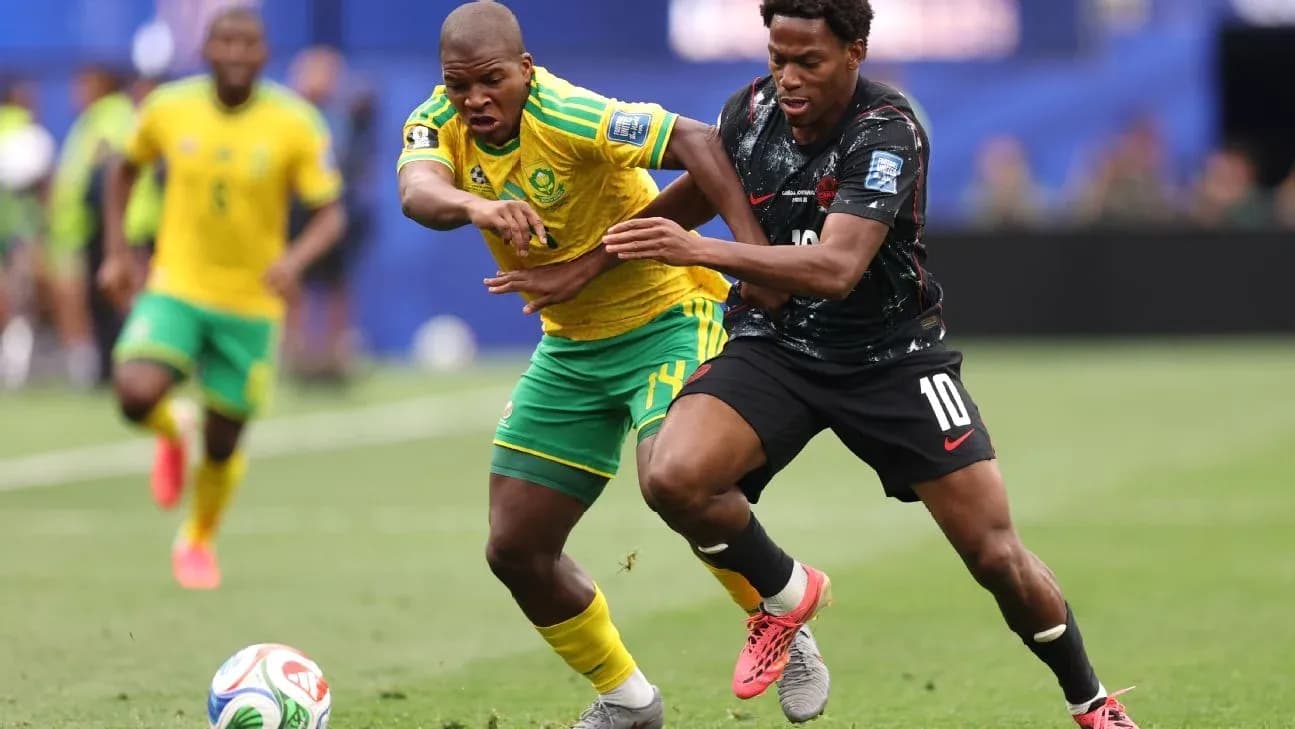
South Africa walked out of the World Cup on the wrong side of a 1-0 scoreline against Canada, hearts heavy and eyes wet. A round-of-32 exit is a cold line in a record book. It does not begin to explain what actually happened to Bafana Bafana over these weeks.
For the first time in 16 years, South Africa were back on the biggest stage. For the first time ever, they were still standing in the knockout rounds. That matters. Not just as a feel‑good story, but as a marker that this team, and this football nation, has moved.
The patriotic surge will fade. The structural gains might not.
Centre-backs for a generation
If there is one department where South Africa can sleep soundly, it is at centre-back.
Mbokazi and Okon walked into the World Cup as first-choice partners and walked out as pillars. They did not just cope; they imposed themselves. Mbokazi, in particular, played like a defender who belongs in any company, among the most assured centre-backs at the tournament.
Behind them, the conveyor belt is already humming. Olwethu Makhanya, Khulumani Ndamane, Tylon Smith, Malibongwe Khoza, Aden McCarthy and others are not just names on youth lists; they are genuine options. If injury, form or transfers ever remove either “TLB” or Okon from the picture, South Africa will not be scrambling for answers at the heart of defence.
Whoever occupies the dugout next cycle, whether Hugo Broos stays or goes, inherits something every international coach craves: stability and depth in the most unforgiving position on the pitch.
Mofokeng: the wildcard waiting to explode
One of the talking points back home has been Relebohile Mofokeng. Many South Africans wanted to see more of the Orlando Pirates playmaker in 2026. Broos did not share their enthusiasm to the same degree, and that frustration spilled across living rooms and social media.
Strip away the emotion, though, and the picture looks exciting. Mofokeng is 21. His ceiling is still somewhere in the distance.
His performance in the 1-0 win over South Korea offered a glimpse of what he can be: brave on the ball, technically sharp, unfazed by the occasion or the calibre of opponent. On that night he looked entirely at home among world-class players.
A move to Royale Union Saint-Gilloise in Belgium, widely reported and awaiting confirmation, would be a crucial next step. It is the kind of platform that can turn raw promise into a fully formed attacking threat by the time 2030 comes around.
If his development tracks anything close to his potential, the next Bafana coach will not just have another attacking midfielder. He will have a game‑changer, the sort of player you keep on the pitch because one touch might rewrite a match.
Homegrown, world-class: Williams, Mokoena and the proof of concept
For years, a familiar narrative has followed South African football: to truly grow, players must leave. The World Cup did not kill that idea, but it did complicate it.
A core of Bafana’s best performers have built their entire careers in the South African Premiership. Their displays on the global stage said as much about the league as they did about the individuals.
Teboho Mokoena bossed midfield zones for Mamelodi Sundowns long before this tournament, but on World Cup grass he showed that his range, energy and timing belong at the highest level. Thalente Mbatha of Orlando Pirates matched that intensity, snapping into tackles and using the ball with composure.
Out wide, the Sundowns fullback duo of Khuliso Mudau and Aubrey Modiba offered both bite and balance. They looked like players who could have come through any top European system.
Behind them, Ronwen Williams did what Ronwen Williams does. The captain produced big saves in big moments, the kind that keep campaigns alive and remind the world why his reputation has grown even while he has remained loyal to SuperSport United and then Sundowns.
Yes, some of South Africa’s brightest young talents will need to move abroad to stretch themselves and test new environments. But this World Cup made one thing clear: staying home does not mean staying small. A career forged in the PSL can now be a pathway to global relevance, not a dead end.
Maseko’s story: from lost love to national lifeline
Thapelo Maseko’s journey cuts deeper than tactics and formations. It is the kind of story that a country clings to when it needs reminding that football is still human at its core.
Hugo Broos saw something in him early. Maseko announced himself with a first Bafana goal at the 2023 Africa Cup of Nations, staged in early 2024, scoring at just 20. It felt like the start of a straight-line ascent.
It was not.
After moving from SuperSport United to Mamelodi Sundowns, the winger’s career stalled. New head coach Miguel Cardoso, in charge from December 2024, rarely trusted him. Maseko drifted to the reserves. Minutes dried up. Confidence went with them.
By January 2026, he was publicly admitting on social media that he had fallen out of love with the game. Five months later, he was on loan at AEL Limassol in Cyprus, fighting for relevance.
That move changed everything. Form returned, belief followed, and by March he was back in a Bafana shirt.
Then came the moment that will live in South African football folklore: his goal against South Korea, the strike that pushed Bafana into the World Cup knockout rounds for the first time ever. One swing of his boot, and a player who had almost walked away from the sport gave a country permission to dream again.
You cannot quantify what that does to a football culture.
SAFA’s lifeline – and its test
Away from the pitch, the South African Football Association arrived at this World Cup with serious problems. Late payments after the previous African Nations Championship, operating costs outpacing income, constant questions about sustainability. The word “crisis” was never far away.
The tournament has not solved those issues. It has, however, bought time.
Qualification alone guaranteed SAFA at least $9 million in performance-based payouts for reaching the group stage, excluding preparation fees. Progress to the round of 32 added another $2 million, taking the total to $11 million.
That kind of injection matters. It offers breathing space. It makes conversations with potential sponsors easier when you can point to knockout football rather than another absence from the global stage.
The danger now is complacency. Money alone will not erase years of missteps or poor planning. But used wisely, it can strengthen youth structures, support the domestic game and ensure that Bafana’s resurgence is not a one-off high.
The challenge for SAFA is to step out of permanent survival mode and into long-term thinking. This is the moment to build systems, not just teams.
Because for the first time in a long time, South African football has something rare: a credible platform, a generation of players who belong on the world stage, and a fanbase that has seen what is possible.
The question is no longer whether Bafana can compete. It is whether the people in charge can match the ambition of the players who have just dragged the badge back into the global conversation.