Slovan Bratislava vs Celje: Tactical Insights from UEFA Champions League Play-off
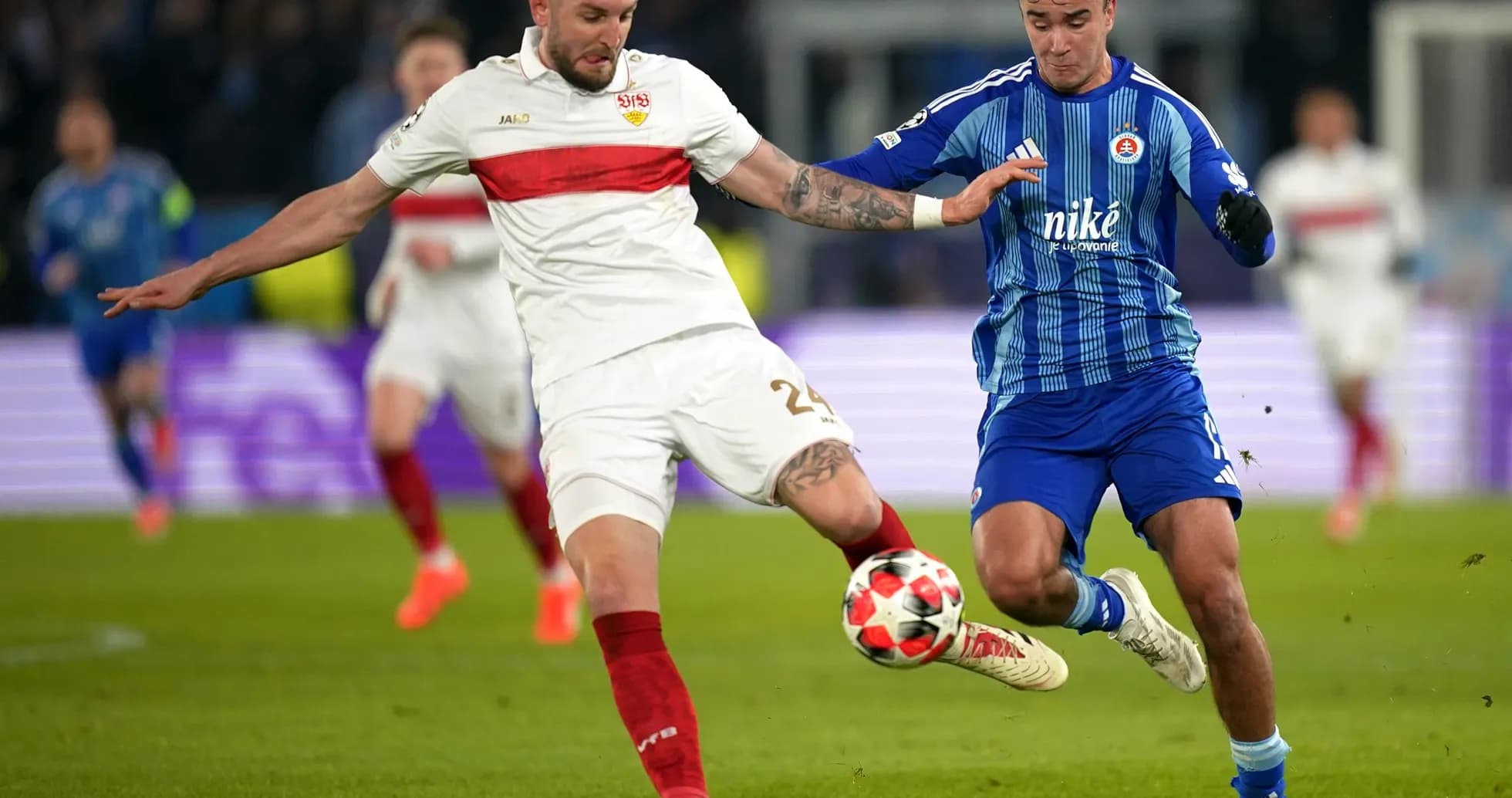
Slovan Bratislava’s 1-1 draw with Celje at Tehelne Pole Stadion was a tactical arm-wrestle in the UEFA Champions League Play-offs, defined less by dominance and more by contrasting interpretations of risk. Both sides finished level on the scoreboard and in ball possession at 50%, but the routes they chose to get there were notably different.
Slovan set up in a 4-3-3 under Yaya Toure and used that structure to impose early territorial control. With 14 total shots to Celje’s 8 and a 4-0 advantage in corner kicks, the hosts consistently advanced play into the final third. The front three of T. Barseghyan, R. Cerepkai and S. Camara stretched Celje’s back four horizontally, while the midfield triangle of P. Pokorny, A. Mustafic and C. Martinez tried to connect through central lanes. Nine of Slovan’s attempts came from inside the box, reflecting a clear intent to construct high-quality chances rather than rely on long-range efforts.
Celje, in a 4-2-3-1 under Vitor Campelos, were more selective but efficient. They produced only 8 shots yet matched Slovan in scoring once and actually led in shots on goal, 4 to 2. Their structure was compact: the double pivot of P. Daniel and M. Zabukovnik screened the centre-backs, while the line of three behind lone forward A. Kucys focused on quick, vertical transitions rather than sustained possession. With 5 offsides to Slovan’s 0, Celje repeatedly tried to break the line early, accepting the risk of being caught offside to threaten in behind.
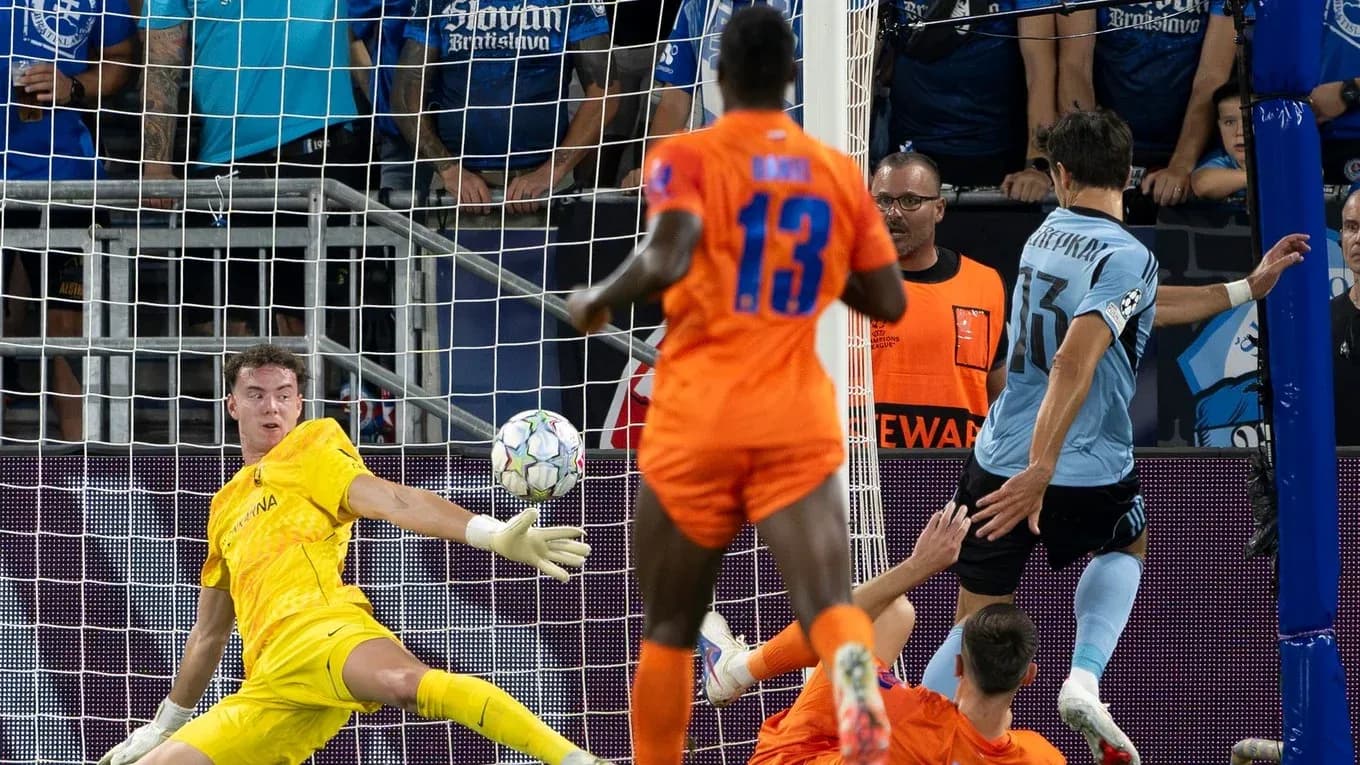
The goal patterns reflected these plans. Slovan’s opener, finished by R. Cerepkai and assisted by C. Martinez, came from their ability to pin Celje back and combine centrally from midfield into the front line. Celje’s equaliser, scored by left-back M. Avdyli from an assist by M. Kvesic, showcased their capacity to exploit moments of disorganisation, with a wide defender arriving from deep rather than a classic striker finish. That a full-back scored for Celje underlined how their 4-2-3-1 allowed outside defenders to step into advanced zones when the opportunity arose.
In possession, the numbers underline how evenly matched the control phase was. Slovan completed 380 of 465 passes (82%), Celje 402 of 487 (83%). Celje actually made more passes overall and slightly more accurate ones, suggesting that once they did secure the ball, they circulated it with composure rather than simply clearing their lines. However, Slovan’s higher shot volume and 6 blocked shots indicate that they spent more time probing around the Celje penalty area, forcing the visitors into last-ditch interventions.
The defensive structures were disciplined on both sides. Slovan committed 12 fouls and Celje 13, with each team receiving two yellow cards. For Slovan, K. Bajric and C. Blackman were booked for “Roughing”, signalling an aggressive approach from the central defensive unit to break Celje’s transitions at source. For Celje, M. Avdyli’s “Roughing” card and M. Zabukovnik’s “Tripping” reflected the strain on their left side and midfield screen as they dealt with Slovan’s rotations and dribbles in the half-spaces.
In goal, D. Takac (Slovan Bratislava) made 3 saves compared to just 1 from Z. Leban (Celje). This is a critical detail: despite Slovan generating more total shots, Celje were the side that worked the opposing goalkeeper more frequently. Takac’s interventions were decisive in preventing Celje’s efficient shot selection from flipping the match. Leban, on the other hand, was protected by a defensive block that allowed 14 shots but limited Slovan to only 2 on target, suggesting effective pressure on the ball and compactness in the box.
Substitutions subtly altered the tactical balance. For Celje, the introduction of B. Verbic for M. Ivansek and A. Kotnik for A. Kucys around the hour mark added fresh energy between the lines and up front, while later defensive changes such as A. Dionkou for P. Sirvys and I. Calusic for P. Daniel helped maintain structure as Slovan pushed late. For Slovan, replacing R. Cerepkai with A. Yirajang, A. Mustafic with D. Matsuoka, and S. Camara with M. Kianga signalled a desire to inject pace and different profiles into the front line, but without changing the fundamental 4-3-3 shape. The late introduction of R. Ibrahim for C. Martinez and A. Sporar for T. Barseghyan further refreshed the attacking unit, yet Celje’s compact 4-2-3-1 block held firm.
Statistically, the verdict is of a finely poised tie where stylistic contrasts cancelled each other out. Slovan’s volume-based approach (14 shots, 4 corners, 9 attempts inside the box) was blunted by Celje’s shot suppression in dangerous zones and their ability to block 4 efforts. Celje’s more economical attack (8 shots, 4 on goal, no corners) still forced more saves, highlighting their precision when they did reach the final third.
With both teams splitting possession 50-50 and almost mirroring each other in passing accuracy, the 1-1 scoreline feels like an accurate tactical reflection: Slovan’s territorial pressure versus Celje’s vertical efficiency, neither quite sharp enough to turn their particular strengths into a decisive advantage.