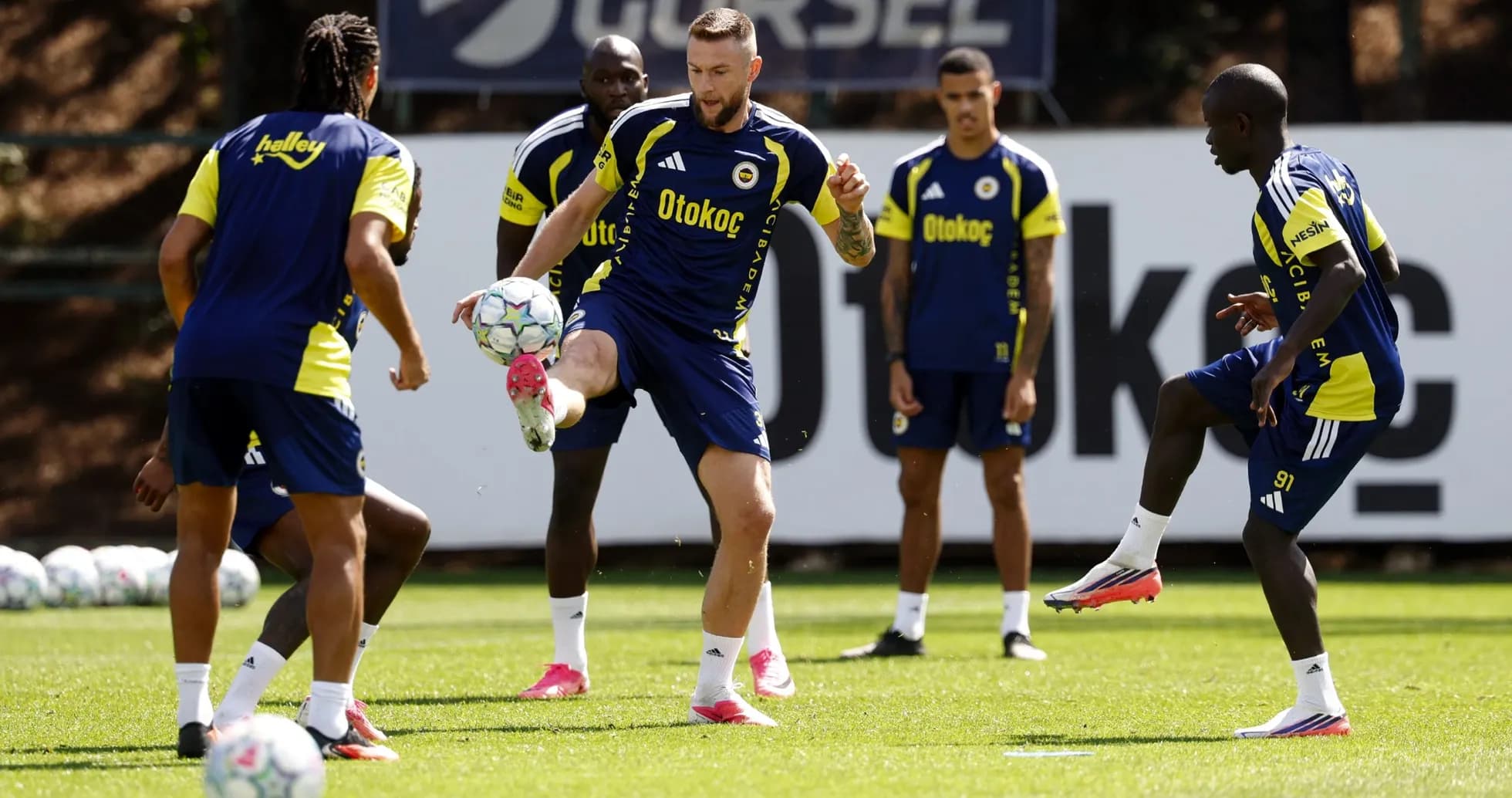
Fenerbahçe vs AS Roma: UEFA Champions League Clash
Under the lights of Chobani Stadium Fenerbahce Sukru Saracoglu, this League Stage opener in the UEFA Champions League brings together two sides at very different stages of their European story. Fenerbahçe arrive as a team already shaped by continental minutes and habits; AS Roma step in as a tactical project just beginning its journey in this season’s competition.
Fenerbahçe's European Profile
Heading into this game, Fenerbahçe’s European profile is clear. Across 6 matches in total, they are unbeaten, with 4 wins and 2 draws, and no defeats either at home or on their travels. They have scored 8 goals overall, split evenly with 4 at home and 4 away, for a total average of 1.3 goals per match in both dimensions. Defensively, they have conceded only 3 in total (1 at home, 2 away), with an overall average of 0.5 goals against per match, 0.3 at home and 0.7 away. The goal difference in total is therefore +5, the statistical footprint of a side that controls games without needing to blow opponents away.
Roma's Situation
Roma, by contrast, step into Istanbul with a blank European slate this season: 0 matches played in total, 0 goals scored, 0 conceded. Their rank of 17 in the early standings and Fenerbahçe’s 20 are largely symbolic at this stage; this is less about table position and more about how quickly Gasperini’s structure can harden under Champions League pressure.
Tactical Voids
The tactical voids tell their own story. Fenerbahçe are without a cluster of players for this fixture: M. Asensio (muscle injury), A. Diouf and A. Fall (both off the roster), Rodrigo Becao and M. Yandas (also off the roster), J. Oosterwolde (Achilles tendon injury) and M. Guendouzi (suspended after a red card). That list removes a potential creative outlet in Asensio, a combative presence in Guendouzi, and depth in the defensive line. For Roma, the absences of M. Bah (knee injury) and L. Pellegrini (thigh injury) strip away a dynamic full-back option and, more crucially, a central creative leader who often stitches midfield to attack.
Coaches' Strategies
Those absences reshape both coaches’ boards. İ. Kartal leans into a 4-3-3 for this match, a departure from the 4-2-3-1 that has been used in all 6 previous European fixtures. Ederson anchors the side in goal, shielded by a back four of M. Müldür, M. Škriniar, N. Aké and A. Brown. In front of them, N. Kanté, İ. Yüksek and B. Elmaz form a narrow, hard-running midfield triangle designed to compress Roma’s central lanes. Up front, M. Greenwood, V. Muriqi and K. Aktürkoğlu give Fenerbahçe a blend of penalty-box presence, one‑v‑one threat, and vertical runs.
Gasperini answers with a 3-4-2-1 that bears all his hallmarks. M. Svilar stands behind a back three of G. Mancini, E. Ndicka and Hermoso, a unit built for aggressive stepping out of the line. The wing lanes belong to D. Rensch and Wesley, with B. Cristante and M. Koné patrolling the centre. Ahead of them, P. Dybala and M. Soulé float behind D. Malen, offering Roma a double-creator structure rather than a classic number ten.
Key Duels
The “Hunter vs Shield” duel is most obvious on Fenerbahçe’s right. Greenwood arrives as both scorer and provider in this competition: 2 goals and 1 assist in total, with 8 total shots and 5 on target, and 6 key passes at an 83% pass accuracy. He is not just a finisher; he is a conduit. Against him stands Roma’s left defensive half-space, where Hermoso and Ndicka must handle his tendency to drift inside and combine with Muriqi. If Roma’s back three are slow to pass him on, Greenwood’s ability to shoot early and thread passes between lines will pull their shape out of joint.
On the opposite flank, K. Aktürkoğlu is Fenerbahçe’s quiet architect. With 2 assists in total, 12 key passes and 11 dribble attempts (4 successful), he is the player who turns sterile possession into penetration. His duel with Rensch is the second key “Hunter vs Shield” battle: if Aktürkoğlu can repeatedly isolate the wing-back, he will either win ground on the outside or draw Cristante out of the centre, opening corridors for Muriqi.
Engine Room Clash
Behind them, the “Engine Room” clash is defined by N. Kanté and İ. Yüksek against B. Cristante and M. Koné. Kanté’s presence allows Fenerbahçe to push their full-backs higher, knowing that his coverage can snuff out counters before they become transitions. Cristante, in turn, is Roma’s metronome and enforcer; if he is pressed aggressively by Yüksek and Elmaz, Roma may struggle to progress through the middle and be forced into longer, riskier passes toward Malen.
Roma's Attacking Strategy
Roma’s attacking fulcrum is Dybala. Lining up nominally as a midfielder behind the striker, he will look for pockets between Kanté and the centre-backs. Škriniar and Aké, both starting, must decide whether to follow him into midfield or hold the line and trust Kanté to screen. Any hesitation opens a channel for Malen to dart into, especially on quick turnovers.
Discipline and Statistics
Discipline is another subtle undercurrent. Fenerbahçe’s yellow-card distribution in this competition shows a clear pattern: 30.77% of their yellows arrive between 31–45 minutes, another 30.77% between 76–90, and 38.46% in the 91–105 window. That late‑game surge in cautions suggests a side that defends aggressively when legs are heavy and the stakes are highest. Against a Roma team that will likely grow into the match, this could translate into dangerous free-kicks around the box or a key player walking a tightrope in the final quarter-hour.
From a statistical prognosis, Fenerbahçe’s overall scoring average of 1.3 and defensive average of 0.5, combined with 3 clean sheets in total (2 at home), point to a side that manages risk well, especially in front of their own crowd. Their perfect penalty record in total (2 scored from 2, with 0 missed) underlines a clinical edge when the pressure peaks. Roma’s lack of current-season data in this competition injects uncertainty rather than comfort; their ceiling is unknown, but so is their resilience.
Match Expectations
The likely pattern, then, is Fenerbahçe attempting to compress Roma in the middle third, trusting Kanté to smother transitions and their wide forwards to win the one‑v‑one battles that decide knockout‑level nights. Roma, under Gasperini, will look to overload wide zones with wing-backs and half‑spaces, trying to drag Fenerbahçe’s back four into uncomfortable diagonals.
In a contest where one side brings proven European rhythm and the other tactical intrigue, the numbers lean slightly toward Fenerbahçe’s controlled aggression. If their defensive structure holds and Greenwood and Aktürkoğlu can translate their creative profiles into clear chances, the hosts have the edge. But with Dybala between the lines and Malen running off shoulders, Roma possess exactly the kind of volatility that can crack even the most carefully constructed defensive averages.