Sevilla vs Espanyol: A Tense La Liga Encounter
Under the late afternoon light at Estadio Ramón Sánchez Pizjuán, Sevilla and Espanyol met as near neighbours in the La Liga table but with very different emotional trajectories. The hosts, 13th with 40 points and a goal difference of -13 (43 scored, 56 conceded in total), came in with a volatile season behind them but a clear sense that home is where they steady the ship: 7 wins, 4 draws and 7 defeats at home, with 24 goals both scored and conceded. Espanyol arrived just one point and one place behind in 14th, on 39 points and a total goal difference of -15 (38 for, 53 against), a side oscillating between impressive streaks and sudden collapses.
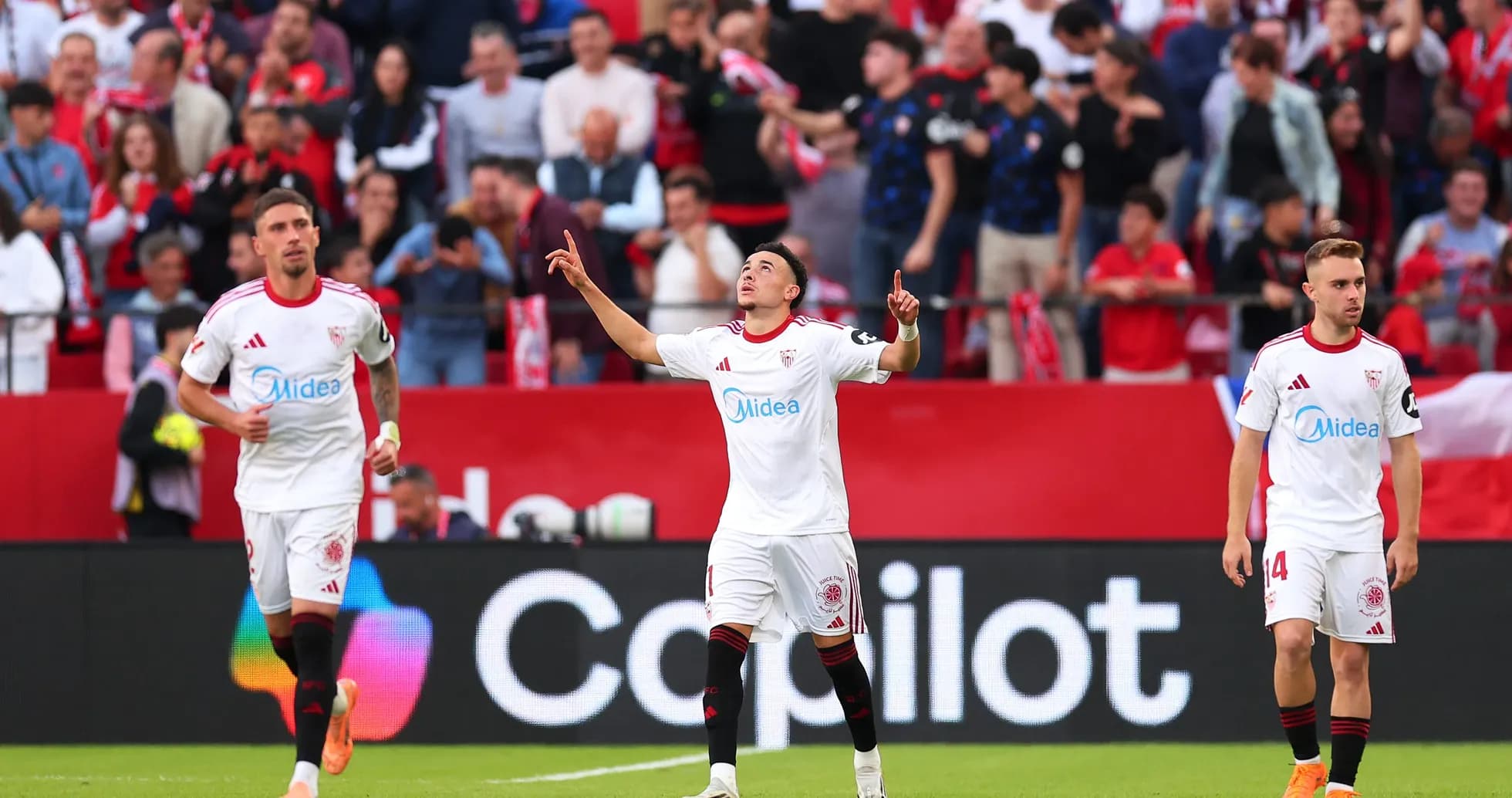
The 2-1 home win that followed felt like a distillation of both teams’ seasonal DNA. Sevilla’s campaign has been defined by thin margins and emotional swings – their total averages of 1.2 goals for and 1.6 against per game tell of a side that rarely plays a quiet 90 minutes. Espanyol, averaging 1.1 goals for and 1.5 against in total, are similarly knife-edge, but with a more pronounced tendency to live dangerously in the closing stages.
Luis Garcia Plaza’s decision to line his Sevilla side up in a 4-4-2 was a deliberate break from their more common 4-2-3-1 template this season (used 11 times in the league). Here, it was about verticality and direct pressure. O. Vlachodimos anchored the side in goal, behind a back four of J. A. Carmona, Castrin, K. Salas and G. Suazo. Ahead of them, a flat but aggressive midfield band of R. Vargas, L. Agoume, N. Gudelj and C. Ejuke was tasked with both shuttling and suffocating. Up front, the pairing of N. Maupay and I. Romero gave Sevilla a dual focal point: one to drop and combine, one to threaten the space behind.
Manolo Gonzalez responded with Espanyol’s structural comfort zone: a 4-2-3-1, the formation they have used 17 times this season. M. Dmitrovic started in goal, protected by O. El Hilali, F. Calero, L. Cabrera and C. Romero. U. Gonzalez and Exposito formed the double pivot, with R. Sanchez, R. Terrats and T. Dolan supporting lone striker R. Fernandez Jaen. On paper, it was a shape designed to exploit Sevilla’s sometimes fragile transitions; in practice, it was often bent back into a 4-5-1 under pressure.
The absences framed the tactical voids. Sevilla were without M. Bueno (knee injury) and Marcao (wrist injury), stripping Garcia Plaza of a left-footed centre-back option and a rotational piece in the back line. That made the selection of Castrin and K. Salas non-negotiable, and pushed even more defensive responsibility onto Carmona and Suazo in the wide areas. Espanyol, missing C. Ngonge and J. Puado (both knee injuries), were deprived of two important attacking profiles – one a direct runner, the other a clever mover between lines. Their absence forced Gonzalez to lean more heavily on T. Dolan and R. Terrats to generate threat from the second line.
Discipline was always likely to be a hidden battleground. Heading into this game, Sevilla’s yellow-card distribution showed a clear late-game spike: 19.80% of their cautions arrive between 91-105 minutes, with another 18.81% in the 76-90 range. Espanyol’s pattern is even more dramatic: 29.89% of their yellows come between 76-90 minutes, and 16.09% between 91-105. This is not a fixture built for calm endings.
Within that context, certain individual profiles loomed large. J. A. Carmona, the league’s leading yellow-card collector, came in with 12 yellows in 32 appearances. His 61 tackles, 7 blocked shots and 35 interceptions underline his front-foot style, but his 47 fouls committed show the cost of that aggression. On the opposite flank, O. El Hilali for Espanyol mirrored that intensity: 68 tackles, 13 blocked shots and 38 interceptions, plus 9 yellows of his own. The wings, therefore, became zones of both progress and peril.
In the engine room, L. Agoume was Sevilla’s metronome and shield. With 1 goal, 2 assists, 1219 passes at 80% accuracy, 62 tackles and 47 interceptions this season, he is the quiet architecture behind Sevilla’s structure. His duel with Exposito and U. Gonzalez dictated whether Sevilla’s 4-4-2 could step into a 4-2-4 in possession or be forced back into a 4-5-1 block. For Espanyol, Exposito arrived as both creator and tempo-setter: 6 assists, 75 key passes and 925 total passes at 76% accuracy. His 29 shots, 12 on target, hinted at a player willing to step into the “second wave” finishing role whenever R. Fernandez Jaen dragged centre-backs away.
Further up, I. Romero carried a different kind of edge. Beyond his 4 league goals, he came into this match with a disciplinary red mark: 1 red card and 6 yellows in total, plus 2 penalties won but 1 missed. That blend of danger and volatility made him a constant emotional accelerant in Sevilla’s front line. For Espanyol, the threat from the bench was embodied by Pere Milla and C. Pickel. Milla, with 6 goals and a red card this season, is a chaos agent between the lines. Pickel, with 1 goal and a red card of his own, adds bite and vertical running from midfield.
The broader statistical backdrop suggested a tight, nervy contest rather than a rout. Sevilla’s home averages of 1.3 goals scored and 1.3 conceded, combined with Espanyol’s away averages of 1.1 scored and 1.7 conceded, pointed towards a game decided by small details in both boxes. Both teams boast perfect penalty records this season – Sevilla with 5 out of 5, Espanyol 3 out of 3 – but with I. Romero’s missed spot-kick in his individual record, there was always the possibility that nerves from twelve yards could intrude.
Following this result, the 2-1 scoreline felt almost mathematically preordained by the numbers: Sevilla marginally stronger at home, Espanyol sufficiently dangerous to score but too porous to keep the door shut. The Expected Goals story, while not explicitly given, would almost certainly mirror the season-long trends: Sevilla edging the shot quality through territorial control and second-phase pressure, Espanyol living off transitions and isolated moments of creativity from Exposito and the wide players.
In narrative terms, this was less a shock than a confirmation. Sevilla, volatile but just functional enough at home, leaned on their retooled 4-4-2 and on the steel of Agoume and Gudelj to navigate another anxious afternoon. Espanyol, brave in structure but undermined by late-game frailty and missing key attacking pieces, once again walked the thin line between resilience and regret – and slipped, just enough, to leave Seville with nothing.