Scottish Football's Gloom Amid New Season
Only those living in cloud cuckoo land can convince themselves Scottish football is about to glide serenely out of its summer of discontent. The fixture lists are out, the grounds are being spruced up, the season is ready to start – and yet the mood is closer to a wake than an opening night.
The hangover from a lamentable World Cup will not shift. The Scottish FA has offered no real explanation, no roadmap, no sense that the debacle in the United States will be used as a turning point rather than a footnote. Mike Mulraney, the president, last surfaced in public squeezed into the background behind Gianni Infantino and the US president at Trump Tower. Ian Maxwell, the chief executive, briefly emerged to condemn “hysterical commentary” around Scotland’s performance after Steve Clarke walked away.
This, remember, from the same leadership that all but laughed off concerns when Clarke was handed a four-year contract on the eve of departure for the World Cup. A needless gamble, flagged at the time, duly exploded in their faces. They have retreated into silence.
Maybe Mulraney and Maxwell are buried in the search for Clarke’s successor. They deserve the chance to appoint someone capable of overseeing a long-overdue transition in a Scotland squad that has drifted towards geriatric. Yet the vacuum around the bigger picture – youth development, coaching standards, the domestic game’s direction – is glaring. The leading clubs, so often happy to ignore that wider conversation, were exposed on the global stage. The anger over the World Cup is not an isolated outburst. It bleeds straight into the Premiership’s return and threatens to turn this campaign sour, even poisonous.
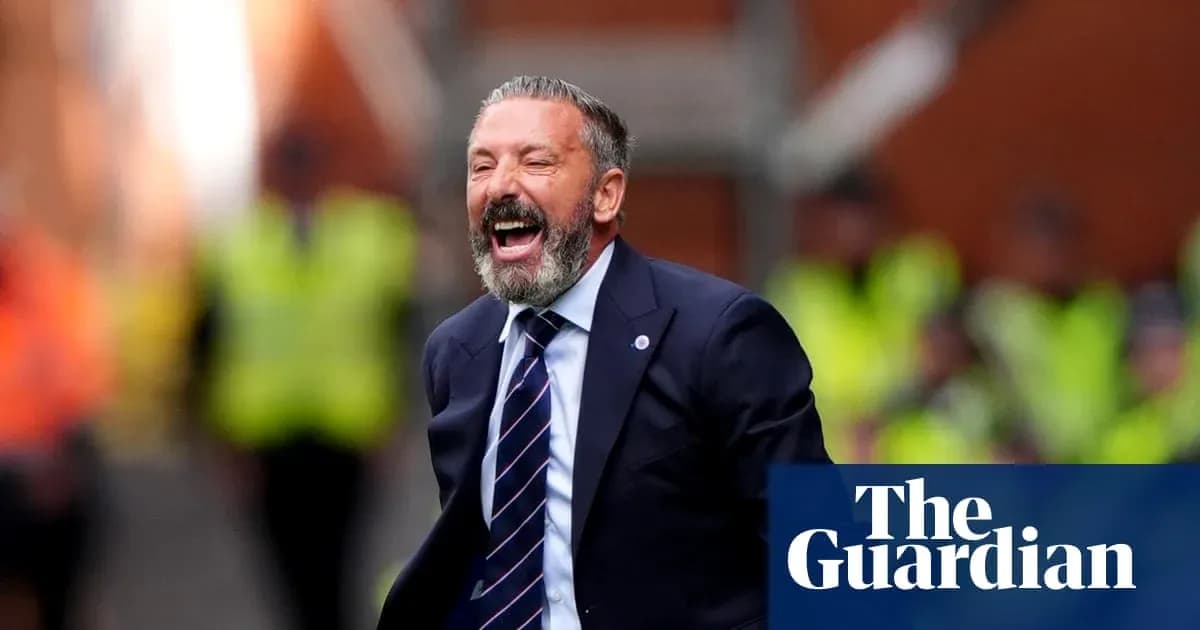
Nowhere is the tension more obvious than at Celtic. Their supporters remain furious with a board they view as complacent, detached and far too comfortable with domestic dominance and healthy balance sheets. Across the city, Rangers have turned to Derek McInnes, a manager whose appointment has been met with open hostility in many Celtic circles and scepticism in some parts of his own support.
Old wounds elsewhere have barely begun to heal. Hearts fans are still simmering after the extraordinary end to the 2025‑26 season, when a first league title in 66 years slipped from their grasp in agonising fashion. The most shameful chapter came on 11 June, when the Scottish Professional Football League finally published the outcome of its disciplinary process into the pitch invasion that forced the early end of Celtic’s title-clinching match against Hearts. Nestled among token punishments for Hamilton Academical, Inverness and Stenhousemuir was a modest fine for Celtic and a suspended, wafer-thin ticket reduction. It landed like a slap in the face.
Rangers supporters, never shy of railing against authority, were relatively quiet until McInnes was hit with a touchline ban for comments about a refereeing decision. That rekindled the sense of persecution. The club has also taken issue with aspects of an independent report into the chaos that followed their Scottish Cup defeat to Celtic in March. Motherwell, meanwhile, are in dispute with the Scottish FA over a fine for a social media video and have turned to lawyers. Hibs fans, already conditioned to European embarrassment, watched a 2-0 first-leg defeat in Kosovo and went into the online equivalent of orbit. Nights like that stopped being a shock long ago. They still sting.
There are, amid the gloom, pockets of optimism.
Celtic have flexed financial muscle with the signing of Kasper Høgh for a club-record fee, a move that finally matched the scale of the support’s ambition. The Dane is the most intriguing arrival of the summer, his name already carrying the weight of expectation. Doubts linger over whether players who thrive in Bodø/Glimt’s finely tuned system can replicate that form elsewhere. Without those questions, and at a price that many Championship clubs in England would not blink at, Høgh would have been snapped up earlier. Yet at 25, with his physical profile and direct, aggressive style, he looks made for Scottish football.
Celtic’s real test lies elsewhere. Arne Engels and Alistair Johnston are the prime examples of first-team regulars who will attract irresistible bids. Replacing that calibre of player without simply banking the money and boasting about net profit will define this board. Supporters have welcomed Høgh. They want more than one marquee signing and a tidy set of accounts.
Across the city, the story is different but no less fraught. Rangers have torched staggering sums in recent years while watching others collect the silverware. The rage from the stands has scarred reputations on and off the pitch. An American ownership group has, curiously, chosen not to confront that culture head-on.
Into this walks McInnes. Rangers open the season at Dundee United on Friday night with a manager whose understanding of the club, the city and the expectation around it feels more authentic than some of his predecessors. Vanja Dragojevic, brought in from Partizan Belgrade, looks a shrewd addition in midfield. Rangers still lack attacking sparkle, yet McInnes’s first instinct has been to harden the spine, to restore a core that can withstand pressure. This is the job he has always coveted. Motivation and work ethic will not be the problem.
On paper, this version of Rangers should be far more competitive. On grass, Celtic remain favourites. Course and distance still matter.
In Edinburgh, Hearts are trying to catch their breath. Nobody tied to the club could be expected to quickly process how they came within minutes of the title, only to see it wrenched away. McInnes’s move to Rangers, the radically different style introduced by Wouter Vrancken and the surge in expectation have created a volatile mix. Hearts’ title tilt arrived ahead of schedule, dragging them into the consciousness of people who previously paid Scottish football little attention. A heavy Champions League qualifying defeat to Sturm Graz underlined the size of Vrancken’s task. The temptation will be to demand an instant sequel to last season’s drama. Patience would be smarter.
Elsewhere, there are signs that those outside the traditional powerbase are refusing to simply cling on.
Motherwell’s work under Jens Berthel Askou and beyond showed that clubs below the financial elite can do more than survive. The football was adventurous, attendances rose, and scouts took notice. The sales of Elijah Just and Elliot Watt for multimillion-pound fees vindicated a model built on smart recruitment and bold thinking.
St Mirren are openly targeting a younger, more dynamic squad and a more attractive style. Kilmarnock hinted at something similar under Neil McCann at the end of last season. Aberdeen, under Stephen Robinson, look primed to be a far more serious proposition. One long-running grievance has even been addressed: only one artificial pitch remains in the top flight, a small but symbolic victory for those who believe elite football should be played on grass.
The country’s obsession with the game endures. Stadiums will still fill, arguments will still rage, and every refereeing call will be dissected. Yet the sport itself feels like a sick patient, propped up by habit and history rather than fresh ideas.
A new season should bring hope. This one will only do that if someone, somewhere in power, finally dares to think differently.