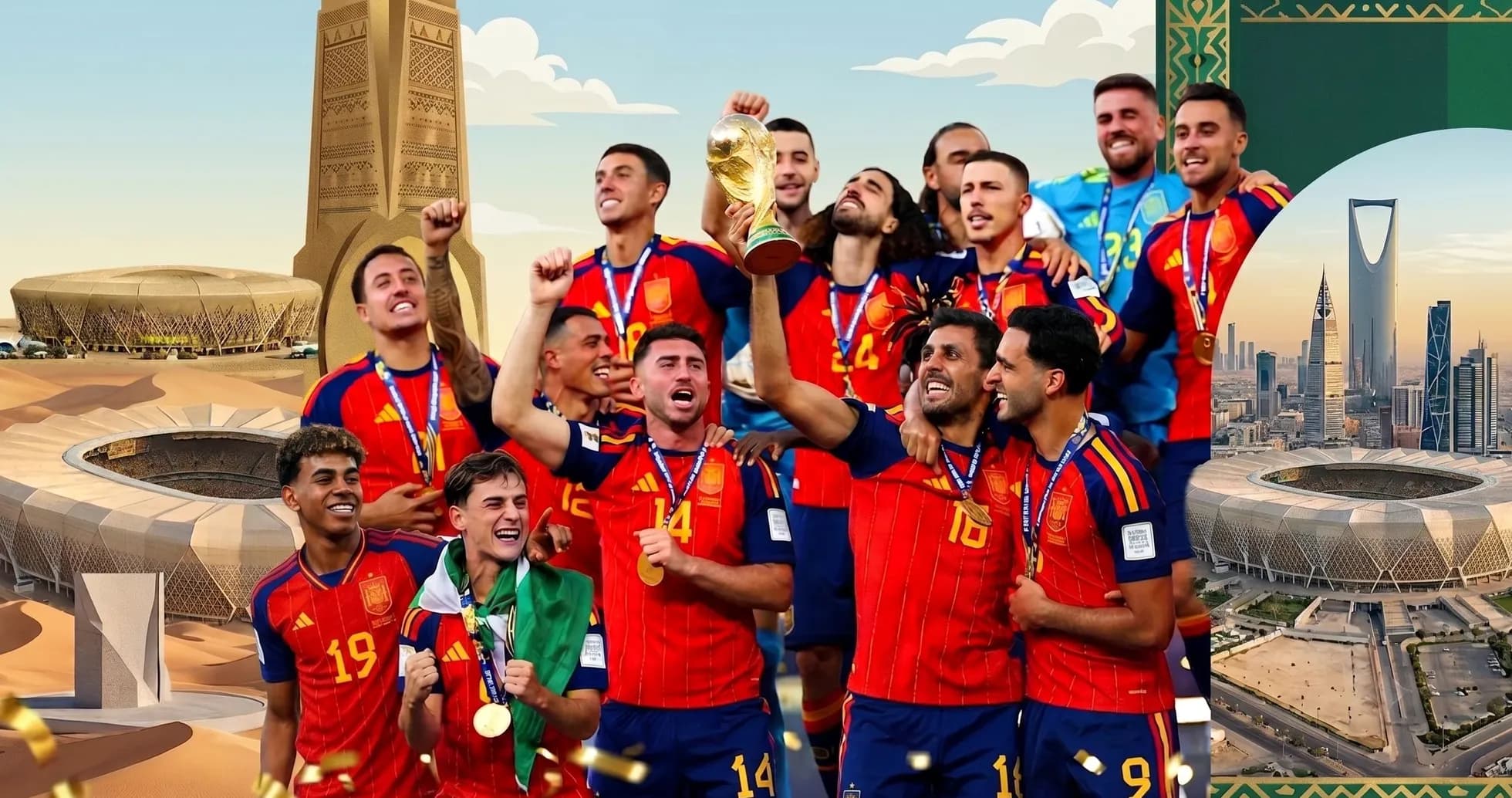
Roshn League's World Cup Journey: No Champions, Yet Many Winners
Two summers ago, the Saudi Roshn League basked in reflected glory. Spain had just climbed back to the summit of Europe at Euro 2024, and two of the league’s own – Nacho Fernandez of Al-Qadisiyah and Aymeric Laporte of Al-Nassr – were part of the coronation.
This time, as Spain hoists the 2026 World Cup, the mood in Saudi Arabia is very different.
World champions, no Saudi employers
The Roshn League is full of Spanish accents these days, but not one of them made Luis de la Fuente’s squad. The coach built a side of tactical control and iron discipline, a team that strangled games and settled the final against Argentina with a single, decisive goal. None of those world champions are contracted to Saudi clubs.
That wasn’t for lack of trying.
Across recent seasons, Roshn League sides circled several of Spain’s stars, opened talks, pushed hard – and watched the deals collapse before the finish line. Had even one of those moves gone through, Saudi clubs would today be parading a world champion in their colours.
Instead, they are left with a tantalising “what if” and a statistic that still carries weight: 49 Roshn League players went to the 2026 World Cup. That, in itself, is a statement of where the league now sits in the global game, even if the final step – having a World Cup winner on the books – remains out of reach.
Laporte: the one that got away
No case stings quite like Aymeric Laporte.
The Roshn League had him. Al-Nassr had him. A seasoned international defender, training every day alongside Cristiano Ronaldo, expected to anchor a title charge and a continental push.
Instead, his Saudi chapter ended in acrimony. Italian coach Stefano Pioli sanctioned Laporte, banishing him to train alone and excluding him from the closing stretch of the season. The atmosphere, Laporte later admitted, had turned “difficult” amid constant churn in management and coaching staff. The project frayed; the relationship broke.
Laporte left Al-Nassr and returned to Athletic Bilbao. One season later, he was at the heart of Spain’s World Cup triumph, forming a defensive wall with Pau Cubarsi and driving La Roja all the way to the trophy.
From the vantage point of Riyadh, that arc is hard to ignore. The Roshn League had a future world champion in its hands – and watched him walk away.
He was not the only name on Saudi shortlists. Several members of Spain’s victorious squad had been tracked or linked by Roshn clubs, only for negotiations to stall, numbers not to add up, or players to choose Europe instead. The result is stark: not a single member of the 2026 World Cup-winning squad plays in the Saudi top flight.
No champions, but plenty of winners
Yet the story of the Roshn League at this World Cup is not one of failure.
On the pitch and on the balance sheet, Saudi clubs emerged as clear beneficiaries of the tournament.
FIFA’s club benefits programme, as reported by French newspaper L’Equipe, paid out 4,300 euros per day for each player at the World Cup, covering the period from 1 June to 19 July 2026. The global pot reached 305.3 million euros. With 49 players involved, the Roshn League took a healthy slice.
Al-Hilal led the way. The Riyadh giants sent 12 players to the tournament, more than any other Saudi club, and cashed in accordingly. Their full-back Theo Hernandez stayed with France all the way to the third-place match, a deep run that extended both his influence and the club’s compensation, even if the French ultimately missed out on bronze.
Al-Ahli and Al-Nassr sat just behind in terms of representation. Al-Ahli matched Al-Nassr with nine players at the World Cup and found their own hero in Ivan Toney. The striker helped England carve out a place on the podium, playing his part in securing a bronze medal that will live long in the memories back home – and on the walls of Al-Ahli’s training ground.
Money flowed, but reputations grew faster.
Al-Qadsiah, with six players in the tournament, watched Julian Quinones seize his moment on the global stage. The Mexican forward delivered four goals and a decisive assist in just five matches, a return that underlined his status as one of the Roshn League’s sharpest attacking weapons. Every strike, every celebration, pushed both his value and his club’s profile higher.
A league on the brink of its next step
So the paradox stands. The Roshn League had no player lifting the World Cup in Spain’s colours. It did, however, send nearly 50 footballers to the biggest stage in the sport, bank significant FIFA revenue, and see its stars shape key moments of the tournament.
For Saudi clubs, the question now is not whether they belong in this conversation. It is whether they can finally turn near-misses into signatures, and signatures into medals.
The next world champion to pass through their hands – will they keep him long enough to see him crowned?