Ronaldinho Joins Ravenna: A New Era Begins
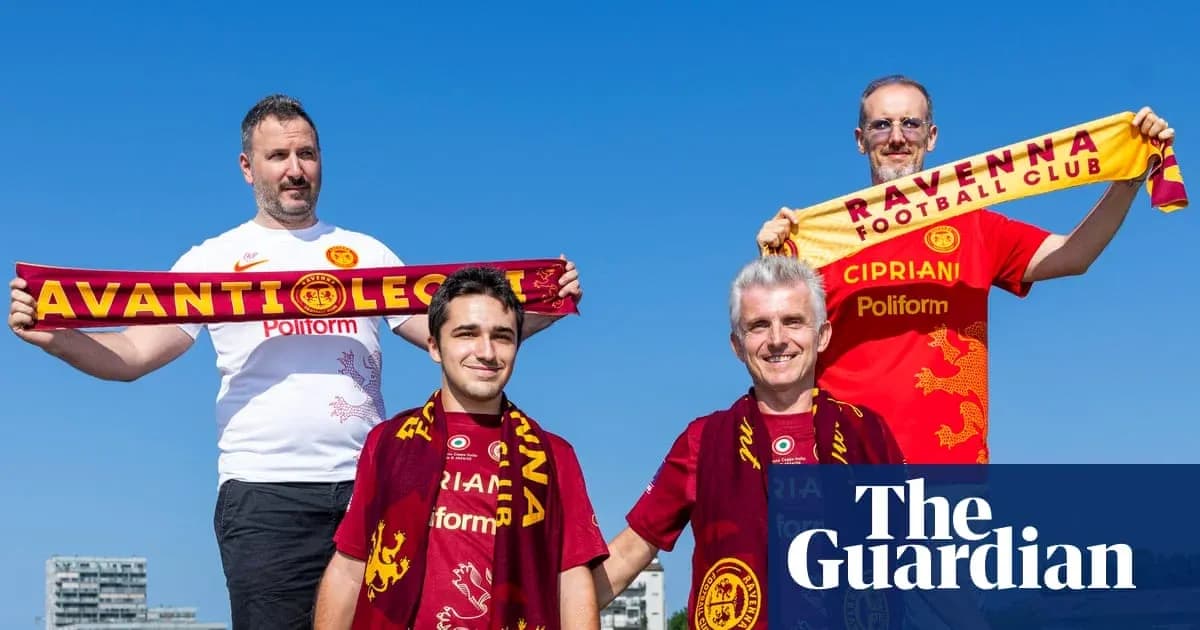
On a blistering afternoon in Ravenna, the heat seems to hang over the city’s Byzantine mosaics like a veil. Tourists drift past Dante’s tomb, locals seek shade in the narrow streets, and in the historic centre four Ravenna supporters sit at a cafe, thumbing through La Gazzetta dello Sport.
“We haven’t seen him yet,” one of them says, dry as the pavement outside. The pink paper crackles, the headline glows, and the scepticism is obvious. Ronaldinho. Here. In Ravenna.
They laugh at the idea, call it a commercial stunt, a circus. But they keep reading. Because somewhere beneath the irony, there’s a stubborn, childlike hope: to see the 2005 Ballon d’Or winner, the 2002 World Cup champion, the man who once shared a World Cup final stage show with Madonna and Ronaldo, pull on their yellow and red shirt. Even once.
A tycoon’s grandson and a wild idea
This is not a football city by birthright. Ravenna has always been known more for its mosaics than its midfielders, more for Dante than for derby days. On the pitch, the story has been one of bankruptcies, resets, and modest ambition. Seven seasons in Serie B stand as the peak, framed by collapses in 2001 and 2012. Volleyball, not football, has long been the dominant sport.
Into this landscape stepped Ignazio Cipriani.
Heir to the Venetian hospitality empire behind Harry’s Bar, Cipriani bought the club in 2024 when it sat in Serie D, the fourth tier. He is also the grandson of Raul Gardini, the chemicals magnate and sailor who took Il Moro di Venezia to the 1992 America’s Cup final. In other words, he comes from a family accustomed to big stages and bigger bets.
In his first year as president, he delivered the Serie D Cup and promotion to Serie C. A tidy achievement, but in his mind just the first rung on a much taller ladder.
“Serie A is the goal I declared from day one because I intend to reach it,” he says. The Champions League? That, he insists, is the “ultimate horizon” he wants to walk towards, step by step. He prefers to work with his back to the wall, he explains: when there is no escape route, excuses evaporate and solutions have to be found.
Then came the move that turned a quiet provincial rebuild into an international talking point.
Ronaldinho. Age 46. Registered as a player for Ravenna.
From dream to dressing room
The deal sounded like a prank when it first broke. Social media treated it as a meme. Yet the connections were very real.
“We met through Lorenzo Tonetti and Ariedo Braida,” Cipriani explains, naming two long-serving AC Milan figures who once had Ronaldinho under contract at San Siro. The notion of involving the Brazilian surfaced almost as soon as he bought the club. Through Tonetti and Braida, meetings followed, conversations deepened, and a genuine friendship formed.
From that, ideas started to flow. Not just about shirt sales and social media spikes, but about how a global icon could help drag a small club into the world’s eyeline.
And then the line that every fan wanted to hear: Ronaldinho will wear the Ravenna shirt as a player. The president even dares to dream of the Brazilian scoring the last goal of his career in their colours.
The response was instant. A dedicated website launched a special-edition shirt emblazoned with the “R10” logo, Ronaldinho’s personal brand. It sold out within hours. High-end global branding had just crashed into small-town football, and the collision felt deliberate, calculated and, to many, exhilarating.
“If someone had told me three years ago that Ronaldinho was coming to Ravenna, I would have sent them straight to the psychiatric ward,” says Fabio, a lifelong supporter, laughing. “The night the news broke, international headlines everywhere read ‘Ronaldinho to Ravenna’. It was an extraordinary operation.”
Between icon and identity
Cipriani knows exactly what he has brought into town.
“Ronaldinho is a unique icon,” he says. His style of play made a generation fall in love with football. For Cipriani, the mission now is for that same player to make a new generation fall in love with Ravenna – in Italy and beyond.
He insists this is not a cheap visibility stunt. In his mind, Ronaldinho is a bridge: between eras of football, between a provincial club and a global fanbase, between Ravenna’s past and its imagined future.
To support that vision, the club is already working with the municipality on upgrading the Stadio Bruno Benelli. Capacity must grow beyond the current 6,300, but the president’s ambitions stretch far further than a few extra seats. His dream is a multi-purpose venue open seven days a week, with retail outlets, concert facilities and, crucially, an integrated Hotel Cipriani that ties the stadium into the city’s expanding tourism strategy.
This is football as urban project, not just weekend entertainment.
A city looking outward
For Ravenna’s mayor, Alessandro Barattoni, the arrival of a global superstar dovetails neatly with the city’s broader plans. Ravenna has been nudging itself onto the international stage, no longer content to be just a beach destination or a commercial port.
Recent years have brought renewed ties with the Anglo-Saxon world, a visit from the British royal family, and the opening of the Lord Byron Museum. Ronaldinho, in that context, is not just a footballer. He is a signal flare.
“Ronaldinho brings a whole new level of global fame,” Barattoni says. When the news broke, his phone filled with messages from old schoolmates. For today’s younger kids, the Brazilian might be someone they first see on YouTube rather than on live television, but the magnetism remains.
The mayor smiles as he adds that, schedule permitting, he would be happy to personally show Ronaldinho the city’s cultural treasures. Yet he is careful to draw a line between civic institutions and club ambitions. The shared ground is internationalisation: projecting Ravenna’s image to the world.
Ronaldinho has long been an ambassador for global brands. Now, Barattoni believes, he can help showcase the city’s initiatives beyond the usual tourist routes. And the club, he notes, had already been doing impressive work with younger generations before the Brazilian’s name ever appeared in a headline. The stands feel younger, louder, more engaged. A community is forming, not just an audience.
The Curva’s caution
Not everyone is swept away by the glamour.
In the Curva Mero, where the hardcore fans gather, the reaction is more cautious. The fear is clear: that the club becomes a marketing vehicle first and a team second, that ticket prices creep up, that lower-income families are nudged out by the spectacle.
“There is a certain reluctance among some factions,” Fabio admits. Modern football, in their eyes, pushes values they do not share: higher prices, less accessibility, more gloss than grit. Visibility can quickly look like vanity.
Cipriani does not pretend those concerns do not exist. “Without roots, no global project makes sense,” he says. Ravenna is not a blank slate brand to be invented in a boardroom; it is a club with a history and identity that predate his arrival. Tradition, in his view, is not a brake on ambition but its foundation.
“A club without its people is worth nothing,” he says. It is a line that will be remembered – and tested – as the project grows.
Giovanni, another long-time supporter, puts it in more personal terms. “I’m 50 years old and I’ve been coming to the stadium since my school days,” he says. “I’m rediscovering the enthusiasm of the past. If it takes an icon like Ronaldinho and a local entrepreneur to make us dream of Serie A, then so be it. The important thing is never to forget the people in the stands.”
The Ronaldinho Effect
For now, the so-called “Ronaldinho Effect” is measurable. The season-ticket campaign has launched with a target of 2,800 sales. Prices have gone up by an average of around 12%, with differences depending on the section of the stadium. The club is assembling a squad with one clear objective: win Serie C and keep climbing.
Around them, the city hums with a new kind of anticipation. Bars talk football as much as art. Kids wear yellow and red with “R10” on their backs. The surreal has become part of the daily conversation.
All eyes now turn to 20 August. In nearby Marina di Ravenna, a three-day summer festival, staged in pure Cipriani style, is set to welcome Ronaldinho’s first appearance in this new chapter. Whether he ultimately sprinkles his magic on the pitch for a few minutes or simply lends his aura to the project, one thing is already clear.
Ravenna, the city of mosaics and poets, has decided it wants a place on the football map. And it has chosen one of the game’s greatest entertainers to help draw the outline.