Roma Triumphs Over Stuttgart in Tactical Battle
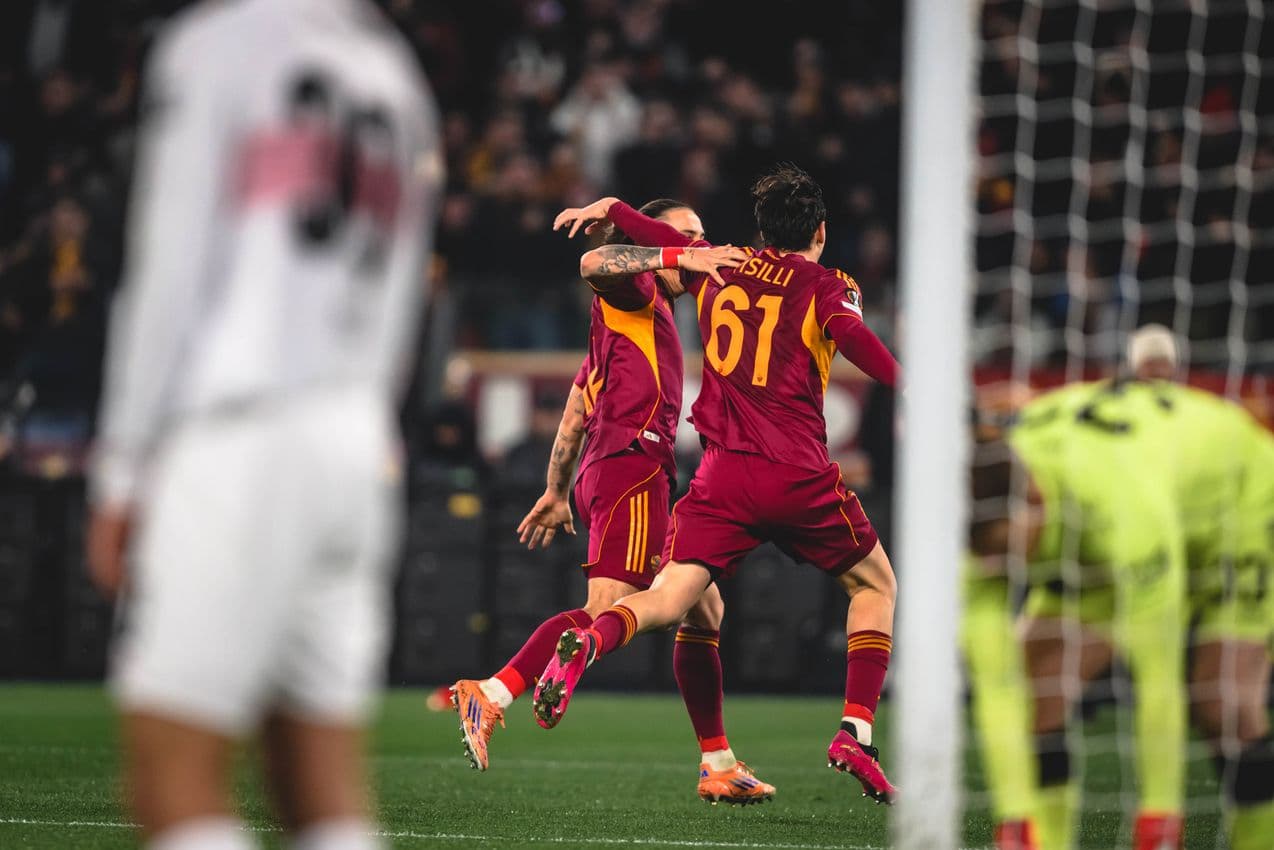
Roma beat Stuttgart 2–0 in a rare European tie where neither side truly “owned” the ball, but Roma owned the scoreboard. Possession was perfectly balanced at 50–50, with almost identical passing volumes (454 passes for Roma vs 452 for Stuttgart) and accuracy (both at 83%). Rather than a classic domination vs underdog pattern, the game became a contest of who could better exploit similar territorial platforms. Roma’s 3-4-2-1 mirrored Stuttgart’s 3-4-2-1, creating a chess match of structures. The Italians focused on controlling central zones and game rhythm, while Stuttgart tried to stretch the pitch and generate more volume in the final third.
Offensive Efficiency
Stuttgart actually carried the greater attacking volume: 15 total shots to Roma’s 12, and 4 corners to Roma’s 2. They also posted the higher xG, 1.77 against Roma’s 0.94, underlining that they carved out more and better-quality chances overall. With 9 of their 15 shots coming from inside the box, Stuttgart consistently managed to access dangerous areas. However, their 5 shots on target were not converted, pointing to a lack of cutting edge in decisive moments.
Roma’s attacking plan was more selective but ultimately more efficient. Ten of their 12 shots came from inside the box, indicating that they largely avoided speculative efforts and focused on engineered, high-value situations. Despite only 4 shots on target, they converted twice from an xG of just 0.94, a clear case of ruthless finishing compared to Stuttgart’s wastefulness. The limited number of corners and the low shots from distance (only 2 outside the box) suggest Roma prioritized structured attacks through the half-spaces rather than sustained crossing or long-range attempts. Substitutions around the hour and 70-minute marks (introducing Bryan Cristante and Paulo Dybala) further tilted the balance towards control and precision rather than volume.
Defensive Discipline & Intensity
The game was tactically intense but not excessively dirty. Both teams committed exactly 12 fouls, and there were only 3 yellow cards in total (2 for Stuttgart, 1 for Roma), indicating committed duels without descending into chaos. The key defensive story lies in goalkeeping and shot suppression. Roma’s Mile Svilar made 5 saves, matching Stuttgart’s 5 shots on target and effectively neutralizing their higher xG of 1.77. Stuttgart’s Alexander Nübel, by contrast, had only 2 saves to make, reflecting Roma’s lower shot volume but also his side’s vulnerability when those few chances did arrive. Blocked shots (4 for Stuttgart, 2 for Roma) show Roma were slightly more successful in getting in the way of efforts, adding another layer of protection in front of their box.
Conclusion
Ultimately, Roma’s combination of chance quality, clinical finishing, and a goalkeeper in command trumped Stuttgart’s greater attacking volume and xG. With possession and passing almost equal, the difference came in the boxes: Roma maximized fewer openings, while Stuttgart’s more expansive shot profile lacked the precision to change the result.