Roma's Dominance Over Lecce in Serie A Clash
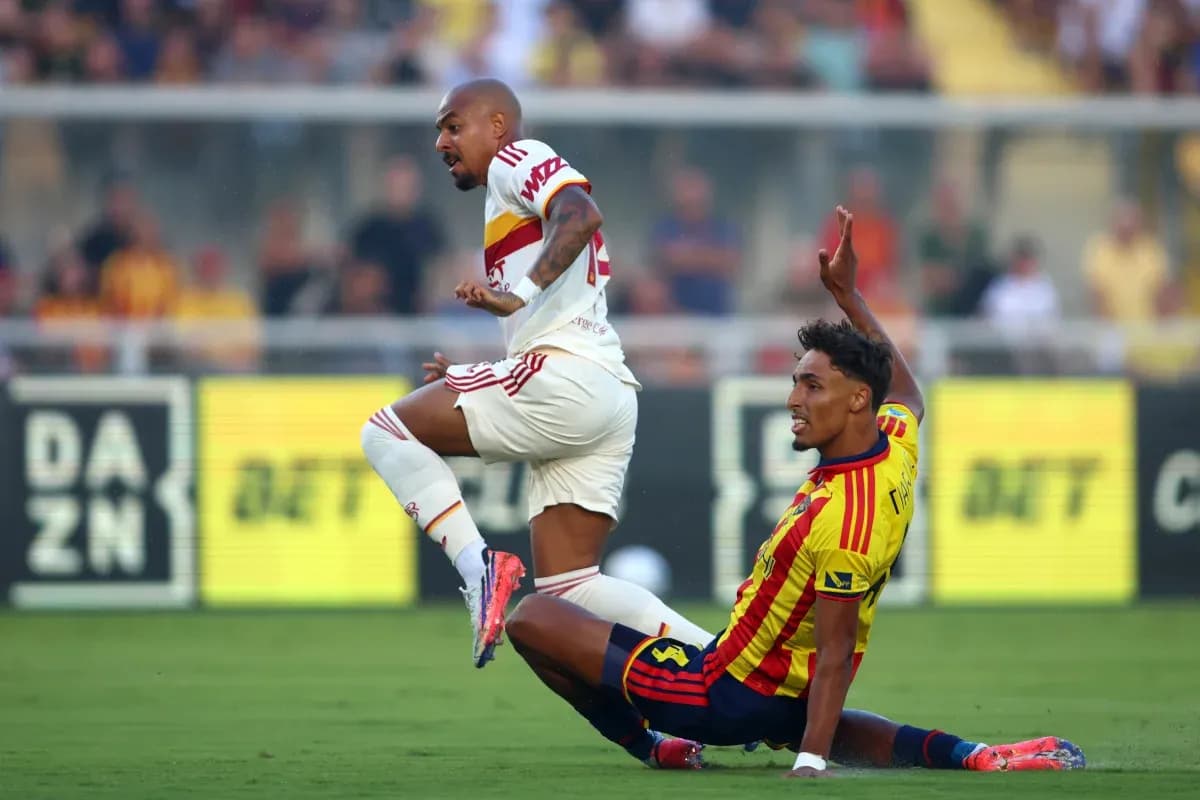
Stadio Via del Mare had the feel of an early-season reality check. On a late August evening in Lecce, Serie A’s Regular Season - 2 fixture pitted a home side still learning its new shape against a ruthless league leader that already looks fully formed. By full time, the scoreboard read Lecce 0–4 AS Roma, a result that crystallised the gulf in both squad construction and tactical maturity.
Heading into this game, Lecce sat 13th with 3 points from 2 matches, their overall goal difference at -2 after scoring 2 and conceding 4. The profile was already split in two: away, they had been efficient and secure with a 2–0 win; at home, they had lost 0–4. AS Roma arrived as early pacesetters, 1st in the table with 6 points from 2 games, 8 goals scored and none conceded overall. Both at home and on their travels, they had won 4–0, underlining a side that travels with its identity intact.
I. The Big Picture – Structures and Seasonal DNA
Eusebio Di Francesco rolled out a 3-5-2 for Lecce, a bolder, more expansive structure than the 4-3-3 they had also used once this season. Wladimiro Falcone was shielded by a back three of Jannik Siebert, Kiko Gaspar and Tiago Gabriel, with a five-man midfield band of Dudu Veiga, Lameck Coulibaly, Ousmane Ngom, Ole Romeny Gorter and Cian Ndaba. Up front, Santiago Pierotti and Willem Geubbels were tasked with stretching Roma’s back line.
Piero Gasperini Gian’s Roma stayed loyal to their 3-4-2-1, the same shape they had used in both league matches so far. Mile Svilar anchored a back three of Diego Ghilardi, Gianluca Mancini and Mario Hermoso. The midfield line of Emanuele Lulli, Kouadio Emmanuel Koné, Bryan Cristante and Wesley Franca sat beneath the creative box of Paulo Dybala and Matías Soulé, with Donyell Malen as the lone striker.
Roma’s seasonal DNA is already clear: a high-output attack (overall 4.0 goals per game, both at home and on their travels) married to an immaculate defensive record (0.0 goals conceded overall). Lecce, by contrast, are split: on their travels they average 2.0 goals for and 0.0 against, but at home they average 0.0 scored and 4.0 conceded. This fixture reinforced that split brutally.
II. Tactical Voids – Absences and Discipline
Roma’s dominance is even more striking given who was missing. Lorenzo Pellegrini (thigh injury), M. Bah (knee injury) and D. Rensch (muscle injury) were all ruled out. That stripped Roma of a key creative midfielder, a dynamic full-back profile and additional depth, yet the system absorbed the losses seamlessly. Cristante’s positional intelligence and Koné’s range compensated in the engine room, while Wesley Franca provided width and ball-carrying from the flank.
Lecce’s squad list showed no documented absences, which makes the structural issues more tactical than personnel-driven. Their disciplinary profile this season hints at a team often chasing games: overall, their yellow cards are evenly spread, with 25.00% in each of the 0–15, 46–60, 61–75 and 76–90 minute windows. That pattern suggests reactive fouling as matches slip away rather than targeted, strategic disruption.
Roma’s card distribution is more front-loaded and controlled: overall, 33.33% of their yellows arrive in each of 0–15, 31–45 and 46–60. They impose themselves early, accept the risk of a booking to set the tone, and then coast through the final half hour with no recorded yellows in the last 30 minutes. Neither side has seen a red card in the league so far, but Roma’s aggression is clearly more calculated.
III. Key Matchups – Hunter vs Shield, Engine Room Battles
The headline duel was Donyell Malen against Lecce’s back three. Malen leads the Serie A scoring charts with 5 goals from 2 appearances, converting 6 of his 9 shots on target into a terrifying threat profile. He’s not just a finisher: 36 passes at 80% accuracy and 7 dribble attempts (3 successful) show a forward comfortable linking and driving at defenders.
Lecce’s defensive hope rested on Tiago Gabriel, who has quietly been one of their standout performers. Across the season he has 1 goal from 1 shot on target, 94% passing accuracy and 4 duels won out of 5, plus 2 tackles and 2 interceptions. In theory, his physical presence and reading of the game could have been the shield against Roma’s spear. In practice, the collective structure around him was too porous. With Lecce conceding 4.0 goals per game at home overall, even a strong individual profile is being drowned by systemic exposure.
Behind Malen, Roma’s creative axis is lethal. Paulo Dybala tops the assist charts with 3 overall, built on 115 passes at 84% accuracy and 7 key passes. He drifts between lines, uses his 6 total shots to keep defenders honest, and has even chipped in defensively with 1 tackle and 1 blocked shot. Alongside him, Wesley Franca adds verticality and work-rate: 74 passes at 81% accuracy, 4 key passes, 6 tackles and 21 duels overall, winning 12. He is both a ball-winner and a conduit, the ideal complement to Dybala’s artistry.
For Lecce, the “engine room” of Coulibaly, Ngom and Gorter simply could not match that blend of control and incision. Without detailed individual stats for those three, the macro numbers tell the story: overall, Lecce concede 2.0 goals per game and fail to score in 50% of their matches. When their midfield line is overrun, the forwards are starved and the back three is exposed to wave after wave.
IV. Statistical Prognosis – Roma’s Ruthless Geometry
Roma’s overall profile after this fixture is that of a title-calibre machine. Two matches, two 4–0 wins, 8 goals scored and 0 conceded overall, clean sheets both at home and on their travels, and no reliance on penalties (0 taken, 0 missed). Their biggest wins – 4–0 at home and 0–4 on their travels – mirror each other, suggesting a game model that travels perfectly.
Lecce, meanwhile, are living a split personality. Overall they have 1 win and 1 loss from 2 fixtures, with 2 goals for and 4 against. On their travels, the numbers are encouraging: 1 win, 2 goals scored, 0 conceded, and 1 clean sheet. At home, the picture is stark: 1 loss, 0 scored, 4 conceded, 0 clean sheets, and 1 match where they failed to score. Their overall goal difference of -2 is entirely a product of what happens at Via del Mare.
In a pure xG-style reading, Roma’s 4.0 goals per game and 0.0 conceded overall point to a side massively outperforming the league in both boxes, even without penalty boosts. Lecce’s 1.0 goals scored and 2.0 conceded overall sketch a team that needs their away solidity to bleed into home fixtures.
Following this result, the narrative is clear: Roma’s 3-4-2-1, powered by Malen’s cutting edge, Dybala’s vision and a back three that has yet to be breached, looks like one of Serie A’s most coherent projects. Lecce’s 3-5-2 remains a work in progress – rich in energy and individual promise, especially in Tiago Gabriel, but tactically fragile against elite, well-drilled opposition.