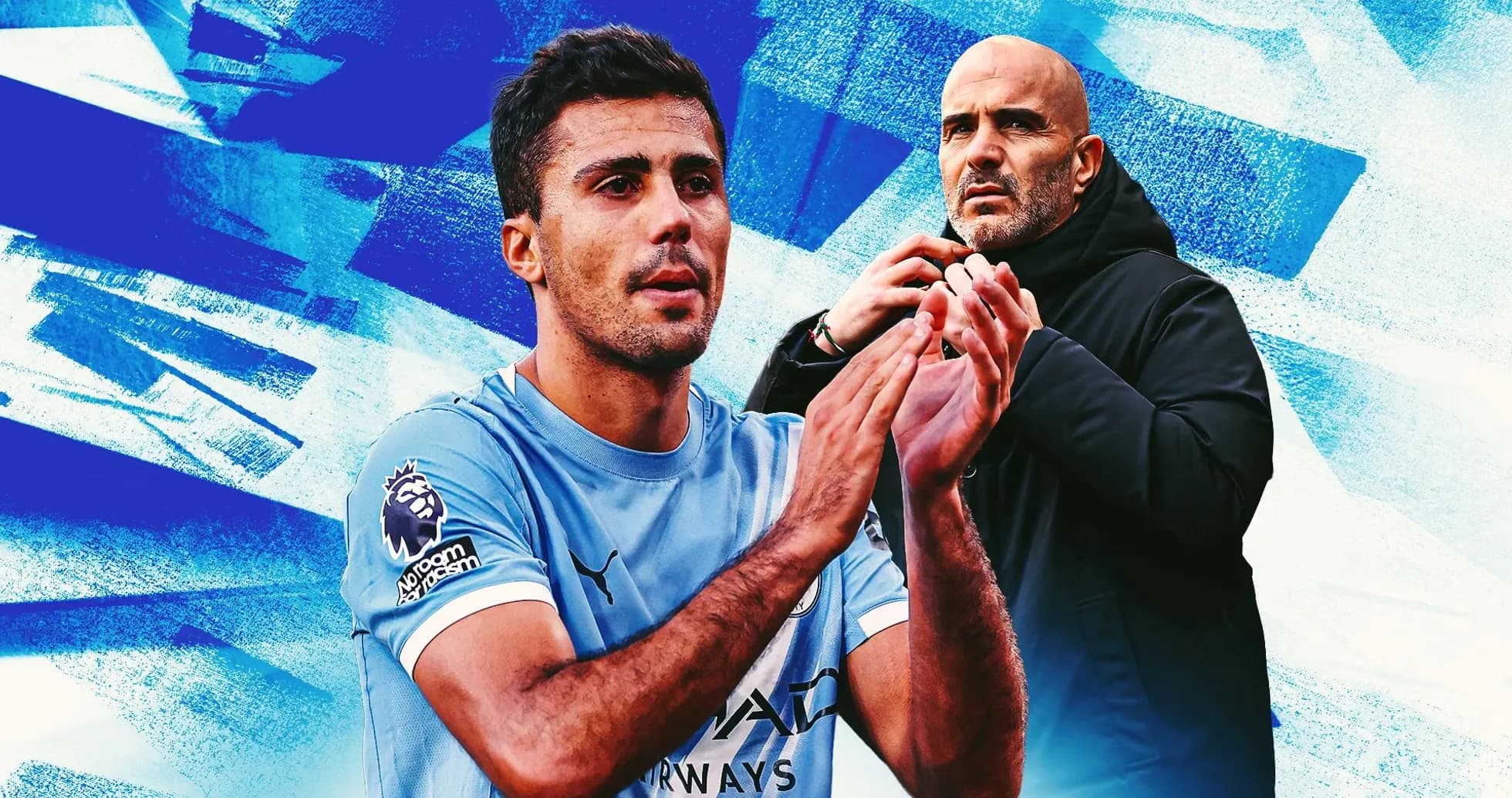
Rodri's Injury: Impact on Manchester City's Future
Rodri has spent the last year learning how quickly a dynasty can wobble.
An anterior cruciate ligament rupture in September 2024 stopped him cold, just weeks before he walked onto the stage in Paris to lift the Ballon d’Or. The timing was cruel. The aftermath, even worse. A string of follow‑up niggles meant Manchester City’s metronome never truly found his rhythm again.
For a club that had grown used to certainty, his absence ripped a hole straight through the middle of Guardiola’s empire.
The injury that broke City’s rhythm
Before that ACL went, Rodri had missed only seven games for City. Seven. Across years of relentless football. He was the constant around which everything else could change.
Once he went down, the numbers told a different story. City, who had dominated the Premier League up to and including the 2023-24 title, have not reclaimed the league since his injury troubles began. Inside the club, they will point to his sporadic availability and the need to gently reintroduce him as a central reason why.
Yet just when questions about his peak began to surface, he answered them on the biggest stage of all.
Guardiola had called it back in October last year: “In the World Cup, he will be the best Rodri, and next season he will be the best Rodri.” The first part of that prediction has already landed.
World champion, irreplaceable heartbeat
In North America this summer, the 30-year-old ran Spain’s World Cup from the base of midfield. He dictated tempo, killed counters, and set Luis de la Fuente’s side on their way to the trophy with the kind of authority only the truly elite can summon. Time and again, attacks broke on him and died. Time and again, Spain moved up the pitch at his command.
If anyone needed reminding, this was it: Rodri is irreplaceable.
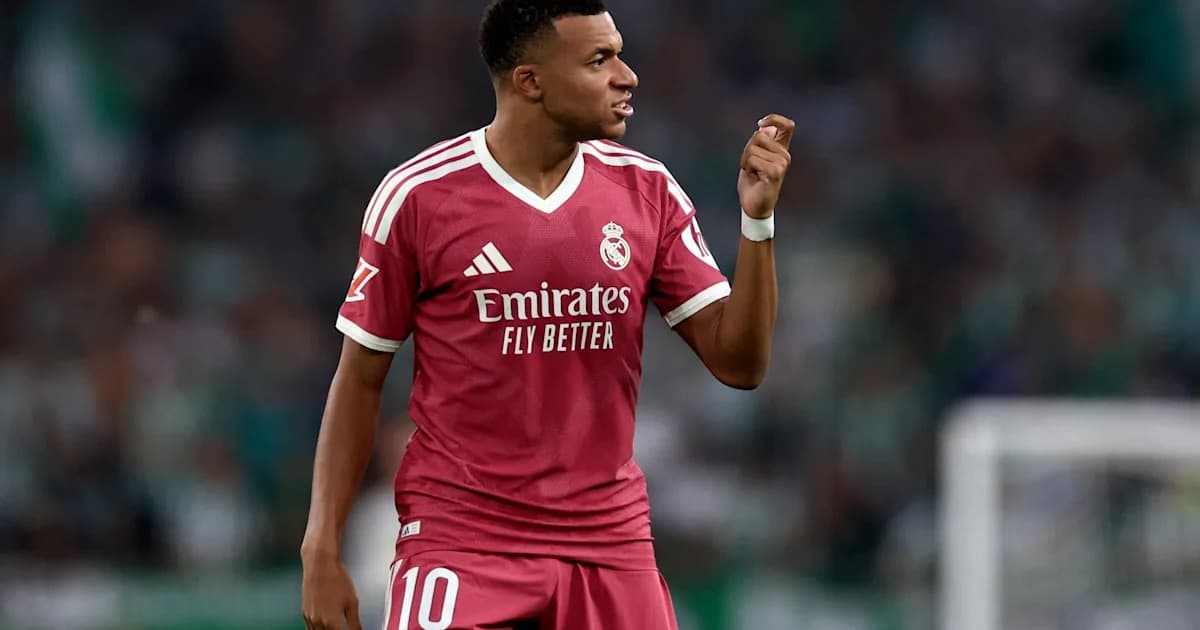
City know that. The problem is he does too. With Guardiola gone and only one year left on his contract, the prospect of a move – potentially to Real Madrid – suddenly feels real. If he senses the end of an era has truly arrived, the temptation to leave at the height of his powers will be difficult to ignore.
Maresca walks into a storm
Into this uncertainty steps Enzo Maresca, Guardiola’s former assistant and, more recently, Chelsea head coach. He understands exactly why the speculation is swirling around his midfield general, even if he refuses to sound rattled.
“First of all I have to say, that around big players there are always speculations so I am not worried about that,” he said at his first press conference back at the City Football Academy. “I think it is normal, also because they won the World Cup, because he is one of the best players.
“I think every manager wants to have Rodri because he is a top player. But now, surgery on Monday [on his back]. He needs a holiday, he needs to rest and recover and then he will be back with us.”
The message is calm. The reality is less so.
Rodri is the piece Maresca can least afford to lose. In a fluid, positional system, he would drift between roles, dropping into defence, stepping into midfield, launching attacks from deep. On top of the tactical value, he is now a World Cup-winning captain, a voice in the dressing room that carries weight.
Strip that out of a squad already bracing for change, and the scale of the rebuild becomes stark.
A thin midfield and a heavy burden
Look beyond Rodri and the £116 million signing Elliot Anderson, and the midfield options start to look alarmingly light for a club with City’s ambitions.
Nico Gonzalez, brought in partly to cover Rodri during his ACL layoff, has been one of the more disappointing chapters of the January 2025 splurge. He never convinced Guardiola, drifted to the fringes, and spent most of the run-in watching from the bench. A sale has been floated.
Tijjani Reijnders began brightly after his £46m move from AC Milan last summer, then faded. By the second half of the season he was a bit-part player, his form dipping as he wrestled with the pace and physicality of English football. City will hope that a year of adaptation pays off, but hope is not a plan.
Then there is the group the club are already prepared to move on. Mateo Kovacic, Rico Lewis and Kalvin Phillips have all reportedly been deemed surplus to requirements. Remove Rodri from that picture as well, and Maresca is staring at a gaping hole in the very area that has defined City’s modern identity.
Anderson, the heir apparent
Amid the concern, one opportunity glows. Anderson did not arrive to hide.
The former Nottingham Forest midfielder, now 23, has climbed fast. Under Thomas Tuchel with England and in the Premier League, he has carved out a reputation as one of the most complete all-round midfielders in the game – aggressive in the tackle, calm on the ball, and creative enough to hurt teams.
The numbers back it up. Last season in the Premier League, he won possession more than any other player (306) and came out on top in the most duels (297). He still led Forest for chance creation, supplying 54 opportunities, including nine big chances, despite the presence of Morgan Gibbs-White. At the 2026 World Cup, he made the joint-most tackles (18), sharing that honour with Rodri himself.
He can destroy. He can build. He can create.
If Rodri does depart, Anderson will see a clear pathway to becoming City’s new No.6, the man around whom Maresca’s structure pivots. It is a daunting assignment, but his profile screams of a player ready to shoulder it.
Bouaddi, the next project?
There may be help on the way. Inside the club, Ayyoub Bouaddi’s name is rising quickly up the agenda.
The 18-year-old Lille midfielder exploded onto the global scene with Morocco at the World Cup, and City have long tracked him as a defensive midfield target. The original plan involved signing him and immediately loaning him back to Ligue 1.
That plan may not survive a Rodri exit.
Reports suggest City could accelerate Bouaddi’s arrival and keep him in Manchester from day one if their Ballon d’Or winner heads to Madrid. For a teenager, it would be a brutal but potentially transformative education.
Leaders gone, safety nets cut
All of this plays out against a backdrop that already looks fragile.
Bernardo Silva, captain last season and one of the dressing room’s most influential figures, has left for Madrid. John Stones, another serial winner and a symbol of the Guardiola era’s tactical innovation, has joined Inter at the end of his contract.
Those departures, combined with Guardiola’s emotional farewell, amount to a seismic shift at the Etihad. The club has lost its manager, its captain, and one of its most intelligent defenders in one swoop. Rodri leaving on top of that would not just be another transfer; it would be a rupture.
City’s hierarchy are acutely aware of the cautionary tales. Manchester United and Arsenal both staggered through years of instability after Sir Alex Ferguson and Arsène Wenger stepped down. City are determined not to repeat that pattern.
Maresca’s mixed spell at Chelsea means there are no guarantees he will glide through this transition. Continuity around him – in style, in structure, and in personnel – is crucial. Rodri, more than anyone, offers that bridge from one era to the next.
Lose him, and the bridge shakes.
Maresca’s gamble with time
For now, the Italian is leaning on familiarity and patience.
“I want to say it is a privilege because the reason why the club decided to go for me, that is a privilege,” he said when asked about stepping into Guardiola’s shoes. “I have said many times, I consider Pep the best coach in the world in the last 20-25 years. It is a challenge.
“Also the history of the manager with many years in the same club, they struggle a bit. Sir Alex, Arsene. But it is also a challenge to do the right things.”
He knows the building from the inside, knows the people, knows the standards.
“Whatever happens,” he added, “time” will be key. He pointed to City’s remarkable stability: three managers in 17 years, from Roberto Mancini onwards, as proof of an organisation that backs its choices and resists panic.
“The organisation is the main thing. This club and organisation has had three managers in 17 years. That is not normal and has not happened often. I am confident that we can continue to do a great job and continue to do the job that has been done in the last 14, 15 years since Roberto Mancini was here.”
The words are measured, the tone relaxed. The schedule will not be.
Next season at the Etihad is shaping up to be a bumpy ride: a new manager, a reshaped dressing room, a fanbase conditioned to relentless success, and a league that smells vulnerability.
Through all of that, one question hangs heavier than the rest: when the first real crisis hits, will Maresca still have Rodri standing in front of his back four, or will City’s new era begin without the player who best embodied the last one?