Rodri's Future: Barcelona's Pursuit, Madrid's Hesitation, and City's Dilemma
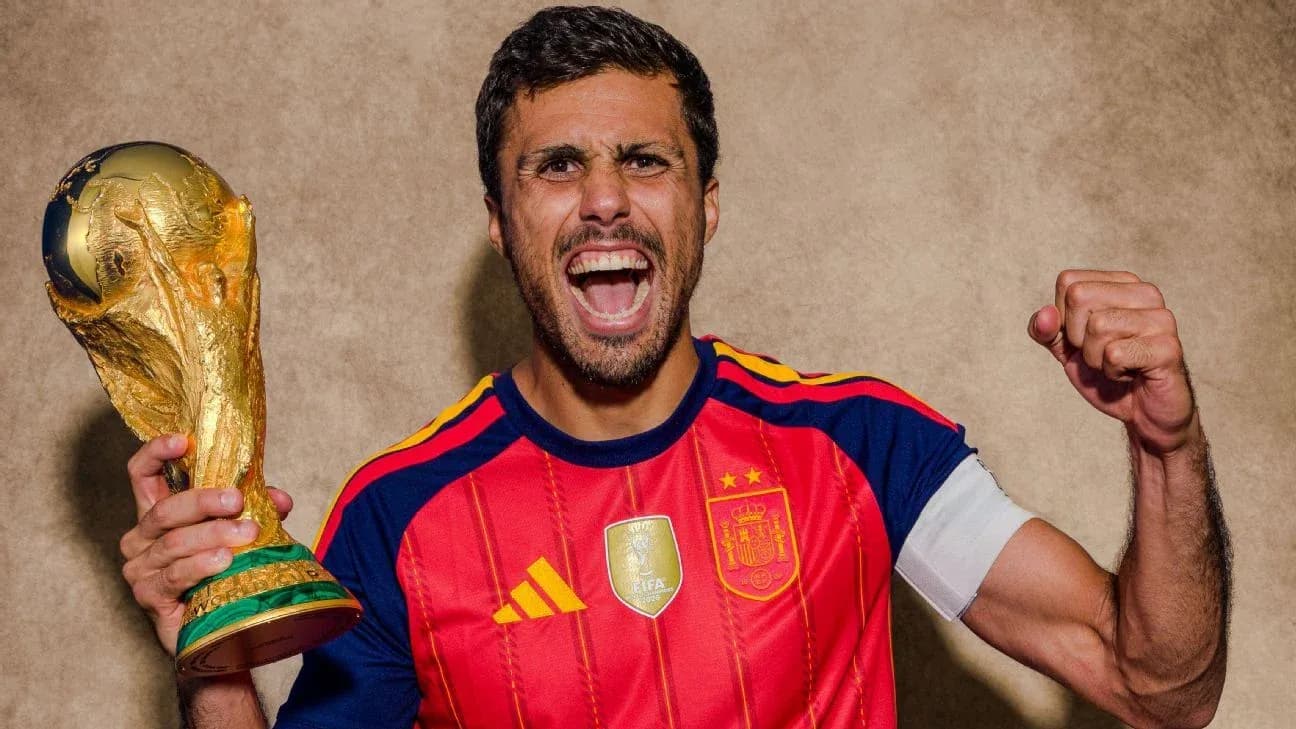
Rodri has spent the past two years collecting football’s biggest prizes as if they were loose change. European champion with Spain. World champion after leading La Roja past Lionel Messi’s Argentina in the World Cup final. Golden Ball winner as the tournament’s standout player. Ballon d’Or winner the following year. Four Premier League titles and the goal that delivered Manchester City their first Champions League.
Now, with one year left on his contract at the Etihad, the most complete holding midfielder of his generation stands in the middle of a three-way tug of war: Barcelona pushing hard, Real Madrid suddenly on the outside, City braced for impact.
Barcelona: from long-term dream to immediate obsession
At Barcelona, Rodri has always been more than a name on a list. He has been the theoretical answer to the question that has haunted the club since Sergio Busquets left for Inter Miami CF in 2023 and retired a year later: who can anchor Barça’s midfield for the next decade?
The honest response until this summer was simple: not Rodri. The Spanish champions went into the window without serious expectations of landing him. The finances were tight, the player was settled at City, and the idea remained just that — an idea.
Then the door creaked open.
As weeks passed and it became clear that a deal for Rodri was not only possible but realistic, the mood inside the club shifted. Hansi Flick, newly installed on the bench, and sporting director Deco didn’t just like the idea. They latched onto it. The injury to Frenkie de Jong forced Barça into the market for a midfielder, and suddenly the “ideal Busquets successor” was no longer a fantasy but a live target.
The pressure finally told when Barcelona discovered that Rodri, given a straight choice between the Camp Nou and the Bernabéu, would prioritise them. That alone felt like a shock. For years, if Rodri returned to LaLiga, the assumption was that he would walk into Real Madrid’s midfield.
The World Cup changed the equation. Rodri had just lifted the trophy surrounded by eight Barcelona players. He had felt the rhythm of a side built around Barça’s core. Flick’s positional, possession-heavy style appealed. So did the quiet lobbying from a cluster of Catalans who have passed through Manchester City’s backroom over the past decade and painted a vivid picture of life back in Catalonia.
Barça moved quickly. Club sources say a loose agreement on personal terms is already in place, and there is growing confidence that the former Villarreal and Atlético Madrid midfielder will be wearing their colours next season. The hard part now is City.
An opening bid was rejected, but negotiations continue over a package that could rise to €70 million. Inside the club, the feeling is clear: this is the deal that can elevate Flick’s side in Europe, even if it means shelving, for now, the search for a top centre-back.
If Rodri walks through the door, he joins a midfield already brimming with talent: Pedri, Gavi, Marc Bernal, Fermín López, Dani Olmo. The question that follows is unavoidable. What happens to De Jong when he returns from injury?
Those are problems Barcelona are happy to have. They believe Rodri is the piece that can turn back-to-back LaLiga titles into something more – a genuine assault on a Champions League they haven’t touched since 2015.
Real Madrid: from cool distance to late regret
Across the country, Real Madrid’s relationship with this saga has been far more erratic.
For months, the line from the Bernabéu was consistent. Rodri wasn’t on the agenda. Not this summer. Not at that price. Not with that injury record. This, despite the fact he seemed tailor-made for them: the best in his position, born in Madrid, a year left on his contract, and a solution to several structural issues in their midfield.
Florentino Pérez, sources say, harboured doubts about his physical reliability. José Mourinho, back in charge, preferred a different profile. Renewing Aurélien Tchouaméni’s contract underlined the club’s faith in what they already had. Rodri never made the final cut on their midfield shortlist.
Then came the World Cup.
Rodri’s dominance in the tournament, his leadership, his durability, stripped away many of those reservations. Inside the club, opinions softened. Director general José Ángel Sánchez and chief scout Juni Calafat, influential voices in recruitment, became open to the idea of bringing him in. By late July, some figures around the club were quietly optimistic.
Rodri wanted to return to Spain. City, though, had their own conditions. They wanted a replacement lined up first. There was no agreement on a fee. Madrid, occupied with other business — negotiations for Yan Diomande, talks over Vinícius Júnior’s renewal — stayed patient. They believed the player’s desire to come home would eventually tip the scales.
Then the landscape changed overnight.
On a Wednesday evening, word filtered through: Barcelona were in. Not circling, not just asking the question. In. And the race, according to some voices, was suddenly a coin toss between Madrid and Barça. Rodri, they were told, was open to both.
Twenty-four hours later, the mood at the Bernabéu darkened. The club now believed they were slipping out of contention. Some inside Madrid felt Rodri had never fully shaken the sense that the hierarchy, and Mourinho in particular, had doubted him. Flick, by contrast, had picked up the phone himself and laid out exactly how he saw Rodri at the heart of his team.
Madrid prepared one last push, but the timing felt wrong. The player’s mind, sources said, was largely made up. His camp were unimpressed that Madrid, who knew his situation for months, had failed to close a deal earlier.
Unless the story takes another sharp turn, Rodri will not be lining up in white. Madrid must now decide whether to pursue an alternative profile — with some reports suggesting Mourinho sees Bernardo Silva as a central option alongside Tchouaméni or Federico Valverde — or to trust what they have and wait for another opportunity in a future window.
Manchester City: calm in public, calculating in private
Back in Manchester, the message from Enzo Maresca is straightforward. Rodri is central to his plans. City want him to stay. They want him to sign a new contract and lead the team into a new era after Pep Guardiola.
Behind the scenes, the picture is more nuanced.
City have known for years that Rodri intended to return to Spain at some point. It was part of the reasoning when they moved for Kalvin Phillips from Leeds United in 2022, a succession plan that never materialised on the pitch.
The club also has a clear principle: they do not like to hold onto players who want to leave. Age, injuries and contract length all matter in their calculations. Rodri is 30, has had recent fitness concerns, and is out of contract next summer. Letting him run that deal down would mean losing a generational midfielder for nothing.
If Barcelona — or, against the odds, Real Madrid — put more than €70 million on the table, City are expected to sit down and talk. They will not be bullied into a cut-price sale, but they are realistic. If the money is right and the player wants out, history suggests they will find a solution.
That triggers another headache. Who replaces him?
The futures of Tijjani Reijnders and Nico González remain uncertain, leaving City’s midfield planning in flux. Elliot Anderson has already arrived from Nottingham Forest, and negotiations continue with Lille over Ayyoub Bouaddi, Morocco’s breakout World Cup star. Those are important moves, but they do not yet add up to a full Rodri succession plan.
City know they cannot leave Maresca short in the middle of the pitch, not in a season that already represents a major transition after a decade under Guardiola. Recruitment staff are actively scanning the market, running checks, updating lists. They are working on the assumption that Rodri could go.
For now, though, the club waits. No acceptable bid has landed. No final decision has been forced. On the surface, there is calm. Underneath, there is a growing sense at the Etihad that this might be the summer when the man who defined their midfield walks away.
If Barcelona find the money, the axis of European football shifts. If they don’t, does Rodri stay to lead a new City, or does someone else step in with a late, decisive move?