
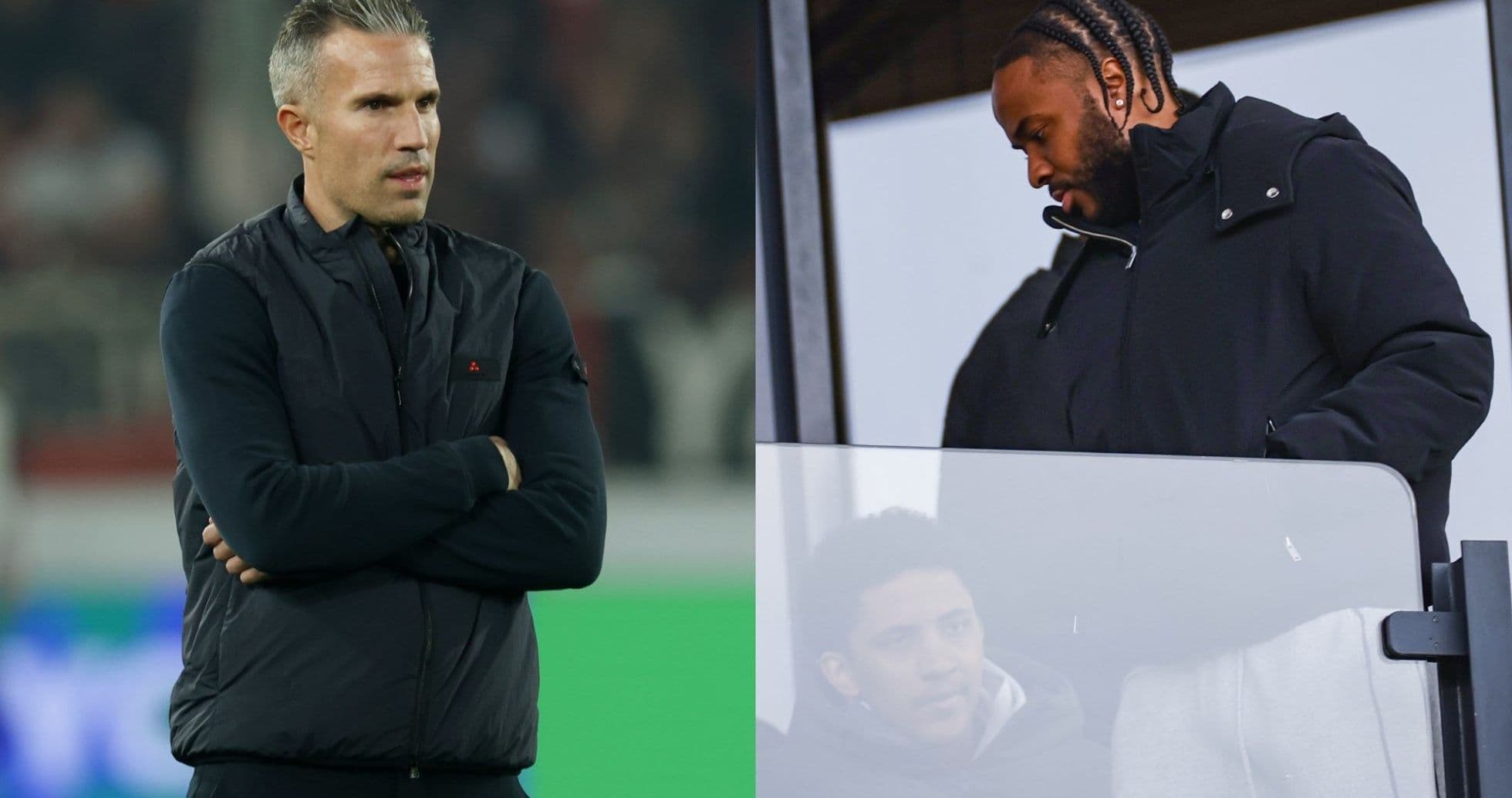
Robin van Persie defends Raheem Sterling amid criticism
Robin van Persie had barely taken his seat in the press room before the conversation turned to Raheem Sterling. Not his goal tally. Not his minutes. The mood.
Sterling had just been given a rare start on the final day, playing more than 70 minutes as Feyenoord wrapped up second place. It was a mixed display: some sharp movement, some loose touches, flashes of the old menace without the end product to match. The kind of performance that usually feeds the cynics.
Van Persie had seen enough of that.
“He was unlucky at times,” he said, choosing his words carefully but with an edge. “But there were also a number of times where he was in a good position. In the second half, for example, when he produced a good run inside.”
Then he went where he really wanted to go. Away from tactics and towards tone.
“Personally, I struggle with the cynicism surrounding him. I think respect is more appropriate. In any case, I don't like cynicism. I can't stand the whole atmosphere around him.”
This wasn’t a manager gently shielding a player after a quiet afternoon. It was a pointed rebuke of the Dutch football culture that has circled around Sterling since he arrived in Rotterdam with a heavyweight reputation and a target on his back.
Van Persie leaned on Sterling’s body of work. Multiple Premier League titles. Almost 100 caps for England. More than a decade at the sharp end with Liverpool, Manchester City and Chelsea. For him, that kind of CV should still mean something.
In his view, it hasn’t.
He argued that the Netherlands has been too quick to dismiss a player who has lived in the pressure cooker for years. Too quick to judge him on a difficult adaptation to the Eredivisie and too slow to acknowledge what he has already done in the game.
“The way we handle this as a footballing nation is really very bad,” Van Persie said, his frustration obvious. “He has scored 200 goals in England and played 82 international matches. And that is regardless of whether you think he plays well or not.”
That line cut to the heart of his argument. Form can dip. Legs can tire. Systems can misfire. But numbers like that do not happen by accident. For Van Persie, they demand a basic level of respect, even in a down year.
He made it clear he wants the conversation to shift. Away from the weekly inquests into Sterling’s current level and towards a broader view of a player who, in his eyes, should be treated as a marquee arrival for the league, not a punchline.
“Everyone has to know their place in that,” he added. “And I think we sometimes go a bit overboard in the Netherlands regarding that.”
Sterling himself offered no public response. He walked past the mixed zone after the win over Zwolle, head down, declining to speak. The noise around him has been loud enough all season; he chose silence.
Van Persie, though, is not leaving it there. He revealed he plans to address the issue directly with Sterling at a post-season team dinner.
“I am going to discuss that with him tonight,” he said. “We are having dinner with the group tonight. Then I will take a moment with him.”
A quiet conversation, away from cameras and headlines, between a coach who knows exactly what it is to live under the microscope and a player who has done it for club and country for more than a decade.
On a night when Feyenoord secured second place, Van Persie’s fiercest defence was reserved not for his own work, but for the reputation of a winger he believes deserves far more than the cynicism that has followed him across the North Sea.



