Real Monarchs Triumph Over The Town in Penalty Shootout
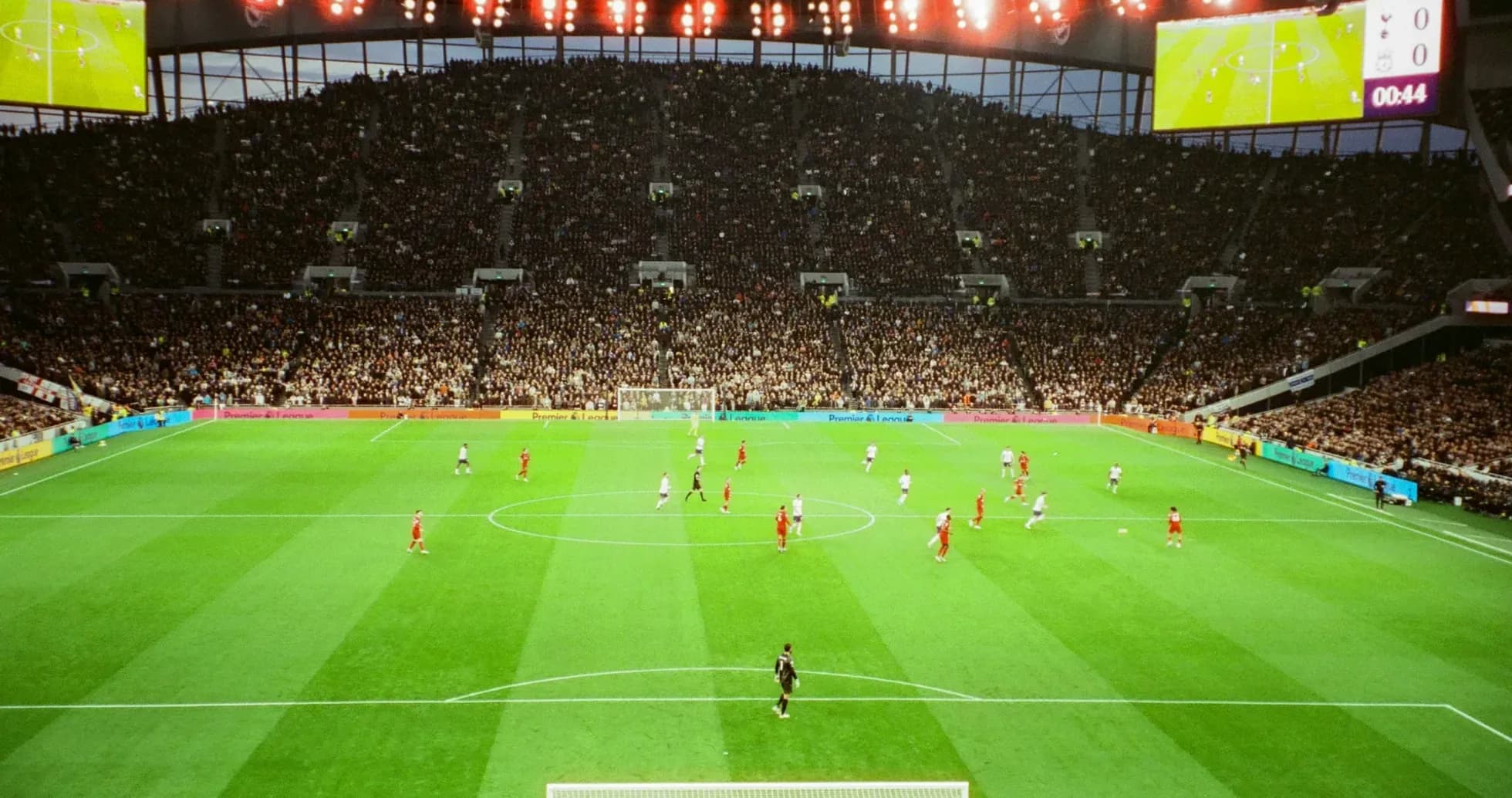
Under the cold lights of Zions Bank Stadium, this MLS Next Pro group-stage tie between Real Monarchs and The Town became a long, attritional duel that only broke in the most fragile of footballing arenas: the penalty spot. After 120 minutes locked at 1–1, the home side edged the shootout 4–3, a result that felt like a minor rebellion against the league table and the broader seasonal trends that had framed the contest.
The Town's Season Overview
Heading into this game, The Town had carried the aura of a contender. Their overall goal difference of 12 was built on 21 goals scored and only 9 conceded, a ruthlessly efficient balance that had them sitting in 2nd place in one conference snapshot and 5th in another, both within the same MLS Next Pro structure. Their attacking profile was clear: 2.3 goals per game overall, powered by a ferocious home output of 3.7 goals per match and a still-dangerous 1.7 on their travels. By contrast, Real Monarchs were a more volatile proposition. With 17 goals for and 16 against overall, their goal difference of -2 reflected a side that lived on a knife edge, winning 5 and losing 4 of their 9 league fixtures, drawing none. At home, they had been solid but not impregnable: 4 wins, 2 defeats, 8 goals scored and 11 conceded in the standings snapshot, yet a slightly more expansive statistical ledger showing 11 home goals for and 11 against, averaging 1.8 scored and 1.8 conceded per match.
Form and Lineups
This clash, officially a group-stage fixture but played with knockout intensity and decided by penalties, therefore felt like a collision of identities. Real Monarchs, coached by Mark Lowry, came in with a form line that read WWWWLLLLW across all recent league matches: a four-game surge followed by a four-game slump, then a stabilising win. The Town, under Daniel de Geer, carried LWLWWLWWD, a streak that spoke of resilience and attacking conviction, albeit with the occasional lapse.
The lineups underlined the contrasting builds. Real Monarchs’ starting XI was a young, fluid group without a declared formation in the data, but the personnel hinted at a side that wanted to play on the front foot. R. Alphin, wearing 99, anchored them from the back, while the defensive line of K. Henry, G. Calderon, R. Mesalles and J. Ottley provided the platform. In front of them, L. O’Gara, L. Moisa and G. Villa formed a busy, combative core, freeing the attacking trident of Lineker Rodrigues, V. Parker and A. Riquelme to probe and stretch The Town’s back line.
The Town’s structure mirrored that ambition but with a slightly more balanced, control-oriented feel. C. Lambe (91) set the tone from the back, with J. Heisner, A. Cano and N. Dossmann providing the defensive spine. Ahead of them, D. Baptista and R. Rajagopal were tasked with linking phases, while K. Spivey and E. Mendoza worked the half-spaces. Up front, Z. Bohane, T. Allen and S. de Flores offered a rotating threat, capable of interchanging positions and attacking from different angles.
Tactical Dynamics
Tactically, the key voids in this match were less about missing names and more about structural risk. Real Monarchs’ season-long inability to keep clean sheets at home (0 home clean sheets, 1 overall, away) had forced them into a proactive posture; they simply do not defend their box passively. Their disciplinary record supported that picture: a flurry of yellow cards in the 46–60 and 76–90 minute windows, each carrying 23.81% of their cautions, showed a team that tackles aggressively when games open up and when fatigue bites. The Town, meanwhile, had their own late-game edge, with 33.33% of their yellow cards arriving between 76–90 minutes. This was a match primed to become more chaotic, not calmer, as the clock ticked on.
In that context, the “Hunter vs Shield” matchup was almost inverted. On their travels, The Town had scored 10 and conceded 8, averaging 1.7 goals for and 1.3 against per away game. Real Monarchs at home had been simultaneously enterprising and fragile, with 11 goals scored and 11 conceded, both at a 1.8 average. The Town’s travelling attack, used to carving out chances, ran into a Monarchs side that accepts risk and trades chances. The result—a 1–1 draw over 120 minutes—felt like a compromise between those identities: The Town could not fully impose their attacking superiority, while Real Monarchs could not quite turn their home aggression into a decisive margin.
Engine Room Battle
The “Engine Room” battle was where the narrative really crystallised. For Real Monarchs, the trio of L. O’Gara, L. Moisa and G. Villa had to function as both playmakers and enforcers, compressing space on The Town’s midfield while still providing enough progression to feed Lineker Rodrigues and Riquelme. Opposite them, D. Baptista and R. Rajagopal had to manage tempo and protect the central lanes. The Town’s season-long defensive numbers—only 10 goals conceded overall, 0.7 per game at home and 1.3 away—suggest a side that usually controls that central corridor. But in a neutralising cup-style tie, Real Monarchs’ willingness to foul, press and disrupt in those key minutes (especially 46–60 and 76–90) blunted The Town’s usual rhythm.
Penalties and Psychological Nuance
Penalties added another layer of psychological nuance. Statistically, Real Monarchs had been flawless from the spot this season: 1 penalty awarded, 1 scored, 100.00% conversion, no misses. The Town, by contrast, carried a more fraught relationship with penalties: 5 taken, 3 scored, 2 missed, for a 60.00% success rate and 40.00% of their attempts wasted. When the shootout arrived, those numbers were no longer abstract. Real Monarchs stepped into the moment with the quiet confidence of a side that had never failed from 12 yards this campaign; The Town had to confront the ghosts of two prior misses. The 4–3 outcome in the shootout felt like the statistical script being followed to its logical conclusion.
Defensive and Expected Goals Picture
Defensively, the broader xG and solidity picture—while not numerically explicit in the data—can be inferred from goals for and against. The Town’s total average of 2.3 scored and 1.1 conceded per match marks them as a side whose expected goals for is likely robust, and whose defensive structure usually suppresses high-quality chances. Real Monarchs, with 1.9 scored and 1.8 conceded overall, profile as a team whose xG for and against are more evenly matched, living off fine margins and momentum swings. Over 120 minutes, that equilibrium favoured the home side’s mentality and penalty pedigree more than The Town’s statistical superiority.
Season Narrative Shift
Following this result, the narrative of both seasons subtly shifts. Real Monarchs, still carrying a -2 goal difference in the league standings snapshot but now buoyed by a high-stakes triumph, reinforce their identity as a high-variance, emotionally charged side that can rise to the moment. The Town, despite their impressive +12 goal difference and top-end ranking, are reminded that knockout football punishes even small inefficiencies—especially from the spot.
In tactical retrospect, this was less a story of formations and more a study in psychological thresholds. Real Monarchs turned their aggressive card profile, their willingness to trade blows, and their perfect penalty record into a weapon. The Town brought the better seasonal numbers, the sharper league form, and the more imposing goal difference—but in the crucible of 120 minutes and a shootout, it was the home side’s nerve and penalty history that ultimately tilted the balance.