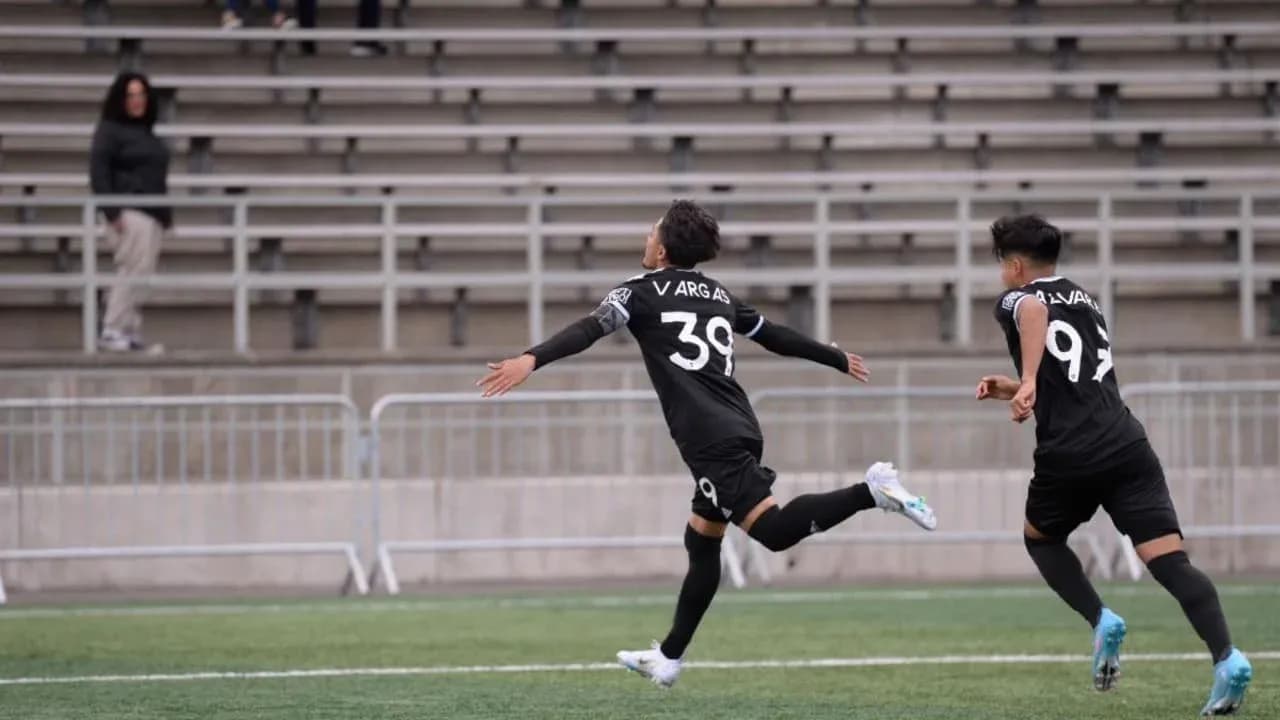
Real Monarchs Dominate Colorado Rapids II in 2–0 Victory
Under the lights of Zions Bank Stadium, Real Monarchs’ 2–0 win over Colorado Rapids II felt less like a surprise and more like a logical extension of where these two squads stand in MLS Next Pro’s 2026 landscape.
I. The Big Picture – Diverging Trajectories
Following this result, the table tells a stark story.
Real Monarchs sit 5th in the Pacific Division with 15 points from 10 matches, their overall record a sharp-edged 6 wins and 4 losses with no draws. Overall they have scored 16 and conceded 16, a perfectly balanced goal difference of 0 that hides a more nuanced reality: at home they are a force, on their travels still a work in progress.
The seasonal statistics sharpen the picture further. Overall, Real Monarchs have played 10 fixtures, winning 6 and losing 4. In total this campaign they have scored 19 and conceded 16, giving them an overall goal difference of +3 when we account for all competitions captured in the stats block. At home, they have played 7, winning 5 and losing 2. At Zions Bank Stadium they have scored 13 and conceded 11, which yields a home goal difference of +2. Their attacking output at home is strong at 1.9 goals per game, while they allow 1.6 on average. This is an aggressive, front-foot side that accepts a degree of defensive risk.
Colorado Rapids II arrive from a very different reality. In the Frontier Division they are 7th with just 3 points from 11 matches, a perfect storm of struggle: 0 wins, 0 draws, 11 losses. Overall in the league they have scored 10 and conceded 26, a goal difference of -16 that is confirmed in the standings. The broader stats block shows 29 conceded in total competitions tracked, with 10 scored, for an overall goal difference of -19. Away from home they have played 5, losing all 5, scoring 4 and conceding 10; that is an away goal difference of -6 and an away defensive average of 2.4 goals conceded per game. Their attack away from home sits at 0.8 goals per match. This is a team that has not yet found a way to manage games, let alone control them.
II. Tactical Voids and Discipline – Edges in the Margins
There is no explicit injury or suspension list, but the disciplinary profiles of both teams sketch the emotional temperature of their squads.
Real Monarchs are yellow-card heavy late in games. A full 25.00% of their yellows come between 76–90 minutes, with another 20.83% between 46–60. They also carry a sharp edge in first halves: 12.50% of yellows in 31–45 and a solitary red card in the 31–45 range, a reminder that their intensity can boil over before the interval. For a coach like Mark Lowry, this means a constant balancing act: keeping the press aggressive without tipping into chaos, especially as legs tire.
Colorado Rapids II, under Erik Bushey, show a different pattern—one that speaks of chasing games and emotional fatigue. They accumulate 26.92% of their yellows in 31–45 and another 26.92% in 61–75, essentially bracketing the middle of matches with rash decisions. Late in regulation, 11.54% of their yellows arrive in 76–90, with an additional 11.54% in 91–105, suggesting that when they are under sustained pressure, discipline frays. More telling still is their red-card profile: one red in each of the 16–30, 31–45, 46–60, and 61–75 windows. That is a spread of dismissals across the heart of matches, indicating systemic problems in managing transitions and frustration.
In a tight fixture, these disciplinary patterns could be decisive. Against a home side that thrives on tempo, any early or mid-game dismissal for Colorado Rapids II would be catastrophic.
III. Key Matchups – Hunter vs Shield, Engine Room vs Enforcer
Without individual scoring charts, the “Hunter vs Shield” battle becomes a clash of collective tendencies.
The Real Monarchs’ attacking “hunter” is their home scoring rate of 1.9 per game, backed by the vertical threats embedded in their XI. The front line and advanced midfield of I. Amparo, L. Moisa, V. Parker and L. O'Gara, supported by the likes of G. Villa and A. Uriostegui, form a fluid band capable of exploiting space between lines. They are not just about raw numbers; the team’s biggest away win of 0–5 and home high of 3 goals show they can explode when the structure in front of them cracks.
The “shield” they are testing is Colorado Rapids II’s away defence, conceding 2.4 goals per game on their travels and 2.6 overall. The back line anchored by C. Harper, K. Sawadogo, J. De Coteau and J. Chan Tack, with K. Starks behind them, has been under siege all season. Their biggest away defeat of 3–1, combined with a home low of 1–4, underlines that once they concede the first, the dam can burst.
In the “Engine Room” duel, Real Monarchs’ midfield triangle—featuring players such as G. Villa and A. Uriostegui—serves as the conduit for transitions. Their job is to turn turnovers into quick vertical attacks, especially at home where the team’s form line of WWWWLLLLWW shows how momentum runs in streaks. When they are on, they are relentless.
Opposite them, the Rapids II central core of L. Strohmeyer, A. Fadal and M. Diop must act as both playmakers and enforcers. Their challenge is enormous: to slow the game, protect a fragile back line, and still feed forwards like S. Wathuta, J. Cameron and A. Harris. Given that Colorado Rapids II have failed to keep a single clean sheet—0 at home, 0 away, 0 in total—they cannot rely on a defensive lock; they must find a way to share possession and reduce wave-after-wave defending.
IV. Statistical Prognosis – xG Shadows and Defensive Reality
We do not have explicit xG numbers, but the scoring and concession patterns act as a proxy.
Heading into this game, a model built on goals for and against would heavily favour Real Monarchs at home. A side scoring 1.9 per game at Zions Bank Stadium and conceding 1.6 is facing an opponent scoring 0.8 away and conceding 2.4. Even a conservative expected-goals framework would tilt toward multiple home chances and at least one high-quality opportunity per half for the Monarchs, while Colorado Rapids II would be projected to create fewer, lower-quality looks.
Add discipline to the equation and the forecast darkens further for the visitors. Their spread of red cards between 16–75 minutes suggests a non-trivial probability of playing long stretches a man down, especially under sustained pressure from a team that already forces late-game yellow surges from opponents.
Following this result, the 2–0 scoreline feels almost restrained relative to the statistical gulf. Real Monarchs’ attacking DNA, home comfort and streaky but potent form aligned perfectly against a Colorado Rapids II side still searching for its first point, its first clean sheet, and, in many ways, its identity.