
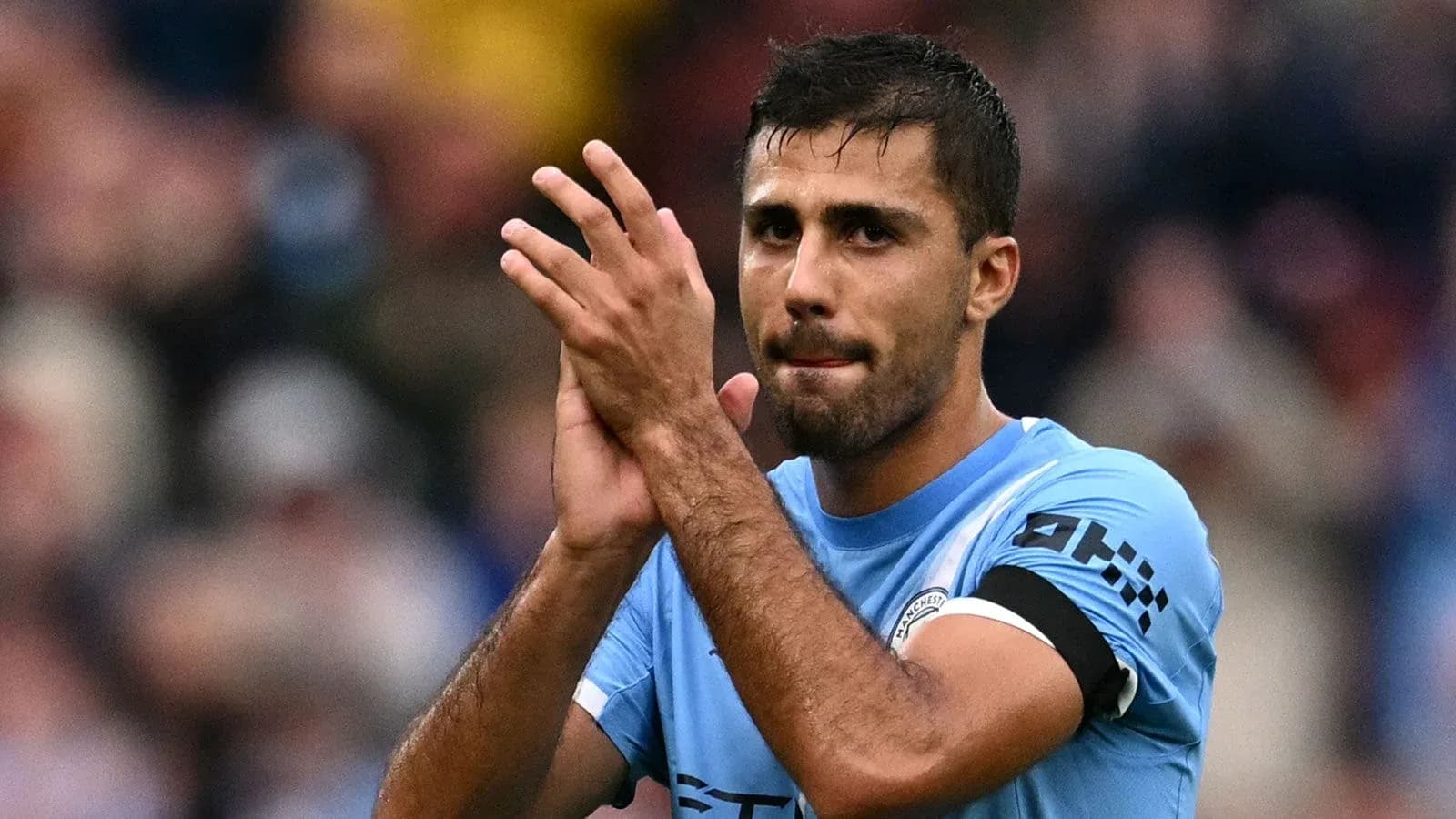
Real Madrid's Midfield Crisis: Rodri's Missed Opportunity
Florentino Pérez promised a galáctico. He has ended up with a headache.
A little over two months ago, as the Real Madrid presidential campaign turned into its usual theatre, Pérez stepped forward with a flourish: a “very big offer” was coming, he said, for a player of the calibre of Cristiano Ronaldo or Kaká. At least €150 million, he pledged. A statement of intent, a warning to the rest of Europe, and especially to Barcelona.
The reality has been far more prosaic. Michael Olise never came from Bayern Munich. The officially confirmed bid for Atlético Madrid striker Julián Álvarez went nowhere. The only major arrival has been Yan Diomande from RB Leipzig, for a base fee of €125m – another forward in a squad already loaded with attacking talent.
And the one thing Real Madrid have truly needed for two years? Still missing.
The hole in the middle
Since the break-up of the legendary Toni Kroos–Luka Modric–Casemiro axis, Madrid have been crying out for a world-class holding midfielder. Not a converted No. 8, not a stopgap. A specialist. Someone to sit, screen, and dictate.
They have instead doubled down on the fireworks. Kylian Mbappé, Vinícius Júnior and now Diomande promise goals and chaos, but behind them there is no conductor. The plan, as it stands, again leans on Aurélien Tchouameni and Fede Valverde in roles that do not quite fit. Both are elite players. Neither is that metronomic pivot the side has lacked since Casemiro left.
Rodri was supposed to be the solution.
The Manchester City midfielder, born in Madrid and once of Atlético, had already opened the door in spring. His past at the Metropolitano, he said, would not stop him from playing for Real. Others had crossed that divide before. Madrid’s hierarchy took that as encouragement and moved.
Now, though, the story has twisted in the cruellest possible way for them.
Rodri has turned down Real’s offer. His agent, Pablo Barquero, has made that clear. All signs now point towards a move not just back to Spain, but to Barcelona.
For Madrid, it is a brutal blow. They were convinced the World Cup’s outstanding player could be the cornerstone of José Mourinho’s new era, the piece to drag them out of a rare trophyless season. Instead, their greatest rival has stepped in and is about to walk away with the prize.
A coup in Catalonia
If the transfer is completed as expected, Barcelona will have landed one of the most significant signings of the post-Messi era.
Hansi Flick’s side, who have humiliated Madrid twice in a row in La Liga, have been limping through yet another long-term injury to Frenkie de Jong. The need for a top-level organiser at the base of midfield has been obvious. Rodri fits that brief perfectly – and he will walk into a dressing room stacked with the same Spanish core that just became world champions with him.
It is not just a footballing upgrade. It is a psychological strike.
Madrid lose the midfielder they saw as the anchor of their rebuild. Barcelona gain a player who can define their style for the next few years. The symbolism is impossible to ignore: the man whose 2024 Ballon d’Or victory Real Madrid refused to recognise by boycotting the gala is now on his way to the Camp Nou.
Two years ago, Rodri’s name was enough to trigger fury in the Bernabéu boardroom. Now he is about to wear the shirt they hate most.
An old feud, a new flashpoint
The Rodri saga slots neatly into a rivalry that has rarely felt this poisonous.
The Negreira scandal has already dragged relations between the clubs to a historic low. Real Madrid joined the criminal proceedings against Barcelona as a private prosecutor, and from that moment every refereeing decision in El Clásico has been filtered through suspicion. Each controversial call becomes another chapter in a case file written in outrage.
Barça president Joan Laporta responded by branding Madrid the “club of the regime”, accusing them of having been favoured by referees historically and still benefiting today. That accusation detonated what little institutional peace remained.
Pérez and Laporta had worked closely in the shadows on the Super League project. That alliance is gone. The traditional joint presidents’ lunch before Clásicos has disappeared with it. Madrid have repeatedly declined to offer Barcelona the customary place of honour in the VIP box. Every gesture is loaded.
The transfer market has become another battlefield. When Pérez trumpeted his promise of a record signing, Real later confirmed they had tabled a €150m bid for Julián Álvarez, only for Atlético to reject it. Barcelona, long seriously interested in the Argentine, were left looking foolish. By going public, Madrid effectively raised the price for a player they did not sign – and made sure their rivals knew it.
Now the roles are reversed. This time, it is Madrid watching as Barcelona close in on the very midfielder they had earmarked as the cornerstone of Mourinho’s project.
Madrid’s misfire
Strip away the politics and the pattern at Real is stark.
Olise, Álvarez, Diomande. Attack, attack, attack. The recruitment strategy has veered towards spectacle while the most glaring structural flaw remains untouched. A team that already boasts Mbappé and Vinícius Júnior has added another forward for over €100m, yet still lacks the player to knit everything together.
Rodri would have been that man. A Madrid-born midfielder, comfortable in the Bernabéu spotlight, with the tactical discipline and passing range to control games on his own. Losing him to any club would have hurt. Losing him to Barcelona cuts far deeper.
For now, Real are left with questions. Can Tchouameni be moulded into that pure holding role? Can Valverde, with his energy and versatility, grow into a position that demands constant positional restraint? The evidence so far says no. Both excel when given freedom to step forward, not when chained to the centre circle.
Mourinho’s second Madrid spell was supposed to be defined by steel and structure. Instead, the spine of his team is still under construction, and the most obvious brick has just been snatched away.
What comes next?
The rivalry will find its next flashpoint soon enough. It always does. Another refereeing storm, another boardroom barb, another transfer tug-of-war.
But this episode cuts to something more fundamental: identity.
Barcelona, despite financial strain and ongoing legal turbulence, are about to secure the kind of midfielder their footballing philosophy has always prized. Real Madrid, the club of galácticos and grand gestures, have once again spent big on the front line while leaving a chasm in the middle of the pitch.
Rodri’s choice underlines that contrast. It also raises a simple, uncomfortable question in Madrid: with the window ticking down and the midfield still unbalanced, how do they respond when the season starts and the real battle with Barcelona moves back onto the grass?



