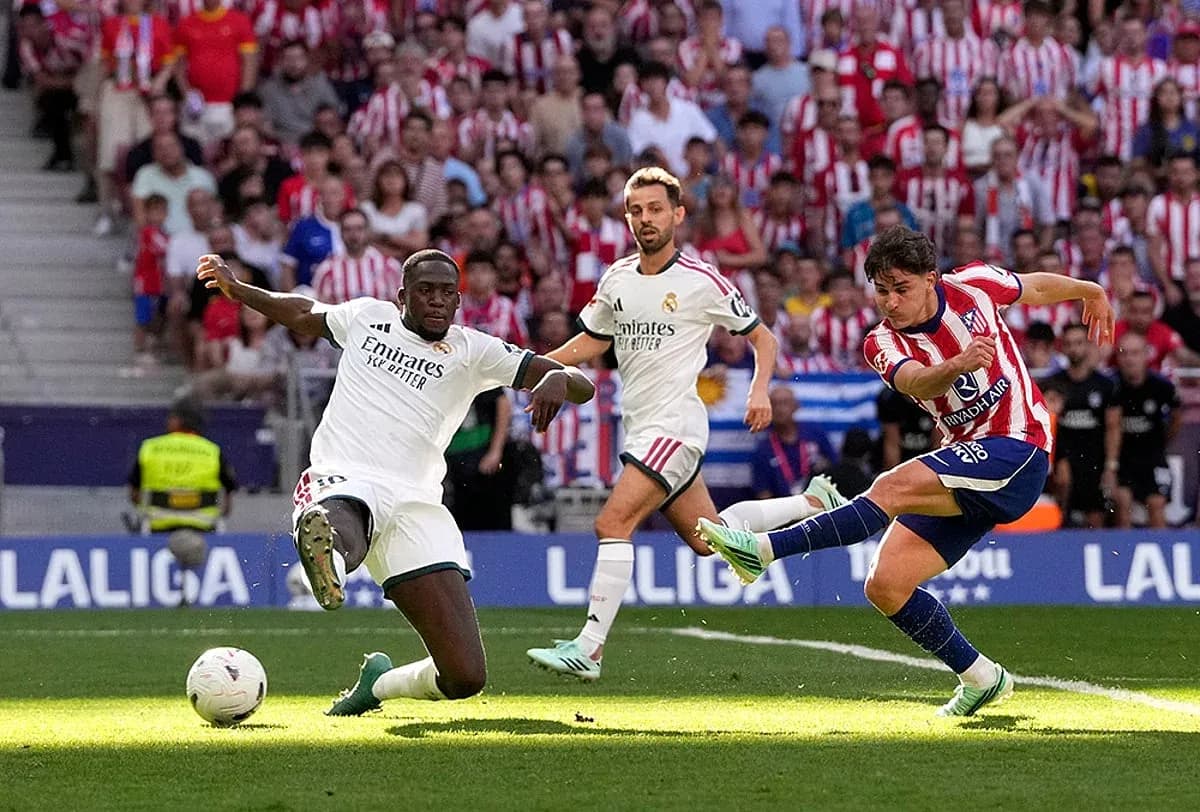
Rayo Vallecano vs Espanyol: A Tactical Battle in La Liga
Under the Vallecas floodlights, this felt like a mid-table duel with something more personal at stake. Rayo Vallecano and Espanyol arrived level on 38 points, 11th and 12th respectively in La Liga after 32 matches, carrying very different footballing identities into a tight, nervy evening. By full time, a 1–0 home win had underlined why Vallecas remains one of the league’s trickiest stops and why Espanyol’s season continues to oscillate between promise and fragility.
I. The Big Picture – Vallecas as Fortress and Filter
Heading into this game, the numbers had already drawn the outlines of the story. Rayo’s season goal difference stood at -8, with 30 goals for and 38 against overall, but that blunt statistic hides a stark split. At home, they had conceded only 11 goals in 16 matches, an average of 0.7 per game, while scoring 18 at 1.1 per match. Vallecas has become a filter: it amplifies Rayo’s strengths and masks their away frailties.
Espanyol, by contrast, arrived as a side that scores consistently but bleeds at the back. Overall they had 37 goals for and 49 against, a goal difference of -12, with away averages of 1.1 scored and 1.6 conceded per match. On their travels they had won 4 of 17 but lost 8; they are dangerous enough to hurt you, yet structurally porous enough to be hurt often.
In this context, Inigo Perez’s choice of a 4-2-3-1 was a statement of continuity rather than surprise. Rayo have used that shape 19 times this season, and the XI here mirrored their statistical DNA: a disciplined double pivot, aggressive full-backs, and a band of three attacking midfielders tasked with tilting the game into Espanyol’s half.
Manolo Gonzalez answered with a 4-4-2, one of Espanyol’s staple systems (10 uses this season), looking to balance their attacking instincts with enough structure to survive Rayo’s surges. But at Vallecas, 4-4-2 can quickly become 4-5-1 under pressure, and that dynamic would define long stretches of the match.
II. Tactical Voids – Suspensions, Injuries and the Shape of the Game
The absences list told its own tactical tale before a ball was kicked. Rayo were stripped of experience and verticality: A. Garcia, F. Lejeune, Luiz Felipe, D. Mendez, N. Mendy and R. Nteka were all missing, several through injury, others through yellow-card suspensions. For a side that already struggles for goals overall (0.9 per match in total), losing A. Garcia’s creativity and Lejeune’s distribution from the back could have dragged them into sterile dominance.
Instead, Perez leaned into flexibility. Pathé Ciss, listed as a midfielder in his season profile, dropped into defence, forming a back line with A. Ratiu, J. Vertrouwd and P. Chavarria ahead of goalkeeper D. Cardenas. Ciss arrived in this fixture as one of La Liga’s most combative presences: 43 tackles, 12 successful blocks, 23 interceptions and 2 red cards this season. His deployment at centre-back gave Rayo a ball-playing anchor who could step into midfield when needed, but also a disciplinary risk in a match bound to be tight.
Espanyol’s own voids were more surgical but still significant. U. Gonzalez and J. Puado were both absent, the former suspended, the latter with a knee injury. Without Puado’s movement, the front line of K. Garcia and R. Fernandez Jaen had to work harder to stretch the pitch, relying heavily on wide supply from Pere Milla and T. Dolan.
Card trends for both teams foreshadowed a spiky encounter. Rayo’s yellow cards cluster between 46-75 minutes (18.60% from 46-60, 19.77% from 61-75), while Espanyol’s disciplinary storm usually hits late, with 29.87% of their yellows between 76-90 minutes. In a match where a single goal was always likely to decide it, the risk of a late booking or dismissal was not abstract; it was structural.
III. Key Matchups – Hunter vs Shield, Engine Room vs Enforcer
The “Hunter vs Shield” duel centred around Jorge de Frutos and Espanyol’s fragile defensive record. De Frutos came into this fixture as Rayo’s leading scorer in the league with 10 goals and 1 assist from 30 appearances, backed by 41 shots (23 on target). Operating as the right-sided attacker in the 4-2-3-1, he had the perfect platform: an Espanyol side conceding 1.6 away goals per game, with their heaviest away defeat a 4-1 collapse.
Behind him, Isi Palazon, starting centrally in the three, offered both incision and edge. His season line – 3 goals, 3 assists, 37 key passes, 47 dribble attempts with 23 successes – makes him Rayo’s creative metronome, but also a disciplinary flashpoint. He has collected 9 yellow cards, one of the highest tallies in La Liga, and his fouls drawn (50) versus fouls committed (34) illustrate a player who lives at the emotional and physical edge of games. Against an Espanyol midfield that can be rash, his capacity to provoke and manipulate contact was a tactical weapon.
Espanyol’s answer in the “Engine Room” was Pol Lozano and Edu Exposito. Lozano, with 867 passes at 87% accuracy, 34 tackles and 21 interceptions, is the side’s positional compass. Exposito, meanwhile, is their creative outlet: 6 assists, 68 key passes and 24 successful dribbles mark him as one of the league’s most productive playmakers from deep. His 2 successful blocks this season underscore his willingness to work without the ball, a necessity against a Rayo side that compresses space between the lines at home.
On the flanks, A. Ratiu versus Pere Milla was another key trench. Ratiu’s season numbers – 60 tackles, 6 blocked shots, 36 interceptions, 100 dribble attempts with 52 successes – define him as an all-action modern full-back. Milla, with 6 goals, 31 key passes and 45 shots (19 on target), is Espanyol’s late-arriving threat from wide. That duel set the tone: could Ratiu pin Milla back with aggressive overlaps, or would Milla force him into deeper, reactive positions?
IV. Statistical Prognosis – Why a Tight Rayo Win Always Loomed
Rayo’s season scoring pattern made a low-scoring, late-decided contest likely. Only 6 of their 32 matches had gone over 1.5 goals for them, and just 4 over 2.5. They fail to score in 12 matches overall, but when they do, it often comes in waves around half-time and late on: 32.26% of their goals arrive between 31-45 minutes, and 22.58% between 76-90. Espanyol’s defensive averages away from home, and their habit of conceding heavily on bad days, suggested that if Rayo could keep the game level and controlled, the decisive moment would probably belong to the hosts in one of those windows.
Defensively, Rayo’s home record – 7 clean sheets in 16 at Vallecas, and only 11 goals conceded – stacked up well against an Espanyol attack that, while consistent, is not ruthless. Espanyol’s own clean sheet count away (5) hinted they could drag the match into a tactical stalemate, but their overall concession rate of 1.5 goals per game in total left them walking a thin line.
Overlay expected goals logic on this, and the outline sharpens: Rayo’s compact block, disciplined home numbers and structured 4-2-3-1 against an Espanyol side that creates but leaves gaps. In such a matchup, the likeliest xG profile skews towards a narrow home edge – something like 1.1–0.8 in Rayo’s favour – and that is exactly the kind of game this became: tight margins, one decisive action, and a Vallecas evening that confirmed why mid-table in La Liga is often decided not by chaos, but by structure and small, well-exploited weaknesses.