
Raphinha Calls Out ‘Robbery’ as Barcelona Exits Champions League
Raphinha did not kick a ball in Barcelona’s Champions League quarter-final against Atletico Madrid. Injured, he watched it all unfold from the sidelines. That distance did nothing to cool his anger.
When it was over – Atletico through 3-2 on aggregate, Barcelona out and fuming – the Brazilian stepped in front of the microphones and let rip.
“For me, this match was a robbery. Not just this match but the other ones as well,” he told reporters after the second leg, his words cutting through the post-game noise.
A tie turned on cards and controversy
Barcelona had dragged themselves back into the contest in thrilling fashion. Lamine Yamal and Ferran Torres wiped out Atletico’s first-leg lead inside 24 minutes of the return, turning a tense night into a statement of intent. For a brief spell, it looked like the old European Barcelona again: front foot, ruthless, alive.
Then came the punch in the gut.
Ademola Lookman struck to tilt the tie back Atletico’s way, restoring their aggregate advantage and tightening the screw on a Barcelona side already carrying the scars of the first leg. From that point, every decision, every whistle, felt heavier.
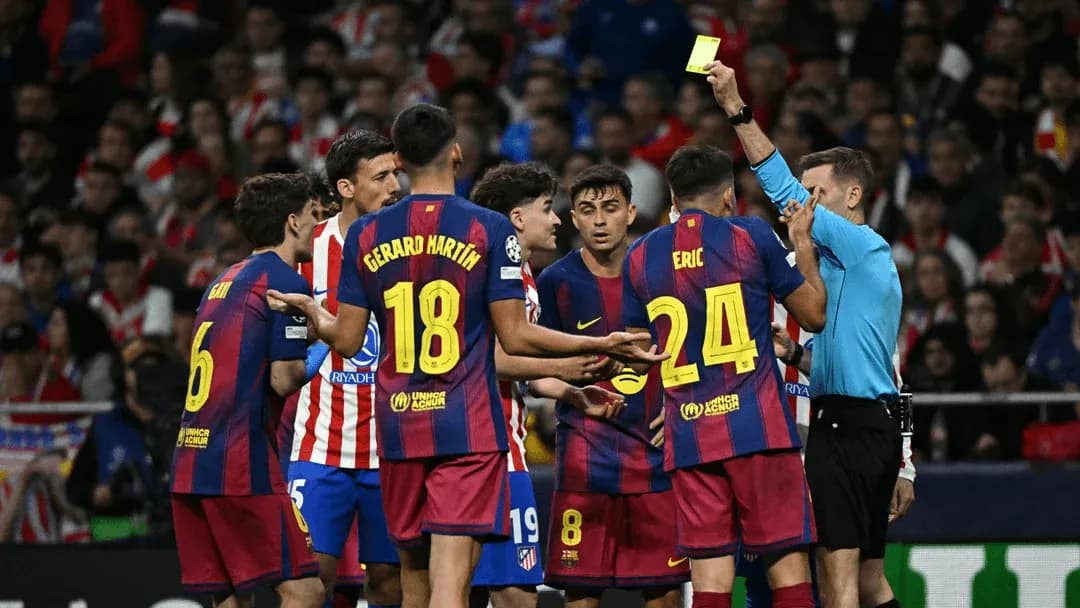
The breaking point arrived in the second half. Eric Garcia hauled down Alexander Sorloth as the Norwegian surged through on goal. The referee initially reached for yellow. VAR stepped in, the card turned red, and Barcelona were reduced to 10 men with the season hanging by a thread.
It was a familiar nightmare. In the first leg, Pau Cubarsi had been dismissed for clipping Giuliano Simeone from behind just before half-time. Atletico went on to win 2-0 at Camp Nou, and Barcelona went into the second leg knowing they were already chasing a game that had been shaped by discipline and decisions as much as tactics.
For the first time in their history, Barcelona had a player sent off in both legs of a Champions League knockout tie. Raphinha watched all of it, helpless, and saw a pattern.
“The refereeing was really bad, the decisions [Turpin] makes are unbelievable,” he said, singling out the French official in charge of the second leg. “I don't know how many fouls Atletico made, but the referee didn't give them a single yellow card.”
The numbers back his frustration, if not his conclusions. Atletico committed 15 fouls in the second leg and escaped without a single booking. Barcelona, who made seven fewer fouls, finished with Gavi cautioned and Garcia sent off.
The handball that lit the fuse
Raphinha’s anger did not begin with Garcia’s dismissal. It had been simmering since the first leg and a bizarre moment involving Marc Pubill.
With play apparently restarted by goalkeeper Juan Musso from a goal-kick, Pubill stopped the ball with his hand in a situation that left Barcelona players demanding a red card. Pubill received only a booking, one of three Atletico cautions on the night, but the Catalan club were incensed by what they saw as a clear denial of a goalscoring opportunity and a glaring case for VAR intervention.
Barcelona went as far as filing a formal complaint to UEFA over what they described as a grave lack of VAR involvement. On Tuesday, European football’s governing body dismissed the protest as “inadmissible”, closing the door on any hope of retroactive justice.
That only deepened the sense of injustice inside the dressing room.
Raphinha pointed to that incident as emblematic of a tie he believes slipped away not just on the pitch, but in the referee’s room and the VAR booth.
“I really want to understand why they're so afraid that Barcelona will come and win,” he said, the accusation hanging in the air. It was not a cool, diplomatic assessment. It was raw, emotional, and very public.
‘You have to work three times as hard’
For all the fury, there was also a hint of resignation in Raphinha’s words. A feeling that Barcelona had been fighting on two fronts: against Atletico, and against the whistle.
“It was tough, especially when you realise you have to work three times as hard to win the match,” he admitted. “I think this tie was quite misleading, in my view. I think everyone can make mistakes; everyone is human.”
That last line softened the blow slightly, an acknowledgment that errors happen. But the broader message was clear: in Barcelona’s eyes, the key calls across 180 minutes had tilted decisively in Atletico’s favour.
The red cards to Cubarsi and Garcia. The absence of cautions for Atletico in a foul-heavy second leg. The Pubill handball. The failed complaint to UEFA. Piece by piece, they built a narrative of a quarter-final that slipped away under a cloud.
Atletico, of course, will see it differently. They defended ruggedly, took their chances through Lookman, and walked away with a 3-2 aggregate win that sends them into the last four. History will show that Diego Simeone’s side advanced; it will not record Raphinha’s fury in the small print.
But inside Barcelona, the feeling will linger. A tie they believed was “misleading”, a campaign ending with two red cards, and a sense that on Europe’s biggest stage, they were left asking not just how they lost – but who, in their eyes, helped decide it.



