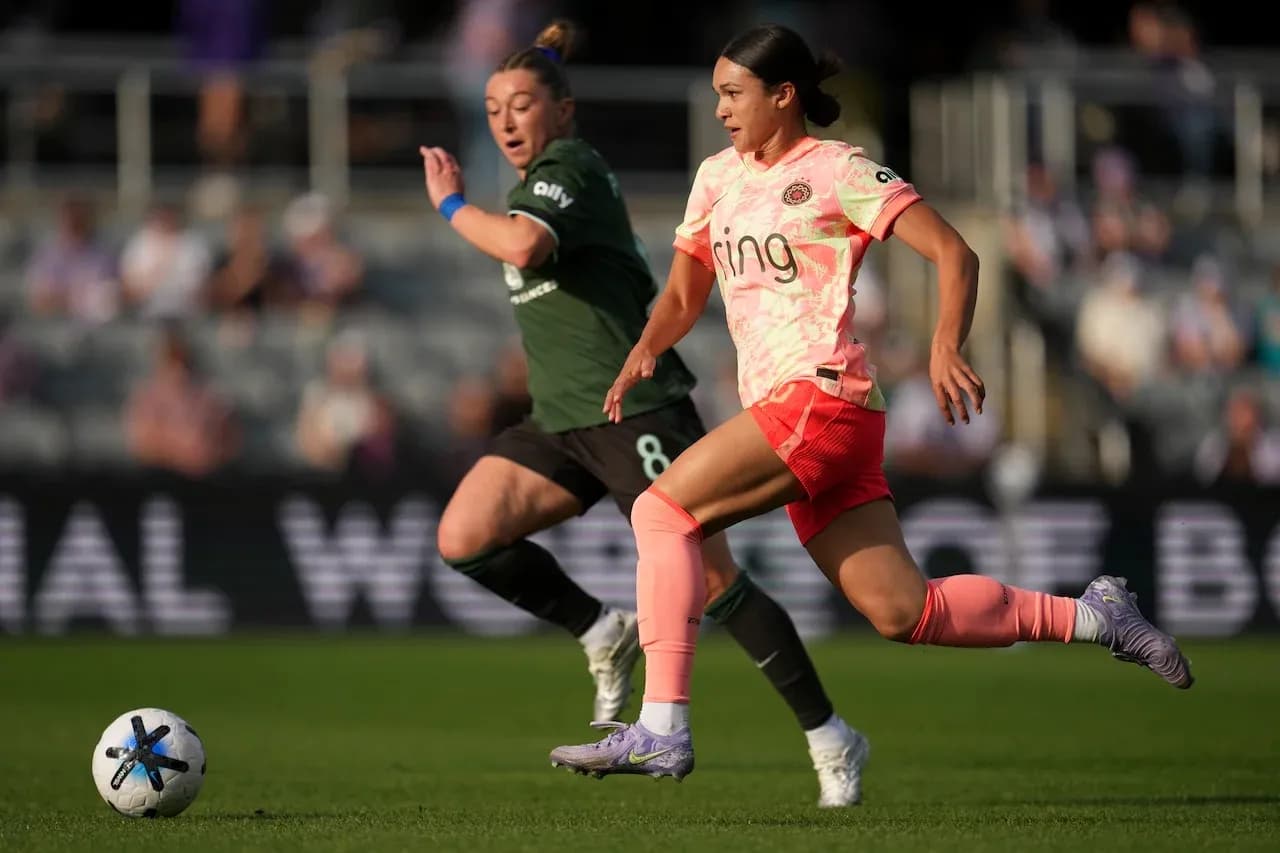
Racing Louisville W Dominates Portland Thorns W 3–1
Racing Louisville W’s 3–1 win over Portland Thorns W at Lynn Family Stadium was built on territorial control, volume of shots, and superior penalty-box management rather than sheer possession or passing dominance. With both sides splitting the ball 50–50, Beverly Yanez’s team turned their share into 16 shots (9 inside the box) and 4 corners, while Robert Vilahamn’s Thorns mustered only 9 attempts and no corners. The match, a Group Stage fixture in the NWSL Women season, was level 1–1 at half-time but steadily tilted toward Louisville as they layered pressure, tightened their defensive line, and used targeted substitutions to control the second half.
I. Executive Summary
Portland struck first on 6 minutes, but Louisville equalised quickly and then gradually imposed their structure. The home side’s shot volume (16–9) and blocked-shot count (7–1) underlined both their attacking intent and their commitment to collapsing around their own box when required. Despite Portland’s marginally better pass completion (82% to 80%), they struggled to convert circulation into penetration, repeatedly funneled into central traffic and denied wing-based overloads. Louisville’s lone booking reflected an aggressive but largely disciplined pressing scheme, while Portland’s clean card record owed more to their inability to sustain duels in advanced areas than to defensive control.
II. Scoring Sequence & Disciplinary Log
The event sequence is clear and linear:
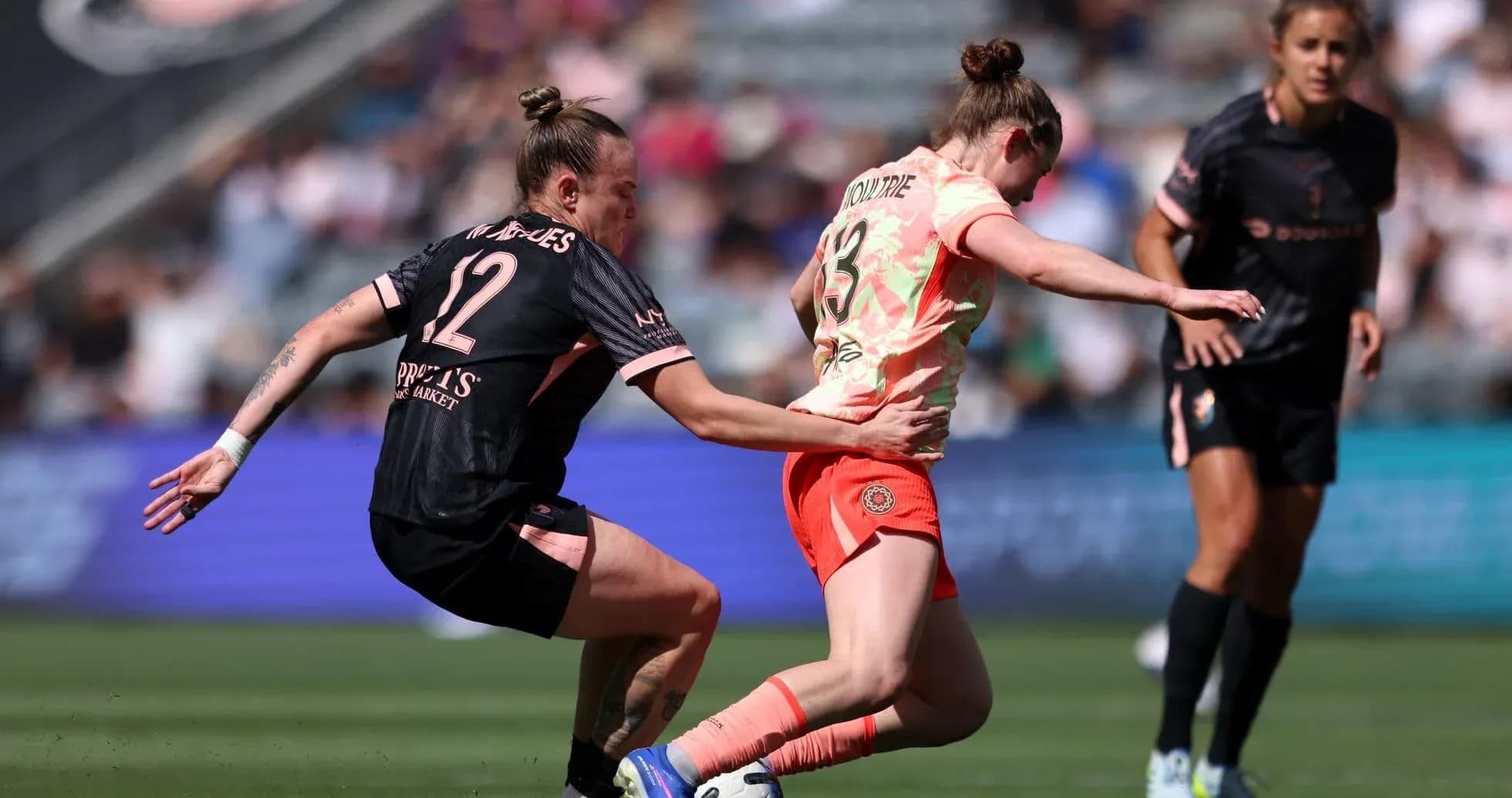
- 6' Sophia Wilson (Portland Thorns W) opened the scoring with a Normal Goal, assisted by Olivia Moultrie. Portland exploited an early phase where Louisville’s midfield spacing was loose, with Moultrie finding a pocket to supply Wilson between the lines.
- 14' Katie O'Kane (Racing Louisville W) equalised with a Normal Goal, assisted by Lauren Milliet. This response came from Louisville’s first sustained spell of pressure, Milliet stepping high from the back line to connect play and release O'Kane into a central lane.
Discipline (all cards, exact reasons):
- 41' Kayla Fischer (Racing Louisville W) — Foul
This was the only card of the match. Fischer’s booking for “Foul” came at a moment when Portland were trying to build rhythm through midfield. It highlighted Louisville’s willingness to break play when their rest-defense was not fully set, but across 90 minutes they committed just 10 fouls to Portland’s 11, keeping their aggression mostly within limits.
Substitutions followed the same chronological order:
- 46' Marie-Yasmine Alidou (IN) came on for Reilyn Turner (OUT) for Portland Thorns W, signaling a desire for more direct, vertical threat from Vilahamn after a balanced first half.
- 52' Deyna Castellanos (IN) came on for Cassandra Bogere (OUT) for Portland Thorns W, adding creativity and shooting range from midfield.
- 61' Emma Sears (IN) came on for Makenna Morris (OUT) for Racing Louisville W, a proactive attacking change by Yanez to maintain intensity and running in the final third.
Although only the first two goals are timestamped in the data, the full-time scoreline (3–1) indicates that Louisville added two more after the break, consistent with their shot dominance and territorial control.
III. Tactical Breakdown & Personnel
Racing Louisville W
With no formation listed, the structure must be inferred from roles. Jordyn Bloomer started in goal behind a defensive line of Lauren Milliet, Arin Wright, Courtney Petersen, and Quincy McMahon. Milliet’s assist at 14' suggests she operated as an aggressive full-back or wide defender, stepping high to support Katie O'Kane and the midfield line of Taylor Flint, O'Kane, Makenna Morris, Kayla Fischer, and Ella Hase. Sarah Weber led the line as the nominal forward.
Louisville’s key tactical traits:
- Vertical full-backs and second-line runners: Milliet’s advanced positioning on the equaliser is emblematic. With 9 shots inside the box, Louisville consistently got numbers beyond Weber, especially from O'Kane and Fischer.
- Layered shot creation: 16 total shots with 7 blocked indicates that Louisville were repeatedly working the ball into crowded central zones rather than relying on low-percentage long-range efforts. The willingness to shoot through traffic forced Portland to defend deep and reactively.
- Midfield control by volume: Even with identical possession, Louisville turned their 267 passes (214 accurate, 80%) into more direct final-third entries. Their Overall Form in this match is reflected in the balance between aggression and control: more shots, more corners, fewer fouls, and only one yellow card.
Defensively, Louisville’s 7 blocked shots show a compact block around the top of their own box, with midfielders dropping into the last line to deny clear looks at Bloomer’s goal. Bloomer herself was required to make just 1 save, underscoring how well the block protected the goal area.
The substitution of Emma Sears for Makenna Morris at 61' was a pivotal tactical nudge. Sears, a forward, for a midfielder tilted the shape toward a more direct, dual-threat front line, allowing Louisville to keep stretching Portland’s back four even as fatigue set in.
Portland Thorns W
Portland’s starting unit featured Mackenzie Arnold in goal, a back line of Reyna Reyes, Sam Hiatt, Carolyn Calzada, and Mary Alice Vignola, with Jessie Fleming, Cassandra Bogere, Pietra Tordin, Olivia Moultrie, and Reilyn Turner supporting forward Sophia Wilson.
Their tactical profile:
- Controlled circulation, limited penetration: 289 passes at 82% accuracy and 50% possession show Portland could hold the ball, but 9 total shots and 0 corners reveal difficulty in turning that control into sustained pressure. Louisville’s midfield screen, anchored by Flint and O'Kane, repeatedly forced Portland central, where blocked lanes and numbers stifled attacks.
- Reliance on early transitions: The 6' goal to Wilson from Moultrie came before Louisville settled into their defensive rhythm. After that, Portland found fewer transition windows as Louisville’s rest-defense improved and their counter-press shortened the field.
- Substitutions for creativity and directness: Alidou’s introduction for Turner at 46' aimed to add more direct running and 1v1 threat. Castellanos replacing Bogere at 52' was a clear attempt to inject line-breaking passing and long-range shooting. However, without width-driven overloads or consistent crossing (0 corners), these changes found limited structural support.
Arnold’s 2 saves, compared to Bloomer’s 1, reflect Louisville’s superior shot volume but also Portland’s relative success in at least forcing some of those efforts into the keeper’s range. Still, the Thorns’ Defensive Index on the night was undermined by the inability to stop shots at source—only 1 blocked shot compared to Louisville’s 7.
IV. The Statistical Verdict
From a statistical standpoint, Louisville’s performance aligned strongly with a side in superior Overall Form on the day:
- Shots: 16–9 to Louisville, with a 9–6 edge inside the box.
- Corners: 4–0 to Louisville, illustrating territorial advantage and sustained pressure.
- Fouls: Portland 11, Louisville 10, with only one card (Fischer, Foul) in the entire match.
- Passing: Portland led in Total passes (289–267) and accuracy (82%–80%), but these gains did not translate into final-third control.
With expected goals not provided, the shot profile serves as the proxy: Louisville’s higher volume, better locations, and blocked-shot count all point to a significantly stronger attacking output. Defensively, limiting Portland to 2 shots on target and forcing them into 6 off-target attempts underscores the effectiveness of Louisville’s compact shape and shot-denial scheme. The 3–1 final scoreline is consistent with these underlying numbers: Louisville converted territorial and chance superiority into goals, while Portland’s tidy build-up could not overcome their lack of penetration and set-piece threat.