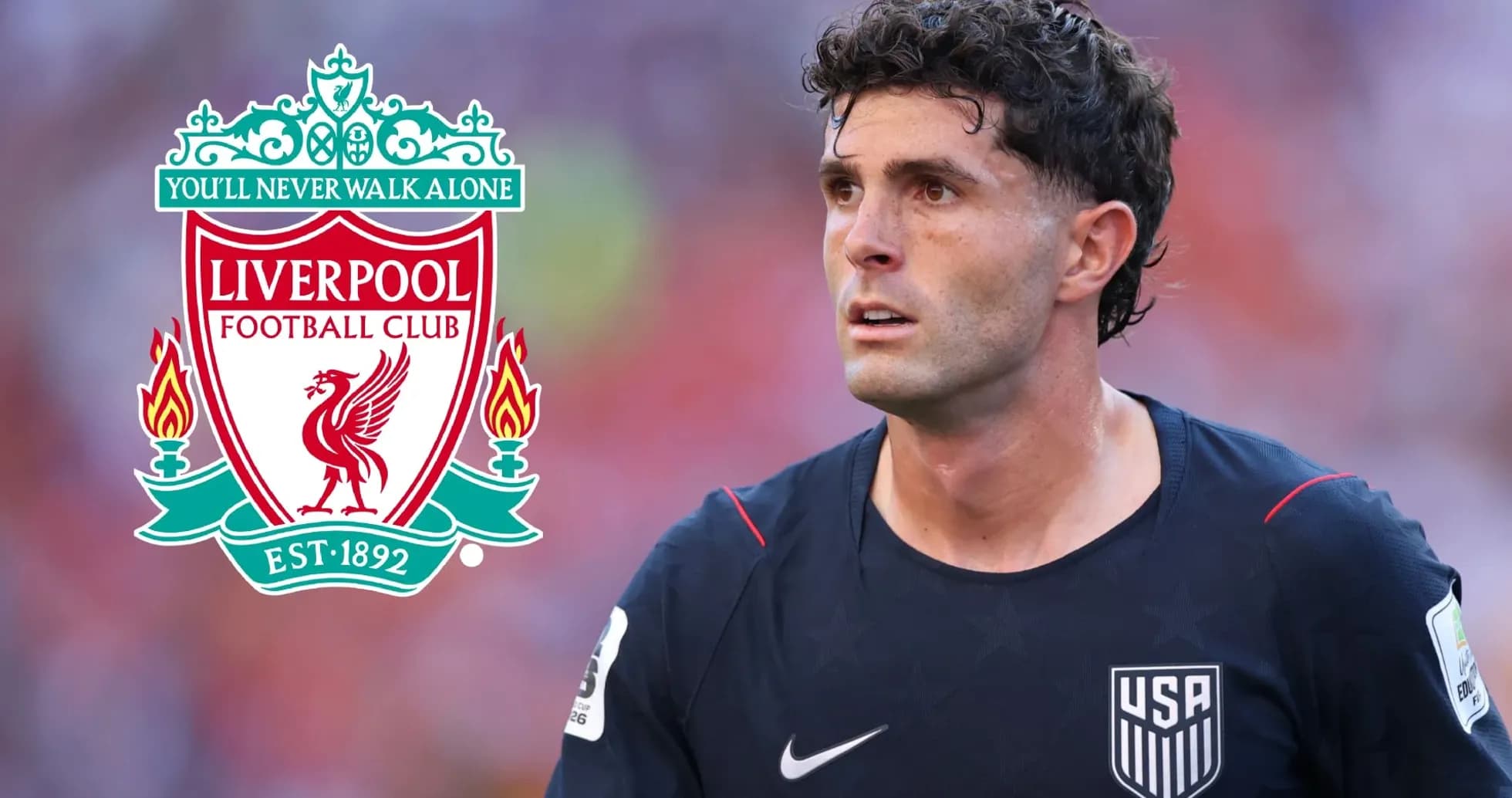
Christian Pulisic's Journey: From Chelsea to Milan and Potential Liverpool Move
Christian Pulisic left Stamford Bridge with a Champions League medal in his luggage but without ever truly feeling like Chelsea’s leading man. Milan offered a reset, a different rhythm, a league that might suit his sharp movement and direct running. It has.
At San Siro, the 27-year-old has delivered the most productive season of his club career in front of goal, his versatility stretched across the frontline and into pockets of space that Serie A defenders have struggled to close. He has become a crowd favourite quickly, the kind of player whose first touch draws a murmur before he even accelerates.
Yet the future is not settled.
A new contract has been on the table for months and remains unsigned. That hesitation keeps the door open, just enough for Europe’s elite to peer through and wonder whether this is the moment to move for a player who still carries the “Captain America” tag and the expectations that come with it.
One of those clubs watching is Liverpool.
Anfield has just waved goodbye to its “Egyptian King”. Mohamed Salah’s departure has ripped a hole on the right of Liverpool’s attack that cannot be filled lightly. Goals, assists, aura – replacing all of that is a puzzle that stretches far beyond simple numbers on a stat sheet.
Pulisic’s name fits naturally into that conversation. Hard running. Relentless pressing. An eye for goal. The profile makes sense, and not just on paper.
Jonathan Spector, the former U.S. international who knows the demands of English football, can see it clearly. Speaking to GOAL in association with UFL on mobile, he painted a picture of Pulisic in Liverpool red, charging into space at speed.
“I see that as well,” Spector said. “I think in that sort of, I don't know if counterattacking style is the right way of putting it because that's not just what Liverpool is, but certainly when you see them go forward, they go at pace, and that is something that he does extremely well.
“He’s confident, he’s running at players. As a defender, it's a nightmare. It's worst-case scenario, when you have a player who is dynamic, and he's quick, shifty. That's the worst, last thing you want as a defender.”
Those qualities were always there at Chelsea, but they never quite knitted together into the sustained impact the club demanded. Injuries, managerial churn, tactical shifts – the usual cocktail at a club that changes direction as quickly as it changes coaches.
Spector did not dress it up.
“He didn't produce to the level that the expectations were at Chelsea,” he said. “At a club like Chelsea, you have to. You could name a number of players, whether it's at Chelsea, Man United, Man City, who just didn't quite produce or didn't match the expectations. Those clubs have the ability to move on from players that are just not the right fit.”
For Spector, the key word is “fit”. Right player, right place, right moment.
“For me, so much of it is about having the right fit at the right time, and that is the biggest question mark in all of this. You know, anyone who knows the game can pick a good player, anyone who is a casual fan can pick out a good player, but it's determining whether or not that player is going to be the right fit at the right time, and that's the really difficult piece of this.
“For me, Pulisic just wasn't the right fit at the right time at Chelsea. I think that's why he struggled and I don't know if that style of play suits him particularly well.”
Italy has looked a better match. More space to surge into, more trust, more responsibility. Yet even as he thrives at club level, Pulisic finds his international story under sharper scrutiny.
The 2026 World Cup, staged on home soil and billed as a coming-of-age moment for the USMNT, ended with a last-16 exit and a wave of criticism for several of the side’s supposed leading lights. Pulisic, as ever, sat at the centre of the debate.
Spector still sees plenty of road ahead for the national-team talisman.
“He for sure has one, maybe two World Cups in him, I would say,” he noted. “I think maybe he didn't have his best World Cup, and I think that's a fair argument to make.
“He wasn't able to play in every match either, not in a rhythm like some of the other players. You play a game, you come out, and you're not in that same sort of rhythm, and you see each team, each game, they've gotten better and better.
“The individuals have gotten better and better, and you really see the top, the elite players, really just showing the quality that they have each and every game and getting better in each and every match. He didn't have that sort of consistency and continuity.”
That lack of rhythm has fed the narrative around him, one tournament placed under a microscope in a way that can distort the wider picture.
“I think some of the criticism he's had has been a bit harsh,” Spector argued. “I don't think it's quite fair to judge him to some of the other U.S. players that we've had in the past, just based on this small sample of matches. At the World Cup is when you expect your main players to do it.
“I still think he was really effective, he looked dangerous in moments. But I'm sure he would be the first to admit he wasn't at his best. I'm sure he's just as frustrated, if not more so, than anyone else.”
So Pulisic stands at a familiar crossroads. Established in Milan, admired across Europe, still the face of the USMNT, but with a contract unsigned and a Premier League giant weighing up a move.
The question now is not whether he is a good player. That has been answered in Dortmund, in London, in Milan, and on the international stage.
The question is whether his next decision finally puts him in the right place, at the right time, to be the main man week after week – perhaps under the lights of Anfield, with the Kop demanding a new hero on the right.