Protesters Occupy Dublin Sports Department Over Ireland–Israel Fixtures
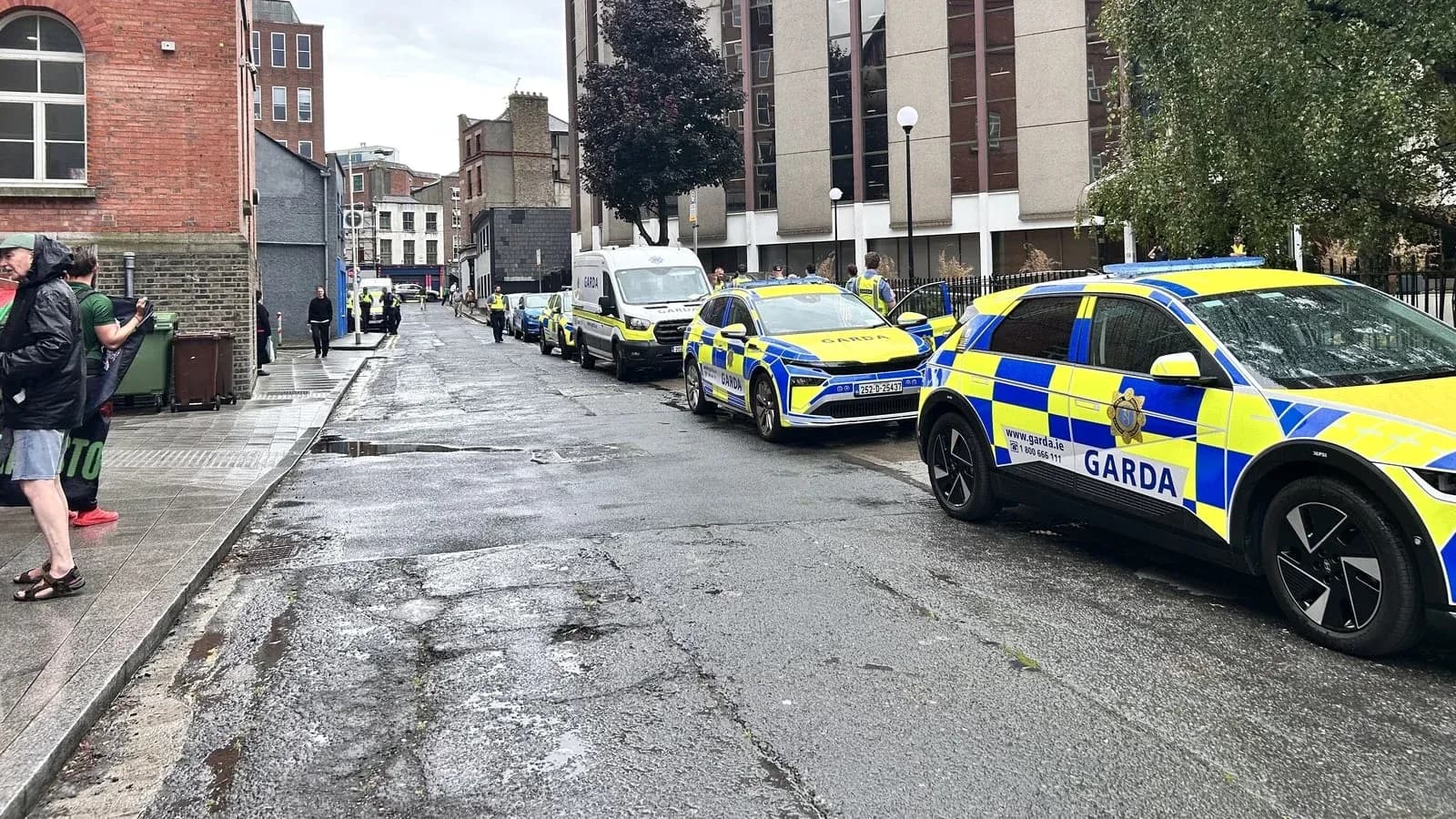
The battle over whether Ireland should play Israel in the Nations League spilled off the pitch and into government offices in Dublin, as protesters were removed from the Department of Sport after occupying its lobby in a coordinated demonstration.
The group, operating under the banner #StopTheGame, took over the entrance area of the Department of Culture, Communications and Sport on Leeson Lane, targeting what they see as the political machinery enabling the fixtures to go ahead.
They are not treating this as a one-off stunt. In a statement, the activists described the sit-in as part of an escalating campaign designed to force the cancellation of both Nations League meetings between the Republic of Ireland and Israel scheduled for late September and early October. The message was blunt: this will intensify until the games are stopped.
Central to their anger is the belief that the Irish state and the Football Association of Ireland (FAI) are complicit in what they call “sportswashing.” The group’s statement accused the Government of leaning on the FAI to fulfil the fixtures, naming Taoiseach Micheál Martin as “one of the first to demand that the FAI play these games.”
They framed it not just as a political dispute, but as a moral and legal breach. Citing Ireland’s membership of the International Criminal Court, the statement argued that the country “should not be engaging in sportswashing,” and claimed that by proceeding with the matches, Ireland is “failing in our moral, humanitarian and legal obligations as a country.”
Independent Dublin City Councillor Cieran Perry, speaking for the protesters, tried to draw a line around the players themselves. The pressure, he said, should not fall on the squad to decide whether or not to fulfil the fixture. That responsibility, in his view, rests squarely with the FAI and the Government, who he believes should move to withdraw from the Nations League ties altogether.
The FAI, though, has already shifted its stance once. Last month, the association confirmed that the Republic of Ireland’s home game against Israel would not be played on Irish soil. Instead, it will be staged behind closed doors at a neutral venue in Bačka Topola, Serbia, on Sunday 4 October.
The decision was framed not as a political move, but a logistical one. In a statement, the FAI Board said it had opted to relocate the fixture “due to operational challenges that could impact on the delivery of the game on home soil.” No further detail was offered, but the implication was clear: hosting the match in Ireland had become too fraught.
The away leg remains in place. The Republic are due to face Israel first on 27 September at the Nagyerdei Stadion in Debrecen, Hungary. Both games, in football terms, are standard Nations League fare. Off the pitch, they are anything but routine.
Inside government, there is a clear effort to keep some distance. A spokeswoman for the Department of Sport stressed that bodies such as the FAI operate independently, with full responsibility for how and where fixtures are staged, whether at home or abroad. “The Government and Sport Ireland have no role in the organisation of such fixtures,” she said.
That formal separation of powers may stand up on paper. On the streets, and now in the lobbies of government buildings, the argument is far from settled.