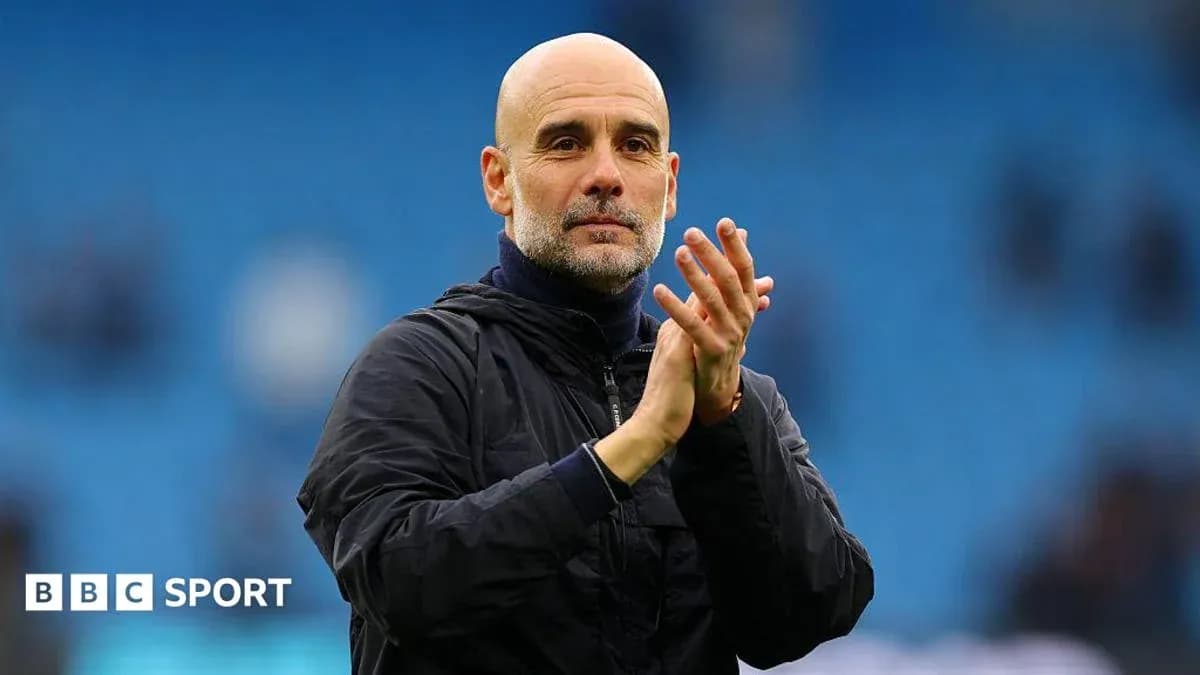
Pep Guardiola in Talks to Become Italy's Next Head Coach
Pep Guardiola has held talks over becoming Italy’s next head coach, Italian Football Federation president Giovanni Malagò has confirmed, in a move that would rank among the most audacious appointments in the Azzurri’s history.
The 55-year-old walked away from Manchester City this summer after a decade that reshaped English football. Six Premier League titles, three FA Cups, five League Cups and a long-awaited Champions League turned City into a machine and Guardiola into the defining coach of his generation.
Now, a national team that has missed three consecutive World Cups is trying to tempt him back into work almost immediately.
Italy turn to Guardiola
Italy have been without a head coach since Gennaro Gattuso resigned in April, the latest casualty of a bleak era for a four-time world champion that can no longer rely on its old aura. Sky Italia first revealed on Monday that the Italian Football Federation (FIGC) had made contact with Guardiola.
Malagò has now gone a step further. Speaking to Italian digital outlet Cronache di spogliatoio, he confirmed that conversations have taken place and that the federation is prepared to bend its own rules to land a coach of this stature.
“[Financial] exceptions have been made, exceptions that for example may concern the name that is so overbearing in these hours: Pep Guardiola,” Malagò said. “Exceptions for obvious reasons that I am not here to explain, but it is not certain that this thing will go through.”
The message is clear: Italy are serious, and they know they are shopping at the very top of the market. But there is no guarantee Guardiola will say yes.
BBC Sport has contacted the FIGC for comment.
A rare foreign bet
Italy’s bench has almost always been guarded by one of their own. Across more than a century, only two foreign coaches have had any role in leading the men’s national side: Hungarian Lajos Czeizler, part of a technical committee in the 1950s, and the legendary Argentine Helenio Herrera, who shared the job with Ferruccio Valcareggi in the following decade.
Guardiola would be stepping into a role that is both sacred and heavily scrutinised, but he would not be arriving as an outsider in the traditional sense. He speaks fluent Italian and spent two seasons in Serie A between 2001 and 2003, across two spells with Brescia and one with Roma. Those years did not define his playing career, yet they gave him a window into Italian football’s culture, obsession and tactical detail.
For a federation searching for a reset, that combination of familiarity and fresh thinking is alluring.
Mancini, Pirlo and a wider field
Guardiola is not the only name on the list. Another former Manchester City manager, Roberto Mancini, is under consideration. Mancini guided Italy to Euro 2020 glory, restoring pride and style before the World Cup failures dragged the project down. His return would offer continuity of idea, if not of era.
Andrea Pirlo is also in the frame. The former Italy midfielder, now in charge of Dubai United, carries the aura of a modern icon and the promise of a long-term project, even if his managerial CV remains relatively light compared with the others.
Asked whether Guardiola, Mancini and Pirlo were the only candidates, Malagò was unequivocal: “Absolutely not. We think about a certain profile and certainly these names fall into that category.” The federation wants a coach with a clear identity and the authority to impose it. Several fit the bill. One stands above the rest.
A tired genius, a quick return?
If Guardiola does accept, it would mark a rapid return to the dugout after an emotionally draining decade in Manchester. When his time at City ended in May, he admitted the toll it had taken.
“I am so tired. Seriously, I am so tired,” he said then, reflecting on a career that has already delivered trophy-laden spells at Barcelona and Bayern Munich as well as City. “The memories I have of Barcelona and Bayern Munich are unbeatable but the luggage of memories I have from here from 10 years is more than any other.”
Those words sounded like a man ready to step away, at least for a while. Yet the Italy job is not just another club offer. It is a chance to take charge of a footballing institution in crisis, to rebuild a fallen power on the biggest international stages, to test his ideas in a different rhythm of competition.
For Italy, the gamble is obvious. For Guardiola, the question is sharper: after conquering club football, does he now want to try to reshape a nation?