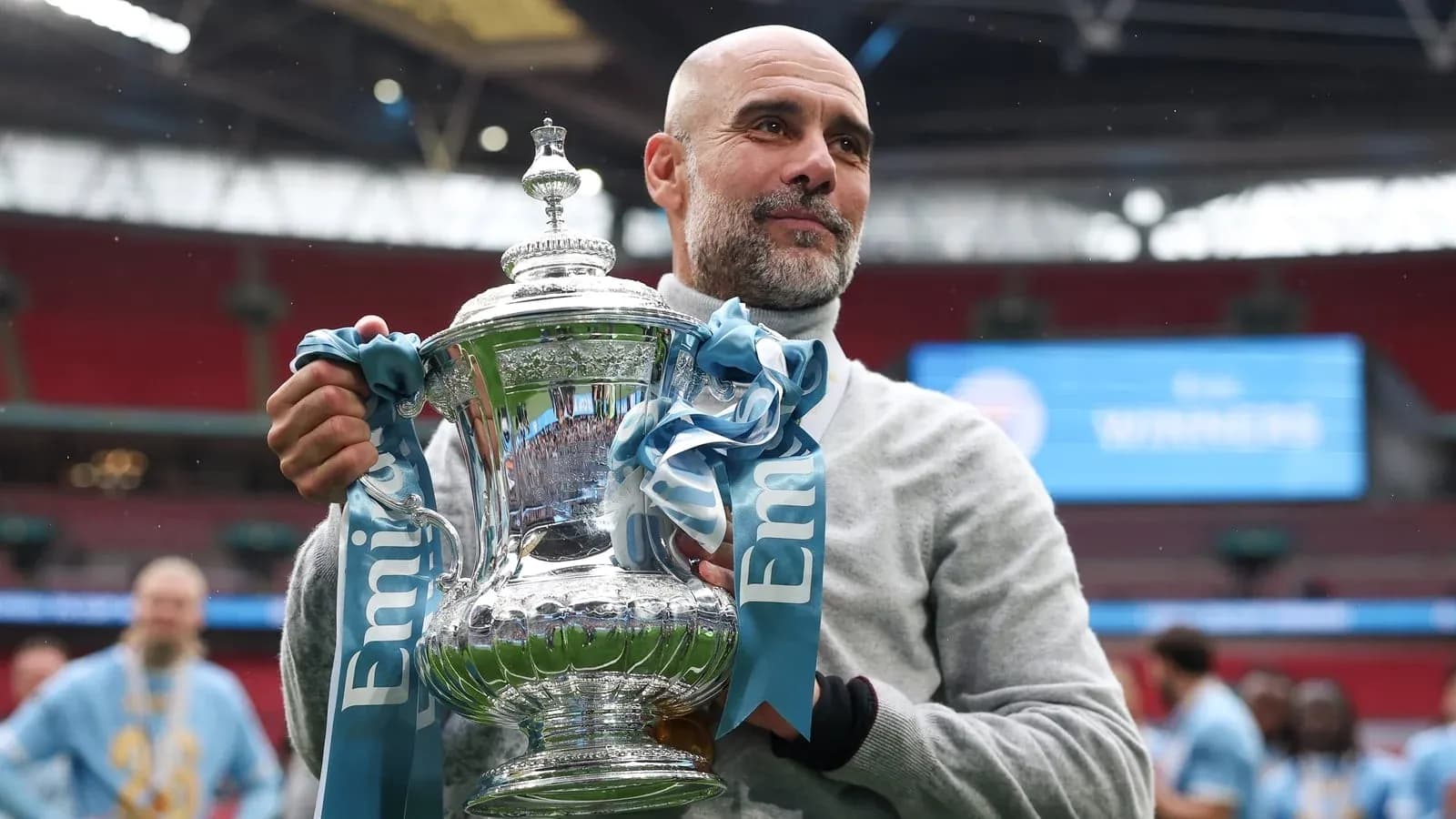
Pep Guardiola to Depart Manchester City After Ten Years of Success
The Pep Guardiola era at Manchester City will end on Sunday. Ten years after he walked into the Etihad with a reputation already carved in gold, the club have confirmed their manager will step down at the end of the season, turning the meeting with Aston Villa into a farewell occasion unlike any other in the Premier League era.
What had rumbled as speculation for days has now been nailed down: one of English football’s greatest managerial reigns is closing.
A Decade That Redefined a Club
When City pulled off the coup of appointing Guardiola in 2016, they were ambitious, wealthy, and successful. They were not yet inevitable. He changed that.
Across a relentless decade, the 55-year-old stacked up 20 trophies: six Premier League titles, the Champions League, three FA Cups, five Carabao Cups, the Club World Cup, and a series of campaigns that bent the domestic game to his will.
The numbers only tell part of it. There was the 100-point Premier League season in 2018, a record that felt like a line in the sand. There was the domestic treble in 2019, a sweep of the league and both domestic cups that underlined City’s stranglehold on English football. Then came 2023, the year of the treble: Premier League, FA Cup, Champions League. The year City finally climbed the mountain in Europe under him.
This season he signs off with a domestic cup double. The chase for a seventh league title went deep into May, only slipping away on Tuesday night with a 1-1 draw at Bournemouth in their penultimate game. Even his near-misses arrived late and with resistance.
“I Know It’s My Time”
Guardiola chose to explain his exit in his own way, with a long, reflective message that carried his familiar mix of warmth and steel.
He went back to the very beginning. To that first interview in Manchester with Noel Gallagher.
“When I arrived, my first interview was with Noel Gallagher. I walked out thinking, ‘OK… Noel is here? This will be fun. And what a time we have had together.
“Don’t ask me the reasons I’m leaving. There is no reason, but deep inside, I know it’s my time.
“Nothing is eternal, if it was, I would be here. Eternal will be the feeling, the people, the memories, the love I have for my Manchester City.”
Then, in a final flourish that felt entirely Guardiola, he signed off: “Noel…I was right. It has been so f****** fun. Love you all.”
His contract had been due to run until the summer of 2027. Instead, he has agreed to step away 12 months early, drawing a clear line under a decade that has redefined what dominance looks like in the English game.
From Barcelona to Bayern to Manchester – and Beyond
Guardiola did not arrive in Manchester as a coach with something to prove. He came as the standard-bearer of a footballing idea.
At Barcelona, he had already lifted the Champions League twice and secured three LaLiga titles, building one of the most admired club sides in history. At Bayern Munich, he added three Bundesliga crowns, sharpening his methods in a different culture, a different league, the same obsession with control.
City gave him the platform and the resources. He gave them structure, identity, and a level of consistency that turned title races into long, unforgiving marathons where only perfection kept pace.
Under him, City did not just win. They imposed themselves. They made 90 points look routine. They made complex patterns of play feel inevitable. They turned the Etihad into a laboratory for a brand of football that others tried, and often failed, to copy.
The Search for a Successor
The question now is what comes after Pep.
His former assistant Enzo Maresca, out of work since leaving Chelsea in January, has emerged as the favourite to succeed him. Maresca knows the City structure, knows the demands, knows the shadow he would be stepping into.
Whoever takes the job inherits a squad conditioned to win and a club built in Guardiola’s image, from the training ground to the boardroom corridors. That is both a gift and a burden.
Guardiola himself will not disappear from the City orbit. He will move into a role as a global ambassador for the City Football Group, a sign of how deeply he is woven into the organisation’s identity.
Chief executive Ferran Soriano put it bluntly: “Pep’s legacy is extraordinary and its true impact will be better assessed by Manchester City historians of the future.”
The Last Game
All that remains now is the goodbye.
On Sunday, against Aston Villa, Guardiola will walk out as Manchester City manager for the final time. No trophy is at stake, no title on the line, yet the occasion will feel as weighty as any final he has contested.
Ten years. Twenty trophies. Records, trebles, and a style of football that changed the expectations of a club and the standards of a league.
The Guardiola era at City ends this weekend. The question, for everyone left behind, is simple: how do you follow that?