Pacific FC vs Cavalry FC: Clash of League Leaders and Bottom Side
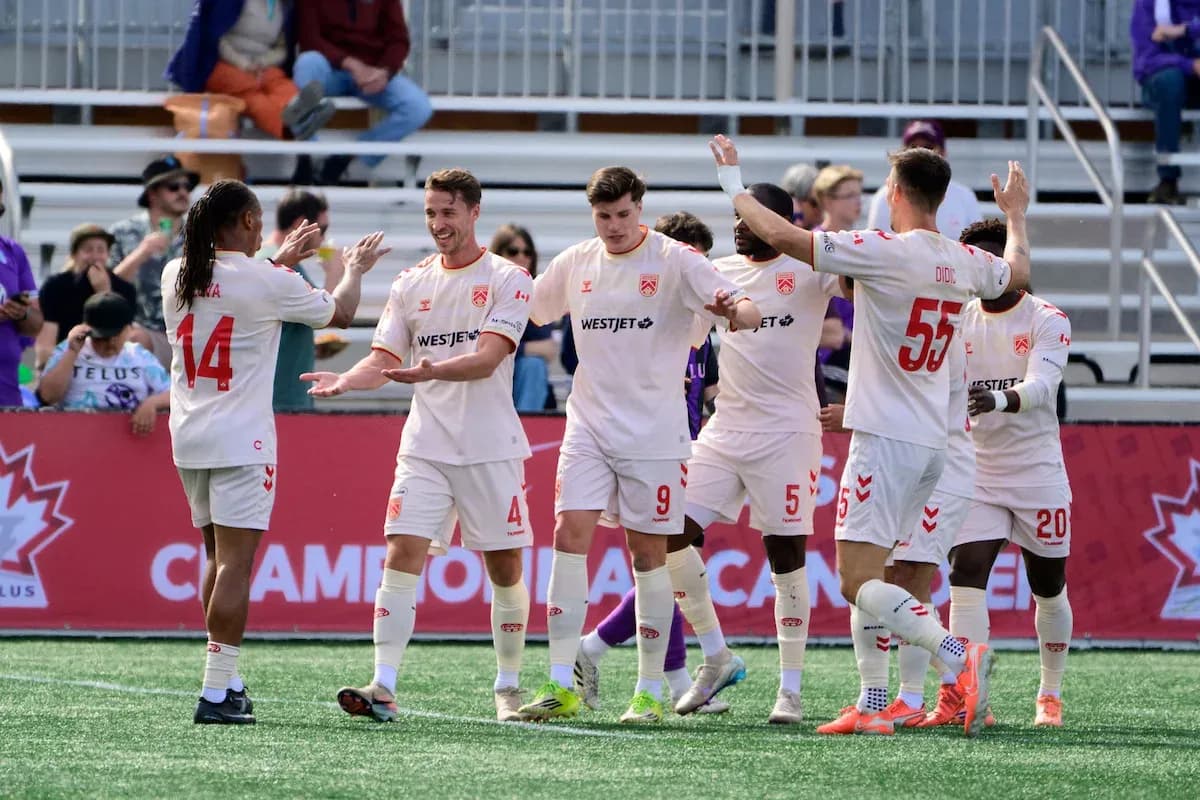
The lights at Starlight Stadium flickered out on a narrow 1–0 defeat, but the story of Pacific FC versus Cavalry FC was written long before the final whistle. It was a meeting between the league’s bottom side and its relentless leaders, a clash of identities as much as a clash of systems.
I. The Big Picture – Top versus Bottom at Starlight
Following this result, the table tells a stark tale. Pacific sit 8th in the Canadian Premier League on 10 points from 21 matches, with a total goal difference of -18, built from 25 goals scored and 43 conceded. At home they have played 11 times, winning 1, drawing 2 and losing 8, with 13 goals for and 21 against. Their season-long averages underline the imbalance: 1.2 goals scored and 2.0 conceded per match overall, with 1.2 for and 1.9 against at home.
Cavalry, by contrast, leave Vancouver Island entrenched at the summit. They are 1st with 49 points from 21 matches, having won 15, drawn 4 and lost just 2. Their total goal difference is a commanding +29, from 41 goals scored and only 12 conceded. On their travels they have played 11 times, winning 7, drawing 2 and losing 2, with 18 goals for and 6 against. The profile is that of a ruthless, balanced machine: 2.0 goals scored and 0.6 conceded per match overall, with 1.6 for and 0.5 against away from home.
On the night, those identities were reflected in the formations. Terry Dunfield rolled out a 4-4-2 for Pacific, a departure from their more frequently used 4-2-3-1 this season, in search of directness and support for the front line. Tommy Wheeldon Jr. trusted Cavalry’s now-familiar 4-2-3-1, a shape that has underpinned their dominance.
II. Tactical Voids and Discipline – Edges at the Margins
Pacific’s season has been marked not only by defensive frailty but by disciplinary strain. Their card distribution shows a worrying late-game pattern: 17.07% of their yellow cards come between 76–90 minutes, and an additional 24.39% arrive in the 91–105 window. Red cards spike even more dramatically late on, with 66.67% shown between 76–90 minutes. It speaks of a side often chasing games, stretched and desperate.
The personnel data reinforces that picture. Midfielder J. Heard has already collected 2 red cards this season, while defender J. Quintana and playmaker M. Bustos have one red each. Bustos, who started on the right of midfield here, walks a fine line: he combines creativity (2 goals, 16 key passes) with a history of dismissal. In a match against the league’s most clinical side, that volatility is a tactical liability.
Cavalry are not without edge themselves. Eryk Kobza and Harrison Paton each sit among the league’s heaviest yellow-card collectors, with 7 bookings apiece, and Kobza has also seen a yellow-red combination this season. Yet Cavalry’s team-wide card profile is more controlled: their yellow cards peak between 46–60 minutes at 23.40%, but they do not share Pacific’s dramatic late-game collapse. They manage the chaos better.
III. Key Matchups – Hunter vs Shield, Engine Room Battles
The central narrative before a ball was kicked was whether Pacific’s few standout weapons could unsettle the league leaders’ armour.
Up front, Pacific’s top scorer Alejandro Díaz began on the bench, leaving the initial burden on A. Daniels and R. Kratt. Díaz has 5 goals and 3 penalties scored this season, with 7 of 12 shots on target. His late introduction was always going to be about moments rather than rhythm, a calculated gamble from Dunfield to change the game state if Pacific could stay level.
Behind them, the creative axis of Bustos and Y. Toualy was crucial. Toualy is the league’s leading assister with 5, having also contributed 1 goal and 11 key passes. He arrived into this fixture as Pacific’s primary conduit between midfield and attack, his 35 dribble attempts and 20 successes emblematic of a player willing to carry the ball under pressure. In the 4-4-2, he started wide on the left, tasked with driving at Cavalry’s right side and feeding early balls into Daniels and Kratt.
But opposite them stood one of the competition’s most imposing defensive pairings. Centre-back Daan Klomp, a top-10 performer in the league, has 4 goals, 1 assist, 5 blocked shots and 12 interceptions, all while completing 90% of his passes. Alongside him, Adam Pearlman has quietly become a two-way force: 2 assists from deep, 26 tackles, 2 blocked shots and 4 interceptions, plus 57 duels won from 88 contested. On the flanks, B. Kamdem and Pearlman formed a back four that is as comfortable defending the box as it is stepping into midfield.
The “Engine Room” duel was defined by R. Juhmi for Pacific against Kobza and the Cavalry double pivot. Juhmi, one of Pacific’s most industrious midfielders, arrived with 693 minutes, 20 tackles and 8 interceptions, but also 6 yellow cards. His role as a shield in front of a back line that had conceded 43 times in 21 matches was non-negotiable. Yet every aggressive intervention risked another booking, especially against a Cavalry side that thrives on quick combinations through S. Camargo and T. Warschewski.
Warschewski himself was the archetypal “hunter” between the lines. With 4 goals, 3 assists and 29 key passes, he is Cavalry’s creative spearhead from the attacking midfield band. His 28 shots, 15 on target, and 31 dribble attempts underline his constant threat. Operating behind C. Elva, he repeatedly asked questions of Pacific’s centre-backs, especially of D. Konincks, who has been one of Pacific’s few bright spots this year with 3 goals, 1 assist, 5 blocked shots and 19 interceptions.
IV. Statistical Prognosis – Why 0–1 Felt Inevitable
From a statistical lens, the 1–0 scoreline almost flattered Pacific. Heading into this game, Cavalry averaged 1.6 goals scored and just 0.5 conceded on their travels. They had kept 5 away clean sheets and 9 overall, failing to score only 3 times all season. Their biggest away win, a 5–1 triumph, showed they are capable of blowing teams away.
Pacific, meanwhile, had not kept a single clean sheet at home all season and only 1 overall. They had failed to score in 3 of 11 home matches and 6 times in total. Their biggest home result, a wild 4–3 win, hinted at attacking potential but also chronic instability.
Layer onto that the form lines: Pacific’s recent run reads like a slow bleed — a sequence of losses punctuated only occasionally by draws and a solitary win. Cavalry, by contrast, came in with five straight victories, part of a longer pattern of sustained dominance.
In that context, the tactical preview always leaned toward a Cavalry victory built on control rather than chaos. Their compact 4-2-3-1, anchored by Kobza and Camargo, was designed to smother Pacific’s midfield and deny Toualy and Bustos the spaces they crave between lines. Klomp and Pearlman’s command of the aerial and ground duels made it difficult for Daniels and Kratt to hold up play, starving Pacific of sustained territory.
The final 0–1 felt like the logical meeting point of those trajectories: Pacific’s structural frailties and disciplinary volatility versus Cavalry’s defensive parsimony and multi-source attacking threat. For Dunfield, the task now is to build on the fragments that did work — the energy of Toualy, the resilience of Konincks and Greco-Taylor, the impact of Díaz — and somehow turn them into a coherent, sustainable plan.
For Wheeldon Jr. and Cavalry, this was another professional step toward a title that their numbers and their performances continue to justify.