Ottawa and Pacific Battle to Goalless Draw in CPL Clash
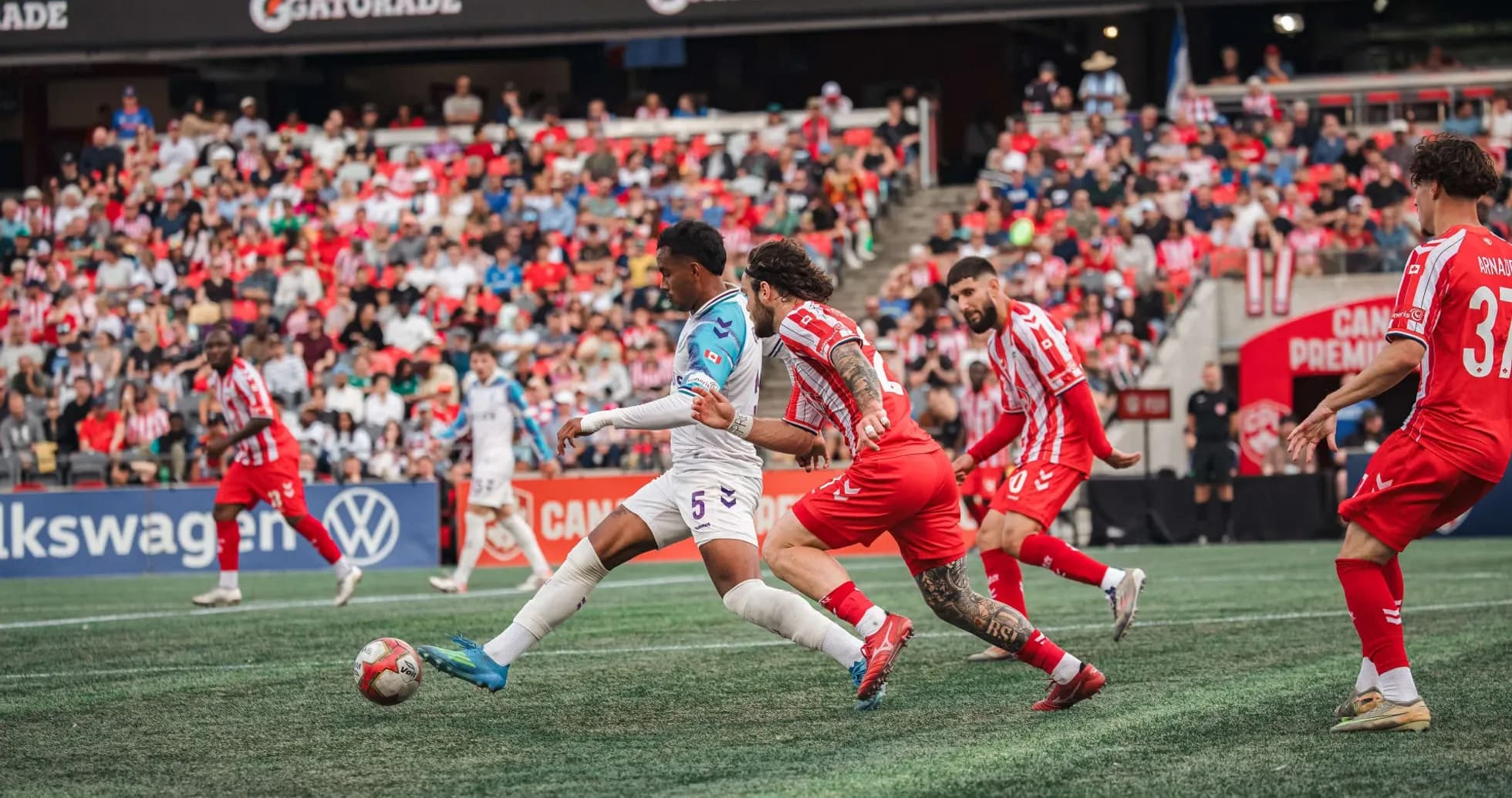
Under the lights at TD Place Stadium, this Canadian Premier League Group Stage meeting finished goalless on the scoreboard, but it told a rich tactical story about a contender trying to consolidate its identity and a struggler fighting to rewire its season.
Atlético Ottawa came into the night as a top‑three side, sitting 3rd with 34 points from 21 matches, their overall goal difference perfectly balanced at 34 scored and 34 conceded. At home they have been formidable: 7 wins from 11, with 21 goals scored and 13 conceded, an assertive profile backed by 1.9 home goals for and 1.2 against on average. Pacific FC, by contrast, arrived at the bottom of the table in 8th, on just 9 points from 19 games and a goal difference of −17 (22 for, 39 against overall). On their travels they are still searching for an away win, with 0 victories, 4 draws and 5 defeats, scoring 9 and conceding 19 away.
Against that backdrop, the lineups told you everything about intent. Gustavo Leal’s Ottawa set up in a 4‑2‑3‑1, a shape that has been part of a broader tactical rotation this season but here felt like a statement of control. C. Kalongo anchored the back line behind a defence of J. Assi, J. Dunn‑Johnson, Loïc Cloutier and D. Aguilar. In front of them, the double pivot of M. Aparicio and T. Arnaud was tasked with both screening and dictating, while a fluid band of three — K. Habibullah, B. Tabla and G. Antinoro — rotated around lone striker N. Fleuriau Chateau.
Pacific, under T. Dunfield, countered with a bold 3‑4‑3. S. Melvin started in goal, shielded by a back three of J. Quintana, D. Konincks and C. Greco‑Taylor. The wing‑backs, K. Chung and Y. R. Toualy, flanked central midfielders R. Juhmi and L. Browning‑Lagerfeldt, with a front three of M. Bustos, R. Kratt and A. Daniels looking to break quickly whenever the visitors could escape Ottawa’s press.
The absence list offered no clues — there was no data on missing players — so both coaches leaned heavily on their known pillars. For Ottawa, that meant building around the league’s top‑rated attacker, B. Tabla. Across the campaign he has 5 goals and 1 assist, with 18 shots and 12 on target, and he carries a 7.05 rating built on more than just end product: 262 passes at 85% accuracy, 8 key passes, and 22 dribbles attempted with 10 successful. Here, operating off the left and drifting inside, he was the “hunter” Ottawa looked to unleash between Pacific’s wide centre‑backs and wing‑backs.
Opposite him, Pacific’s defensive “shield” was personified by D. Konincks. The Dutch defender has 3 league goals and 1 assist of his own, but his real value is in the back line: 511 passes at 90% accuracy, 17 interceptions and 4 blocked shots speak to a defender comfortable both stepping out and absorbing pressure. In a 3‑4‑3 that can easily flatten into a back five, Konincks’ timing in duels (61 contested, 37 won) was crucial in tracking Fleuriau Chateau and sliding across to double up on Tabla when he cut inside.
The engine room duel was equally compelling. For Ottawa, M. Aparicio is the metronome and enforcer rolled into one. He has played every league match so far, with 619 passes at 83% accuracy and 11 key passes, but he also brings bite: 25 tackles, 4 blocked shots, 19 interceptions and 5 yellow cards this season. Across from him, R. Juhmi is Pacific’s quietly influential pivot, with 365 passes at 87% accuracy, 18 tackles and 7 interceptions, plus 5 yellow cards of his own. This was a midfield battle between two players who live on the disciplinary edge — and in a league where Ottawa’s yellow cards spike late (36.96% of their bookings come between 76‑90 minutes), it was always likely that the closing stages would be laced with risk.
Ottawa’s broader disciplinary profile underlines that narrative tension. They accumulate cards progressively through the match, but the late‑game surge in yellows is striking, followed by a further 19.57% of bookings in stoppage time (91‑105 minutes). They also carry a red card on the season through G. Antinoro, whose aggressive dribbling — 43 attempts, 20 successful — often drags him into duels and fouls. Pacific, meanwhile, are even more combustible in terms of dismissals: J. Heard has already seen red twice, M. Bustos and J. Belluz have each been sent off once, and the team’s red‑card distribution is weighted dangerously toward the final quarter of matches, with 66.67% of their reds arriving between 76‑90 minutes and another 16.67% in the 91‑105 window. This fixture, despite finishing without goals, always had the potential to tilt on a single mistimed challenge.
In the final third, the numbers framed the tactical risk‑reward calculus. Ottawa’s attack is varied: beyond Tabla, N. Fleuriau Chateau has 3 goals and 2 assists in limited minutes, with 11 shots (6 on target) and a willingness to attack space, while E. García brings another 3 goals and high‑energy pressing from the bench. They average 1.6 goals per match overall, with that 1.9 at home underscoring why Leal was content to commit his full‑backs high and let Habibullah and Antinoro roam between the lines.
Pacific, by contrast, average 1.2 goals overall and only 1.0 on their travels. Their main “hunter” is A. Díaz, the league’s seventh‑rated attacker, with 4 goals and 1 assist from 16 appearances. His penalty record — 2 scored from 2, 100% conversion — is a rare area of perfection in a season otherwise defined by struggle. Around him, creativity flows through Y. R. Toualy, who leads the league in assists with 4 and has attempted 26 dribbles, succeeding 17 times. Yet Pacific’s overall defensive fragility, conceding 2.1 goals per match overall and 2.1 away, forced Dunfield to prioritise compactness over ambition.
Ottawa’s own penalty story is more complicated. They have earned 4 spot kicks this season but converted only 2, with 2 missed — a stark 50.00% success rate that injects uncertainty into even their best attacking moments. It is a small but telling detail: a team otherwise trending upward still carries a vulnerability in the most controlled of scoring situations.
From a statistical prognosis standpoint, this stalemate ran against the grain of expectation rather than confirming it. Heading into this game, the numbers pointed toward an Ottawa win: a strong home record, a balanced overall goal difference versus Pacific’s −17, and a home attack that typically overwhelms a defence conceding heavily, especially away. But football matches are often decided not by long‑term averages, but by how well a struggling side can compress space and survive key matchups on the night.
Here, Pacific’s back three, led by Konincks and supported by the combative Greco‑Taylor and disciplined Juhmi, managed to blunt Tabla’s incursions and keep Fleuriau Chateau away from high‑value zones. Ottawa’s late‑game card tendencies did not explode into a dismissal, and Pacific’s own red‑card history stayed in the background. Instead, what emerged was a tactical arm‑wrestle: Ottawa circulating, probing, and trying to create the central overloads their 4‑2‑3‑1 promises; Pacific shuffling, doubling wide, and trusting that any break via Bustos or Daniels might steal more than the performance deserved.
Following this result, Ottawa will feel the dropped home points more than Pacific will celebrate an away draw. Yet as a squad snapshot, it reinforces the contours of both sides: Ottawa as a high‑ceiling contender still ironing out efficiency and discipline, Pacific as a fragile but stubborn unit whose survival depends on the continued excellence of their defensive core and the occasional moment of quality from their front line.