
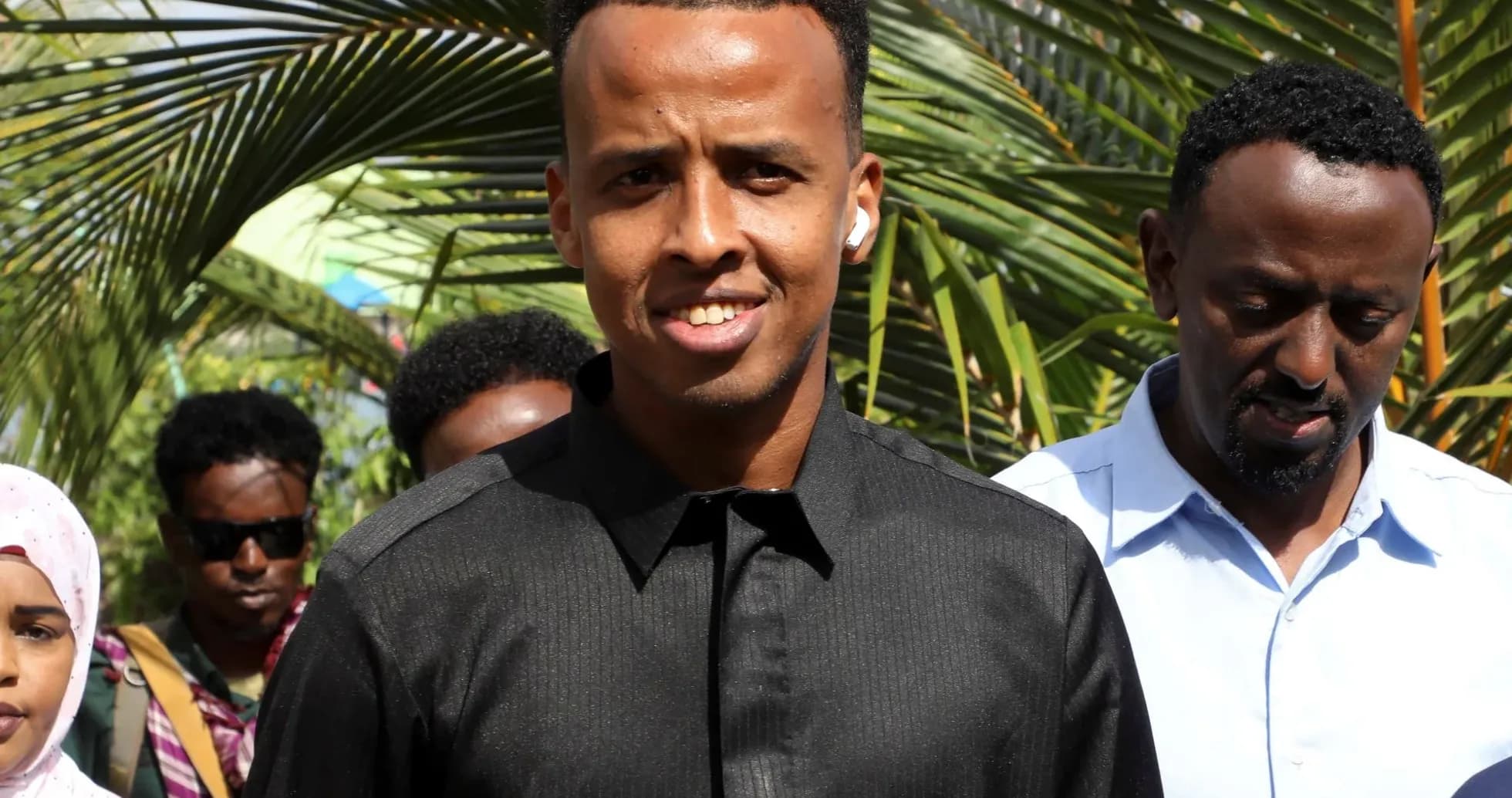
Omar Artan: From Airport Rejection to UEFA Super Cup Referee
Omar Artan will finally walk out on a stage that fits his story.
The Somali referee, blocked from officiating at the World Cup after being refused entry to the United States, has been handed the whistle for Wednesday’s UEFA Super Cup between Paris Saint-Germain and Aston Villa – a showpiece appointment that carries far more weight than a traditional curtain-raiser.
From airport rejection to European showcase
In June, as the World Cup build-up gathered pace, the 34-year-old arrived at Miami International Airport expecting to join the elite panel of referees selected by FIFA. Instead, he was turned away at the border and sent home, his tournament over before it had even begun.
The case exploded beyond football. A US Department of State official told AFP that Artan was “associated with suspected members of terrorist organisations”, a designation that “made the traveller ineligible for admission to the United States”.
Artan rejected the allegations. So did Somalia. Back home, the referee was greeted not as a suspect but as a symbol – a man who had climbed from a country ravaged by conflict to the edge of the game’s biggest stage, only to be shut out at the door.
“It was a very tough period,” he said in an interview with UEFA. “A lot of people have sympathy for me, because when someone has been working a lot of years and is supposed to do something, and then can’t do it, it’s very challenging.”
The sense of injustice travelled quickly. “It is unfortunate what happened to the referee from Somalia,” FIFA president Gianni Infantino said at the time, adding: “We don’t control everything.”
UEFA steps in – and sends a message
What happened next was not just about a referee’s career being salvaged. It was about power.
UEFA moved to appoint Artan to the Super Cup, a decision it framed as part of its new cooperation agreement with the Confederation of African Football (CAF), signed at the end of April. On paper, it fit neatly: an African official given a high-profile European assignment, a practical expression of inter-confederation collaboration.
But the timing, and the target, told a deeper story.
UEFA and FIFA have been locked in a bitter stand-off in recent weeks over an abandoned plan to open the World Cup to private investors. UEFA led the revolt that ultimately sank the project and has openly brandished the threat of a boycott of FIFA tournaments – including future World Cups – to force Infantino into retreat, or even out of office.
Against that backdrop, giving Artan the Super Cup is more than a reward for perseverance. It is a political gesture, a pointed reminder that UEFA can set its own stage, choose its own protagonists and, when it wants to, turn one man’s misfortune into a statement of defiance.
A career built in adversity
For Artan, the symbolism runs alongside a very personal journey. He is the first Somali to have officiated at the Africa Cup of Nations, making his debut at the 2024 edition. That alone marked a historic step for Somali football, long overshadowed by instability and limited infrastructure.
“I was lucky, but I have worked very hard to be here and I’m really proud,” he told UEFA. “As you can imagine, I grew up in a difficult situation, but it didn’t prevent me from pursuing my dreams.”
This week, those dreams cross another border. The Super Cup will be his first match in Europe, and it comes not in some low-key friendly but in a contest between the Champions League winners, PSG, and Europa League winners Aston Villa – a global television event, a high-wire assignment for any referee.
“Having adventures, making memories and learning new things is always great,” Artan said. “When we got this call it was, for me and my family, really a very, very happy moment.”
A whistle at the heart of a power struggle
On the surface, Wednesday night will be about Kylian Mbappé’s runs, Unai Emery’s tactics, PSG’s star power against Villa’s resurgence. But every time Artan raises his arm, the subtext will be hard to ignore.
Here is a referee once deemed ineligible to enter the United States, now trusted by UEFA to control one of its flagship fixtures. Here is a governing body that clashed with FIFA over the future of the World Cup, now using its own showpiece to underline its independence and its alliances beyond Europe.
UEFA can point to its agreement with CAF as justification. It can talk about development, exchange, opportunity. All of that is real. Yet in an era when football politics spills into every corner of the calendar, the choice of referee for a single match can echo far beyond the 90 minutes.
Artan will walk out to the anthem, flanked by two of Europe’s heavyweight clubs, with the ball in his hands and the eyes of the game on him. For once, the man in the middle is not just there to stay out of the story.
He is the story – and a reminder that in modern football, even the appointment of a referee can feel like a line in the sand.



