Nottingham Forest vs Fulham: A Crucial Clash in the Relegation Battle
On 15 March 2026, the City Ground becomes a pressure cooker. Nottingham Forest, hovering just above the trapdoor, welcome a Fulham side with European ambitions still flickering. Seventeen versus ten in the table, 28 points against 40, and a 12‑point chasm that underlines just how different these campaigns have felt – but the stakes are arguably higher for the hosts than for the visitors.
Forest’s reality is stark: 17th place, only 7 wins from 29 league matches, and a goal difference of -15. Fulham arrive with a little more comfort, sitting 10th and already on 12 wins, but their inconsistency keeps the door ajar for late drama in both directions. For Forest, this is less a glamour fixture and more a survival mission.
Form guide and statistical pulse
Forest’s league form line of DLLDL tells its own story: one point from the last five, momentum slipping at precisely the wrong time. The broader statistical picture matches the mood. Across 29 matches they average 1.0 goal scored and 1.5 conceded per game. At home that drops to 0.9 scored and 1.4 conceded: 13 goals for and 19 against in 14 outings at the City Ground.
That home record – 3 wins, 4 draws, 7 defeats – suggests a side that struggles to impose itself. Forest have failed to score in 8 of those 14 home games, and 13 times overall. The upside? Six clean sheets show they can dig in, and their biggest home win, 3-0, proves there is a ceiling to this team when things click.
Fulham’s form line, LWWLL, is streaky but more productive. They have 12 wins from 29, with 40 scored and 43 conceded. They also average 1.4 goals scored and 1.5 conceded per match, almost mirroring Forest defensively but offering more in attack.
Away from Craven Cottage, Fulham are unpredictable: 4 wins, 2 draws, 8 defeats, with 16 scored and 25 conceded in 14 away games (1.1 scored, 1.8 conceded on average). They have kept only 1 clean sheet on their travels and failed to score 4 times, which hints at vulnerability when asked to control games away from home.
Tactically, both managers lean heavily on a 4-2-3-1 base. Forest have used it 25 times in the league, while Fulham have lined up that way in 26 matches. Expect a mirror formation, with double pivots screening the defence and creative No. 10s tasked with breaking lines.
Head-to-head: Fulham’s recent edge
The last five meetings form a tight, self-contained narrative – and Fulham have had the upper hand.
- On 22 December 2025 at Craven Cottage, Fulham beat Forest 1-0, leading 1-0 at half-time and seeing it through.
- On 26 July 2025 in Faro, a club friendly ended Fulham 3-1 Nottingham Forest, after a 2-0 half-time lead.
- On 15 February 2025 in London, Fulham again prevailed 2-1 over Forest, with a 1-1 score at the break.
- On 28 September 2024 at the City Ground, Fulham edged a tight contest 1-0, after a goalless first half.
- The outlier came on 2 April 2024 in Nottingham, when Forest produced a statement 3-1 win, going 3-0 up by half-time and managing the game from there.
Within this five-game block, Fulham have four wins to Forest’s one, and they have taken the last three competitive league meetings. The City Ground itself has hosted both extremes: a commanding 3-1 Forest victory in April 2024 and a narrow 0-1 home defeat in September 2024. That duality feeds directly into the tension around this fixture – Forest know they can hurt Fulham here, but the visitors arrive with the psychological advantage.
Tactical battle lines
Forest’s numbers suggest a side that often plays on the margins. With an average of 1.0 goal for and 1.5 against, their matches tend to be tight but lean slightly against them. The reliance on 4-2-3-1 points towards Morgan Gibbs-White as the creative heartbeat. He has 8 league goals and 2 assists, with 44 key passes and 40 dribble attempts (21 successful). He is also a key carrier under pressure, involved in 253 duels and winning 103.
In a low-scoring team, Gibbs-White’s ability to receive between the lines and drive at the Fulham back four will be central. Expect Forest to try to draw Fulham’s full-backs high, then find Gibbs-White in the pockets to release runners beyond. Forest’s penalty record – 2 taken, 2 scored in the league – adds another small edge if they can force mistakes in the box.
Defensively, Forest concede an average of 1.4 at home. Their biggest defeats, 0-3 at home and 3-0 away, show that when the structure breaks, it can break badly. With a yellow-card distribution heavily weighted towards the middle and late stages of games, there is a risk of ill-discipline as pressure mounts, especially around the 61-75 minute window where they pick up the most bookings.
Fulham, meanwhile, are more expansive. They have 40 league goals, with a home/away split that shows clear comfort at Craven Cottage but enough away threat to worry Forest. Their biggest away win, 1-3, underlines their capacity to counter-punch on the road, even if that is balanced by some heavy defeats (including a 3-0 away loss).
The key figure is Harry Wilson. With 9 goals and 6 assists from midfield, plus 29 key passes and 22 shots on target from 38 attempts, he is Fulham’s primary end-product merchant. His set-piece delivery and ability to arrive late into the box will test a Forest defence already missing experience.
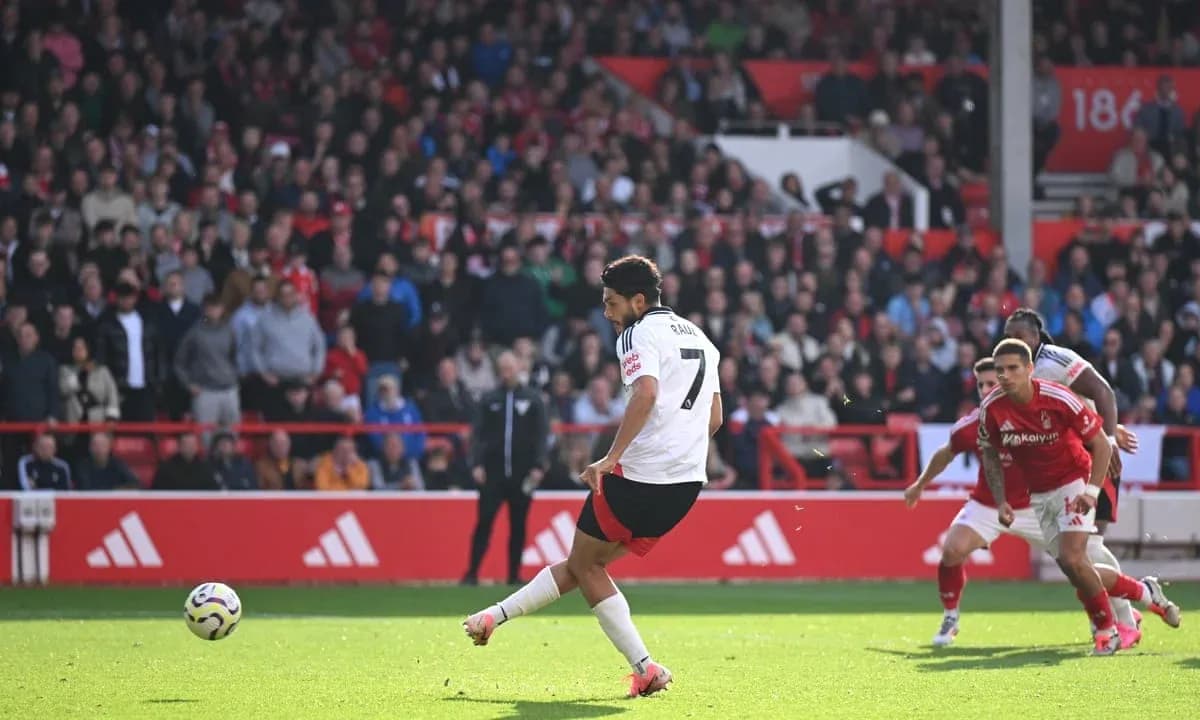
Fulham’s penalty record – 3 taken, 3 scored – means any rash challenges in or around the box could be punished. Their yellow-card pattern spikes dramatically late in games (15 yellows between minutes 91-105), suggesting a team that often has to defend desperately to see matches out.
Team news: absences shape the plan
Forest’s injury list is long and significant. W. Boly, John Victor, D. Ndoye, S. Ortega, N. Savona and C. Wood are all ruled out. That removes a senior centre-back option in Boly and, crucially, a proven Premier League goalscorer in Wood. With Cunha and L. Lucca both listed as questionable, Forest’s centre-forward choices could be limited or short of full fitness. The knock-on effect is likely a heavier creative burden on Gibbs-White and more responsibility on wide players to contribute goals.
For Fulham, Kevin is confirmed out, trimming depth options. J. Kusi Asare and Harry Wilson are both doubtful. Wilson’s status is the headline concern: if he does not start, Fulham lose their most productive attacking midfielder and a key set-piece specialist. That could force a more conservative or more direct approach, with others asked to step into the creative void.
The verdict
The table, the form, and the recent head-to-heads all lean towards Fulham. They are 12 points better off, have won 4 of the last 5 meetings in all competitions, and carry more consistent attacking threat across the pitch.
Yet the City Ground on 15 March 2026 is not a neutral stage. Forest’s situation demands urgency; their home crowd will expect a front-foot approach, at least in phases. With both sides typically using 4-2-3-1, this may come down to which No. 10 can impose themselves more – Gibbs-White in red or, if fit, Wilson in white.
Fulham’s frailty away from home (25 conceded in 14) keeps this finely balanced. Forest’s lack of goals and long injury list, especially in forward areas, pull it back towards the visitors.
Expect a tense, tactical contest with swings in momentum rather than end-to-end chaos. A narrow Fulham edge feels likely, but with the pressure of the relegation battle and the volatility in both teams’ recent form, a draw – with both sides scoring – is firmly in play.