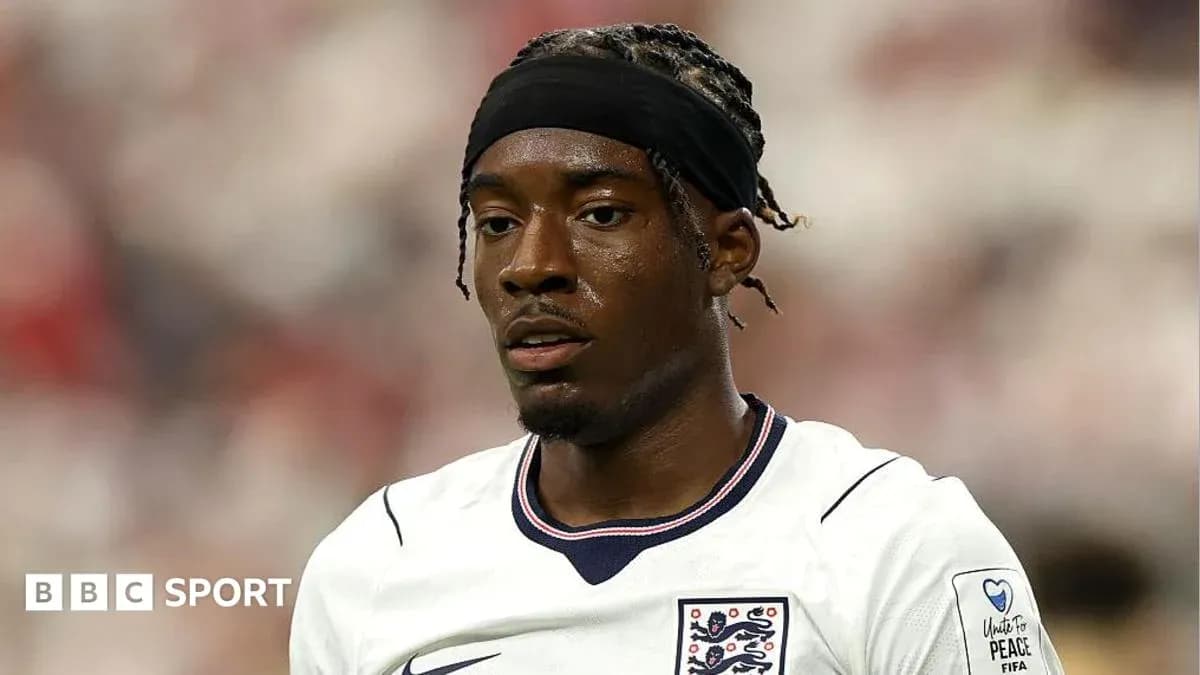
Noni Madueke: From Doubt to World Cup Star
Noni Madueke walked out for England’s World Cup opener with the look of a man who had heard every doubt and stored it. Croatia were the opponents, the world was watching, and there he was on the right wing, starting for Thomas Tuchel’s side at the end of a season that has turned his career on its head.
Twelve months earlier, many Arsenal supporters did not even want him.
Last summer’s £50m move from Chelsea to the Emirates was met with open resistance, a petition and the #NoToMadueke hashtag circling social media as if the club had lost its mind. Too expensive. Too risky. Not needed.
Now? He is a Premier League champion, a World Cup starter and one of the faces of a new, more ruthless England.
From hashtag to headline act
Madueke’s first season under Mikel Arteta did not scream guaranteed stardom. He made 43 appearances in all competitions, scoring eight times and adding four assists as Arsenal finally ended a 22-year wait for the league title. Important numbers, but not dominant ones.
Only 16 of those outings were league starts. A knee injury slowed him. So did the presence of Bukayo Saka, the homegrown favourite and, until recently, the undisputed owner of that right flank.
Yet Arteta kept finding ways to use him. Madueke popped up on the left wing. Saka slid into the No 10 role. Both stayed on the pitch when it mattered most as Arsenal hunted down the title. When the Champions League final against Paris St-Germain went to penalties last month, it was Madueke who came off the bench for Saka and lit up the game, even if the night ended in heartbreak.
Those cameos, that willingness to adapt, made him hard to ignore. Tuchel certainly didn’t.
Tuchel’s England, built for the Premier League tempo
When the England manager named his World Cup squad, his admiration for Madueke was obvious. Tuchel spoke about his “one-on-one ability”, called him a potential “difference-maker” and then backed those words with a starting place against Croatia.
This England is built to feel like a Premier League side dropped into a World Cup. Tuchel wants physicality, power, runners who can break lines and keep breaking them. At the centre of it all is Harry Kane, the record goalscorer, the captain, the man the entire gameplan bends around.
Kane drops, the wingers run. Space opens, the midfield breathes. It is simple in theory, brutal when executed at full speed.
Against Croatia, Madueke was central to that design. He constantly threatened the space behind the defence, dragging full-backs back towards their own goal and inviting Kane to step into the pockets he loves. Madueke ended the game with four passes into Kane – the joint most by any England player, matched only by goalkeeper Jordan Pickford. That statistic says as much about Tuchel’s blueprint as it does about the winger’s maturity.
Kane, with his passing radar switched on, twice looked to slide Madueke in behind Croatia’s back line. Each time, the movement was sharp, the timing precise. England’s right side suddenly felt like a weapon again.
A penalty won, a point made
The pressure finally told. Madueke drove into the box, drew contact and won the penalty that Kane converted to give England the lead in a 4-2 victory. It was a classic winger’s contribution: direct, fearless, decisive.
By the end, Madueke had five touches in the Croatian penalty area, completed his only attempted dribble and left the pitch having justified Tuchel’s faith. On the opposite flank, Anthony Gordon’s relentless running mirrored his energy. Together, the pair stretched the game in a way England have often lacked at major tournaments.
This was not just a neat performance. It was a statement: Madueke belongs at this level.
Brotherly rivalry
All of this plays out against one of the more intriguing subplots in English football. Madueke and Saka are not just team-mates at Arsenal; they are competing for the same position for club and country.
Saka, who made his 50th England appearance in the win over Croatia, described their situation as “unique” and admitted, “I don’t really know how it works, but it works” when asked about their relationship. Off the pitch, he calls Madueke his “brother”. On it, they are fighting for minutes and for trust.
For now, injury has tilted the balance. Saka has been carrying an Achilles issue since March and is not expected to start until England’s final Group L game against Panama in New Jersey on Saturday. The plan is to manage him carefully, to make sure that when the knockout rounds arrive, he is ready to influence them.
That opens the door for Madueke.
Another chance to take the shirt
With Ghana up next on Tuesday, another start for Madueke looks likely. Another audition, too. Tuchel knows what Saka can do on this stage; the Arsenal winger has been central to England’s recent tournament runs. What he is learning now is whether Madueke can be more than just a change of pace off the bench.
Arteta has already shown that the two can coexist. Madueke on the left, Saka drifting inside as a No 10, Kane dropping deep, runners flooding past him – it is not hard to imagine Tuchel sketching out similar patterns on his tactics board as the World Cup progresses.
For England, that is a luxury. For Madueke, it is an opportunity wrapped in pressure.
He arrived at Arsenal under a cloud of scepticism, a £50m gamble the fans openly questioned. A year on, he has a Premier League medal, a World Cup start, and another game looming where he can argue, with his feet, that he is no one’s understudy.
Against Ghana, he is not just playing for three points. He is playing for a place in England’s strongest XI – and for the right to turn a once-hostile hashtag into a footnote in a season that keeps rewriting his story.