
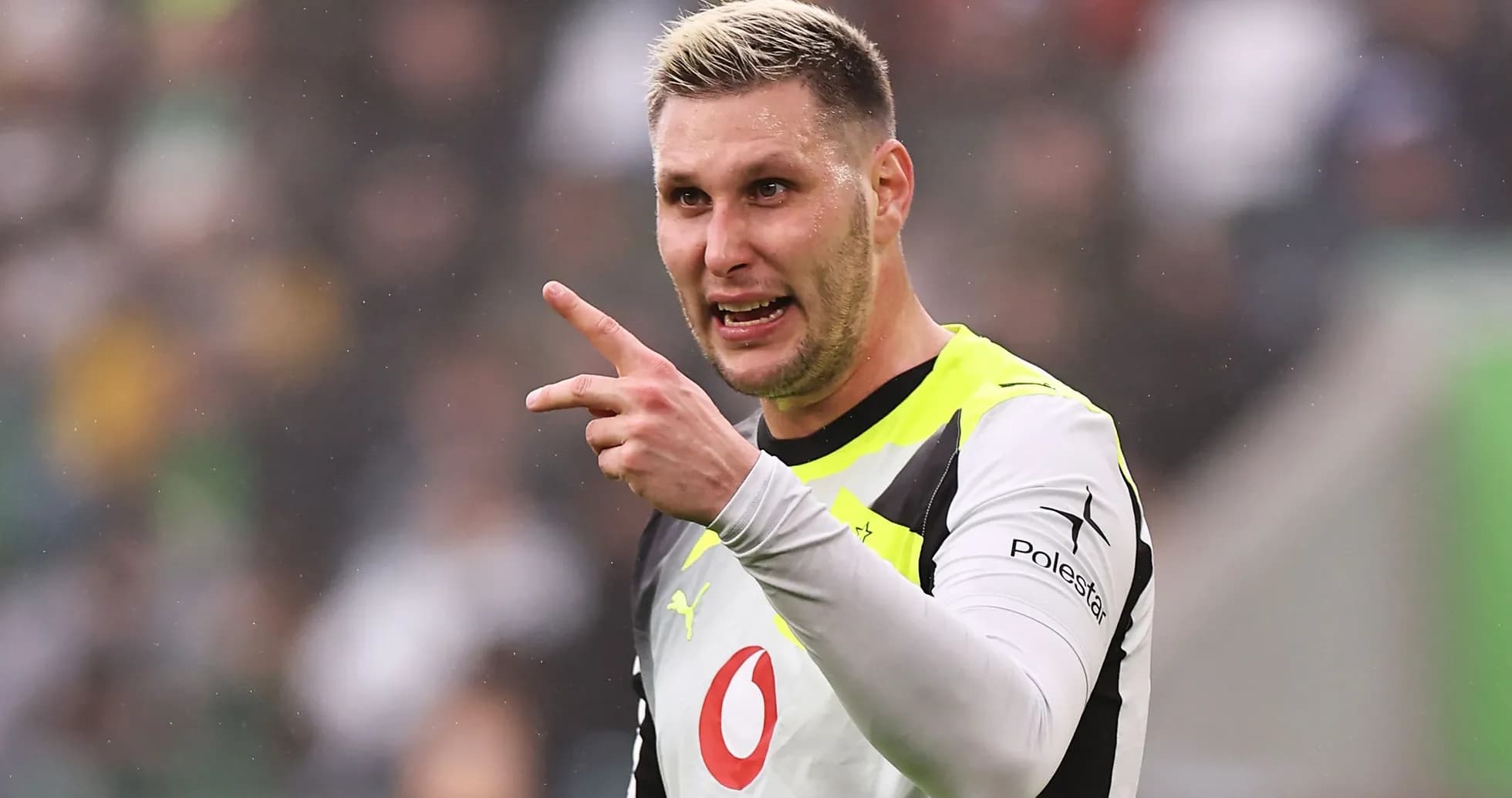
Niklas Süle's Career Decision: Retirement on His Own Terms
Niklas Süle sat in a podcast studio and did what many players of his generation still shy away from: he drew a hard line under his own career. No farewell tour, no drawn-out speculation. Just a clear decision, delivered into a microphone on "Spielmacher" and sent out into a football world that had already started planning his next move.
1. FC Köln wanted him. MLS clubs circled. A 29-year-old centre-back with his CV and his experience does not usually slip quietly off the market. On a purely sporting level, he knows that. He said it himself: the quality is still there. The body, at least in theory, can still cope. The problem lies elsewhere.
The moment everything changed
The turning point came on 18 April, against his former club TSG Hoffenheim. A routine league match, until it wasn’t. Süle felt something in his knee, that horrible déjà vu of a player who knows cruciate ligament pain far too well. He has already torn it twice in his career. A third time would have been more than just another injury. It would have been a verdict.
In the dressing room, the familiar ritual played out. The doctor performed the drawer test. He looked at the physio and shook his head. The physio checked again, also felt no resistance. For Süle, that was enough.
He walked into the shower and cried for ten minutes.
The all-clear came later. No cruciate tear. No surgery. No year out. But something inside him had shifted. As he put it, from that moment on it was “a thousand per cent clear that it was over.” When a false alarm feels that real, the fear of the next one never really leaves.
A decision made in the head, not the legs
Süle has never hidden from the less flattering parts of his story. Injuries, doubts, the constant chatter about his weight – he has taken them on with unusual openness and a touch of self-deprecating humour, again on "Spielmacher". That honesty has made him a rare figure in the modern game: a top-level defender prepared to talk about the strain, not just the silverware.
He insists he could still play. You believe him. A defender who has worn the shirts of FC Bayern Munich and Borussia Dortmund, and who joined BVB on a free transfer in 2022, does not suddenly forget how to defend his box. But he also admits that the real battle is no longer in the duels or the sprints. It is in his head. Mentally, he says, it became harder and harder.
The fear of the next setback. The grind of constant rehab. The weight of expectation. At some point, the calculation changes. For Süle, that point arrived in that Hoffenheim dressing room.
Dortmund goodbye, on his terms
Behind the scenes, those close to him already sensed what was coming. BVB had decided not to extend his contract beyond this summer. The speculation around his future grew louder with every week on the sidelines and every rumour of interest from elsewhere. Süle cut through the noise with a direct conversation: he informed coach Niko Kovac that he would be leaving the club and retiring.
Dortmund will say goodbye to him properly. Before Friday’s match against Eintracht Frankfurt, the 29-year-old will receive an official send-off in front of the Yellow Wall. A big stage for a big defender, even if his time in black and yellow never quite became the long-term story many had imagined when he arrived from Bayern.
Yet he still has one last target, a small but deeply personal milestone: 300 Bundesliga appearances.
Chasing one last milestone
Süle is not asking for a grand finale. He is asking for minutes. Just a few of them.
“In the best-case scenario, I'll get another ten seconds, a minute, or, if Niko Kovac wants, even five minutes – I can manage that,” he said. The numbers are modest, almost shy, but the stage he imagines is anything but: a packed stadium, 80,000 spectators, his family in the stands, and a round number in the record books.
It is the kind of detail that reveals what really matters to him at this point. Not another contract. Not another league. Just a clean, emotional closing scene to a career that has been repeatedly interrupted, but never broken, by serious injury.
He speaks with gratitude about where he is now. After all the surgeries and setbacks, he is still in “reasonably good physical shape”, still able to play sport, to kick a ball around with his children, to play golf. That, in his eyes, is already a victory.
On Friday, he wants to enjoy it. The walk onto the pitch. The applause. Maybe those final few minutes that turn 299 into 300. Then the curtain will fall – not because his body has finally given up, but because he has chosen to step away before it does.



