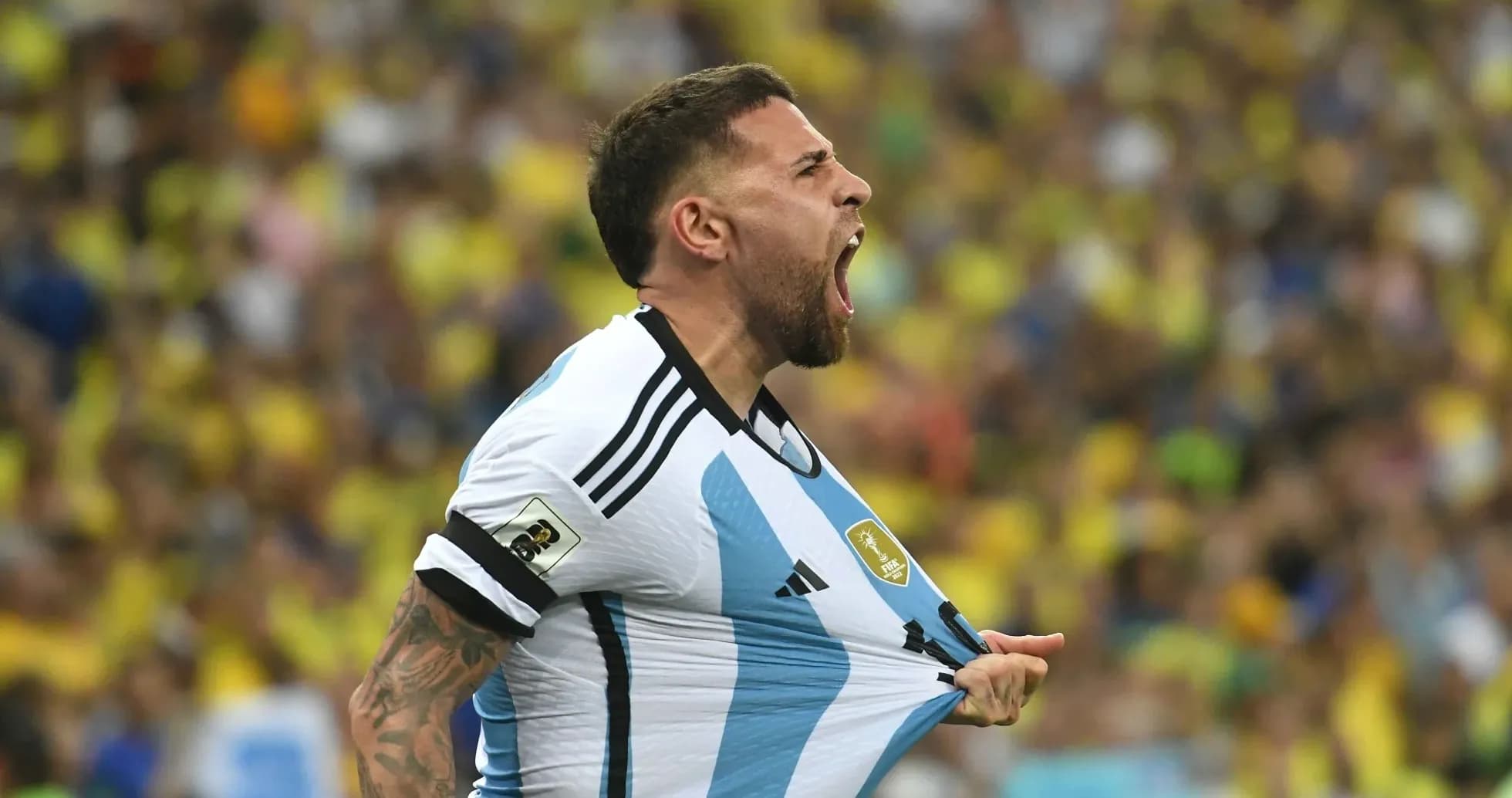
Nicolás Otamendi's Farewell: A Warrior's Tribute to Argentina
Nicolás Otamendi chose his own moment. No press conference, no staged backdrop, no federation statement. Just a phone, an Instagram post, and a defender who has spent 16 years throwing himself in front of everything football could hurl at him, finally stepping aside from the Argentina national team after the 2026 World Cup.
“Today, I’m writing the most difficult words I’ve ever had to,” he began. It fit him. Direct, unvarnished, emotional without ever sounding soft.
For Otamendi, the Argentina shirt was never just a kit. It was, as he put it, “a childhood dream’’ and “the greatest privilege” of his career. He reminded everyone that he defended it “with all my heart, with pride, and with a sense of responsibility, knowing what it means to millions of Argentines.” That line could have been a mission statement for the way he played.
He did not hide from the scar either. Argentina’s defeat in the 2026 World Cup final still stings him, and he admitted as much. But he insisted he walks away “with the peace of mind that comes from giving it all.” For a player built on effort, on the ugly side of the game, that peace is his medal.
He thanked the fans, his family, the people who rode every high and low with him. Then he turned to the future, urging the next generation of Albiceleste players to “never stop believing.” The post ended with a line that carries the weight of an entire era: “Thank you, Argentina. Thank you for letting me fulfill my dream of becoming a world champion and wearing the most beautiful jersey in the world.”
The dressing room reacts
The reaction was instant and heartfelt. His Instagram post filled with messages from former teammates, each one a snapshot of how Otamendi was seen inside the camp.
- Alexis Mac Allister called him “an exemplar of fight, resilience and love for the shirt.”
- Germán Pezzella described him as “a guide for us all.”
The words were simple, but they spoke of hierarchy, of a player who led as much by presence as by speech.
Paulo Dybala, Marcos Senesi, Mariano Andujar and Gianluca Prestianni all added their own thanks. They had shared tournaments, flights, training sessions where Otamendi’s standards never dipped. Those days, they know, are gone now.
Rodrigo de Paul went a step further. The midfielder, one of the emotional engines of the current Argentina side, dedicated a full Instagram story to the vice-captain. He recalled the first day he joined the national team, when Otamendi “opened the door to your room,” and how the two maintained the same rituals ever since. “My thanks to you, my brother, are eternal,” he wrote. “You were an example to follow and one of the leaders of the beautiful story this team built. Thanks for everything, I’ll miss you.”
That word — leader — appears again and again. Not captain in name, but captain in the way he tackled, argued, organized, and stood his ground when the lights burned hottest.
From Vélez to the world
Otamendi’s goodbye might feel emotional, but it does not come as a shock. At 38, and with Argentina already looking to the next cycle, the writing had been on the wall.
His story with the Albiceleste began back in 2008, as a rugged defender at Vélez Sarsfield in the Primera División. From there, he built a European career across several clubs, including Manchester City and Benfica, carrying the same uncompromising style wherever he went.
He was never the most elegant centre-back in the room. He was the one you heard before you saw. Sliding tackles, clenched fists, a permanent readiness for the aerial duel. A “rugged, uncompromising and abrasive defender,” as many have called him, Otamendi injected tenacity into every back line he anchored.
That tenacity defined his international career. In Qatar 2022, Lionel Scaloni trusted him as one of his pillars, starting him throughout a tournament that ended with Argentina lifting the World Cup. Four years later, his role shifted. Lisandro Martínez stepped in alongside Cristian “Cuti” Romero as the starting pairing, and Otamendi moved into a support role, the veteran voice on the bench, the insurance policy, the standard-bearer in training.
The pressure of age eventually caught up, but the respect never dropped.
An image that endures
If one picture captures Otamendi’s time with Argentina, it is the moment in Qatar when he rose above Harry Souttar in the round of 16 against Australia. Souttar stands at 1.98m. Otamendi is 1.83m — a solid frame by Argentine standards, but not towering on the global stage.
Yet in that duel, he soared over the Australian defender, chest out, eyes fixed on the ball, as if sheer will could add extra centimetres. The photo went viral. It was more than a jump. It was Otamendi in pure form: defying odds, refusing to accept physical limitations, turning stubbornness into an art.
That same stubbornness carried him through the dark years, the lost finals, the criticism, and into the golden stretch where Argentina finally became world champions again.
A place among the greats
Otamendi leaves behind more than appearances and trophies. He leaves a template.
Determination. Fierceness. A competitiveness that never dimmed, not at 22, not at 38. Young Argentine defenders will study his tape, his positioning, his aggression, the way he imposed himself on forwards who, on paper, should have dominated him.
His name now sits in the same breath as Daniel Passarella, Oscar Ruggeri and Roberto Ayala — the lineage of great Argentine centre-backs. Different eras, different styles, but the same core: defenders who treated the shirt as armour and responsibility.
Argentina will move on. Football always does. New centre-backs will emerge, new leaders will shout in new huddles.
But somewhere in the story of every future Albiceleste back line, there will be a trace of Nicolás Otamendi — the kid from Vélez who dreamed of the national team, the veteran who walked away as a world champion, and the defender who never, ever took a step back.