
Neymar Jr's Journey: From Santos to World Cup Aspirations
Neymar Jr is pulling that yellow shirt back on with a World Cup looming into view, and he sounds like a man who believes the argument about his place in football history is already over.
Recalled to the Brazil squad after a long, bruising stretch of serious knee and muscular injuries, the 33-year-old returns to the Seleção as the country ramps up preparations for this summer’s tournament in North America. The stage is familiar. The stakes are, too. The version of Neymar walking into camp this time, though, feels different: older, scarred, but unshaken about what he has already done for the game.
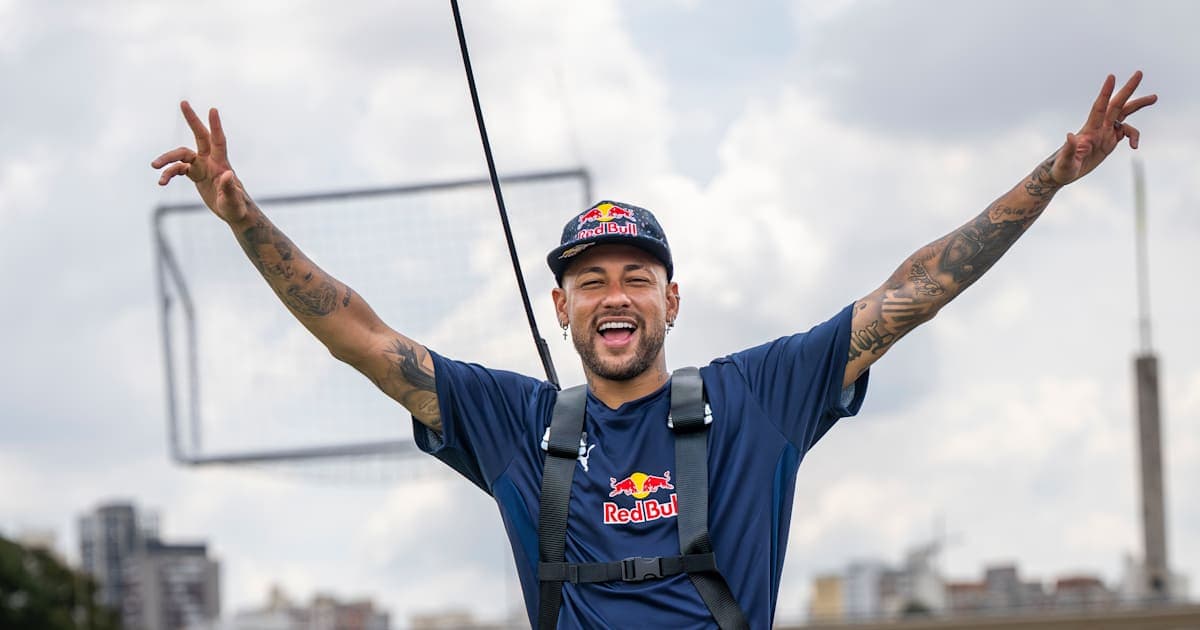
Before reporting for national duty, the Santos forward briefly stepped out of the usual grind of training pitches and tactical meetings to take on Red Bull’s Ultimate Soccer Challenge alongside freestyle specialist Séan Garnier. It was a stunt, yes, but one that pushed him well outside his comfort zone – high above the ground, ball at his feet, fear of heights in full view.
He did not pretend it was easy.
“I thought it would be easier… it was just scary, and I realised it was harder than it looked,” Neymar admitted, describing how the wind turned a simple touch into something unpredictable. “It’s mostly because of the wind – the way the ball comes at you, it changes direction a lot, so that makes it even harder to control… I liked going through that adrenaline rush, let’s say.”
The challenge was a sideshow, yet it mirrored where he is now: still chasing the rush, still inviting risk, still trusting his technique when the ground seems a little less stable than it once was.
Full circle at Santos
His club story over the past year has carried a different kind of emotion. Neymar rejoined Santos in 2025, going back to the place where he first ignited as a teenager, this time as a global star trying to rebuild a battered body. For him, it was not a nostalgic detour. It was a return to origin.
“For Neymar Jr, returning to Santos was less a restart than a full-circle moment,” is how those around him frame it, and the player himself reaches instinctively for childhood when he talks about it. The bond with the club is tangled up with his earliest memories of the sport, and with his father.
“I fell in love with soccer naturally, because I used to go with my dad when he played soccer. I’d go with him to the stadiums, to practice, and I ended up falling in love with the atmosphere,” he recalls. “Things just happened, I joined a youth academy, ended up standing out, went to Santos, and turned pro.”
That boy who followed his father into modest stadiums now walks back into Vila Belmiro as Brazil’s all‑time leading scorer, a Champions League winner, a player who carried the No. 10 shirt for club and country through a decade of impossible expectation. The setting is the same. The weight on his shoulders is not.
His contract at Santos reflects that sense of a crossroads. It is short, deliberately so.
“I have a one-year contract with Santos, and I plan to fulfil it,” he says. “I plan to decide in December or January what’s best for me. It depends on how I’m doing mentally and physically; it depends on a lot of things.”
No promises about staying. No grand farewell either. Just a player who knows his body has limits now, and wants the freedom to listen to it.
Legacy already written
The recall to Brazil offers him another shot at the one prize that has eluded him, the World Cup, and another chance to stretch his scoring record in the famous shirt. For most players, that would dominate every answer, every thought. Neymar keeps circling back to something else: legacy.
He talks as if that part is already settled.
“I think my legacy in soccer is already made,” he says. “Everyone will remember me in some way when they talk about soccer. So I’m very happy about that, to have made history, to have left my name etched in the history of soccer. One day I’ll be able to tell my children, my grandchildren, about the important things I did for my country.”
There is no false modesty there, no attempt to downplay what he has achieved. The numbers back him up. So does the memory of what he has looked like at his best: the feints, the sudden bursts, the swagger that could tilt a match in a heartbeat.
Yet the story is not finished. Not quite. A one-year deal at Santos, a World Cup on the horizon, a body that has betrayed him and a mind that insists there is still one more chapter to write. The question now is simple: how will football remember the way this final act ends?



