Newcastle United's Transition: Howe's Departure and Jaissle's Arrival
An era ended at Newcastle United almost in silence.
There was no farewell speech on the pitch, no emotional lap of honour. Just a 4-1 defeat to Bristol City in a low-key pre-season friendly at Ashton Gate and a quiet flight home, where Eddie Howe sat hunched over a laptop, replaying the damage.
Even in his final hours in charge, the man who had ended Newcastle’s long wait for silverware was still searching for answers in a game that barely mattered. By the next morning, he was gone.
Howe’s quiet exit, Jaissle’s abrupt arrival
Howe had already told the hierarchy he was done. A couple of weeks earlier, drained by a bruising domestic season and a punishing summer, he made clear he wanted out. The compromise was simple: stay until a replacement is found.
That man is Matthias Jaissle.
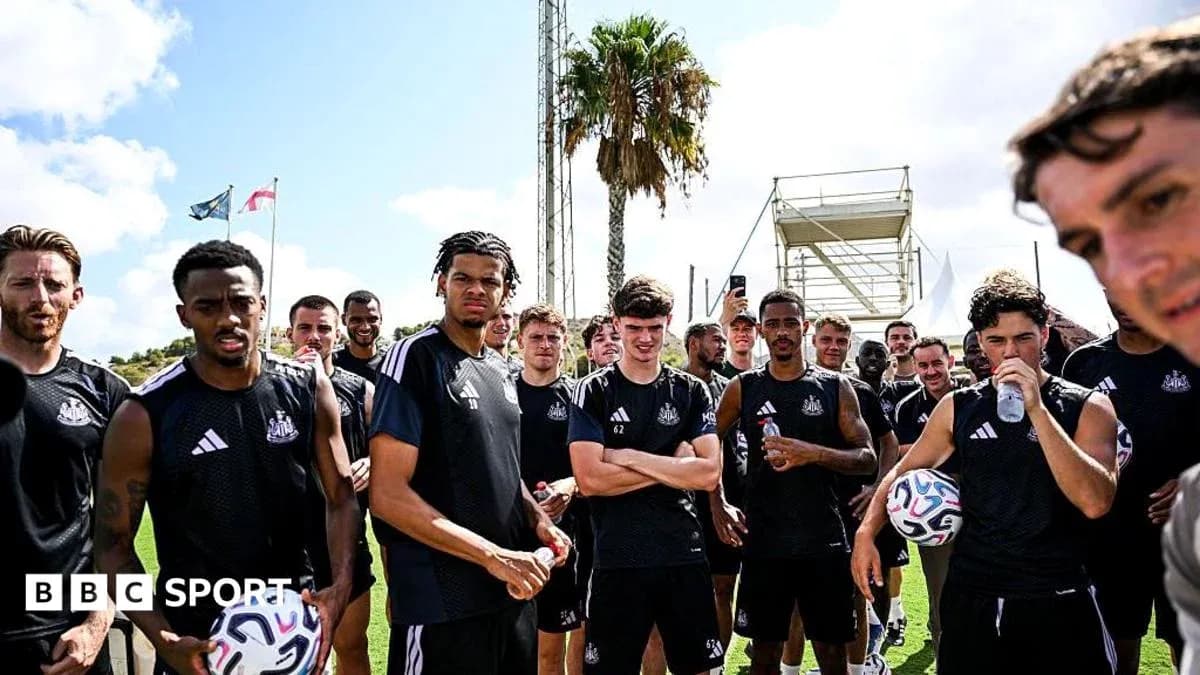
By the time the 38-year-old German left Al-Ahli and dropped into Newcastle’s pre-season camp in Spain last weekend, the clock was already ticking. Liverpool at St James’ Park on 23 August is not just around the corner; it is racing towards them.
Performance director James Bunce called the first days under Jaissle “speed dating” because every moment counts. It has felt like that on the training pitches too.
Double sessions. Relentless running. Players pushed to the edge and then nudged a little further. The intensity, one observer said, has been “off the charts”.
Jaissle, stopwatch bouncing on his chest, has already made one thing clear: effort is non-negotiable.
A new model, and the pain that comes with it
The change in the dugout is only part of the story. A new cycle has already begun on Tyneside, forced as much by balance sheets as by ambition.
Last summer’s transfer window hurt Newcastle. This one has cut even deeper.
The club’s breach of Uefa’s financial rules has led to a restrictive settlement and a hard pivot in strategy. The days of simply hoarding talent are over. Newcastle have moved towards a trading model, leaning heavily on data, scouring the continent for younger, more affordable players who can grow – and, crucially, be sold at a profit.
It sounds clinical. In reality, it has been painful.
Sandro Tonali and Anthony Gordon have gone, to Tottenham Hotspur and Barcelona respectively. Their departures were reluctantly accepted as the price of reinvestment. The likely exit of captain Bruno Guimaraes to Arsenal cuts deeper. That was never in the script.
Newcastle have also been knocked back in the market. Spain winger Victor Munoz chose Liverpool. Switzerland midfielder Johan Manzambi headed for Aston Villa. Top targets, gone elsewhere.
There is still intrigue in what has been done. Goalkeepers Lukas Hornicek and Ewen Jaouen, midfielders Aladji Bamba and Sean Steur, and forward Bazoumana Toure have all arrived. Five new faces, five bets on upside.
Sporting director Ross Wilson knows the squad is not finished.
“We have to build a model here that can compete, can win,” he said. “But also one that works for us and doesn't lead us to have to sell players we don't want to sell and lead to Uefa sanctions.”
The message is blunt: this project has to be sustainable, or it will keep eating its own stars.
The Salzburg blueprint, retooled for England
For all the upheaval, there is a thread that links Howe and Jaissle. Both demand that training mirrors match intensity. Both insist on front-foot football, not passive survival.
At Red Bull Salzburg, Jaissle built a side that hunted the ball high and often. His team ranked first per game in the Austrian league for high turnovers (9.8) and possession won in the final third (5.6) per match. They won back-to-back titles and reached the last 16 of the Champions League by suffocating opponents, not sitting off them.
He took that aggression to Al-Ahli and adapted it. The numbers stayed fierce – 8.2 high turnovers per game, 47.6 duels won per match – but he layered in more control, more balance, and claimed successive Asian Champions League titles.
That blend will be vital in England. The Premier League punishes naïve pressing and soft underbellies. Jaissle knows it.
No surprise, then, that he has already hammered home the importance of clean sheets. In one session, the number of recovery runs demanded left players visibly drained. On Thursday, he eased off, acknowledging their “heavy” legs and trimming the workload.
He may look calm in front of a microphone, but on the grass he is anything but. He storms through drills, barking instructions, even physically shifting his own staff around to show the level of intensity he wants.
New staff, raised standards
Jaissle has not come alone. Assistants Alexander Hauser, Engin Yanova and Florens Koch have joined him, along with coach analysts Maximilian Fischer and Steffen Konrad, and goalkeeping coach Alexander Bade.
The backroom reshuffle is significant, but Jaissle’s first address to those already at the club carried a clear warning: standards must rise. This is not just a new manager; it is a reset.
Newcastle’s staff know they are slightly behind Liverpool in the race to adapt to change. Andoni Iraola has had longer at Anfield to imprint his ideas. At Newcastle, analysts and coaches have been working into the early hours, trying to compress weeks of tactical education into days.
Hornicek’s crash course in English football
Nowhere is the rush more obvious than in goal.
Lukas Hornicek, fresh from a £25.7m move from Braga, has been on a crash course in Premier League reality. Less than a week into his Newcastle career, he has been drilled on the chaos of English set-plays, on the elbows, the blocks, the sheer weight of bodies crashing into him.
The message: this league is unforgiving, and opponents will test every weakness, especially in the air.
Is he ready?
“For sure,” Hornicek said, without blinking.
He will need to be. So will the rest of this young, reshaped squad.
The Liverpool game is coming fast. The Howe era has already slipped into the past. Newcastle, under Jaissle, are trying to sprint into the future while still learning how to walk a new way.
The question now is simple: can this bold, brutal reset turn potential into trophies before the model demands another sacrifice?