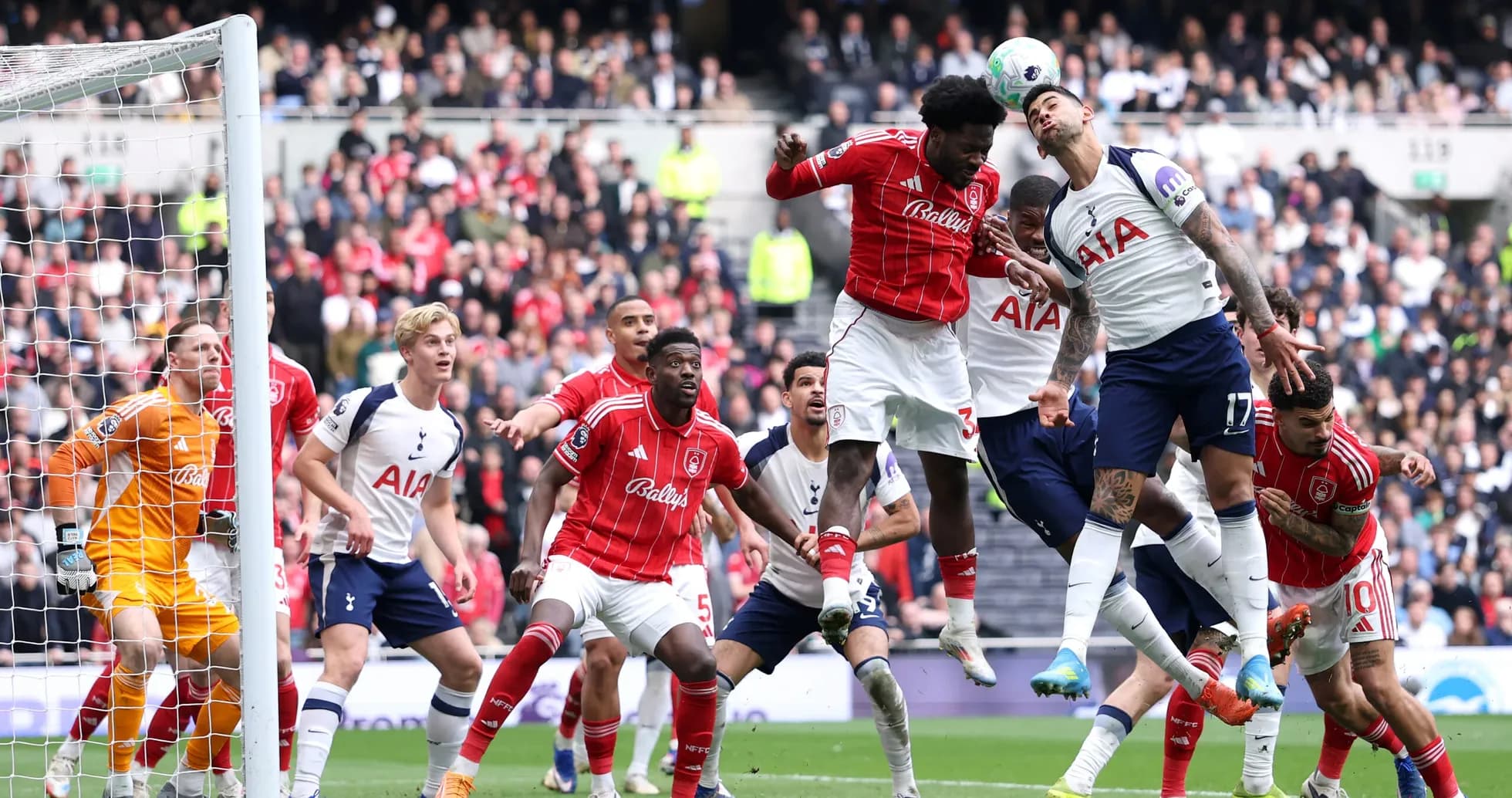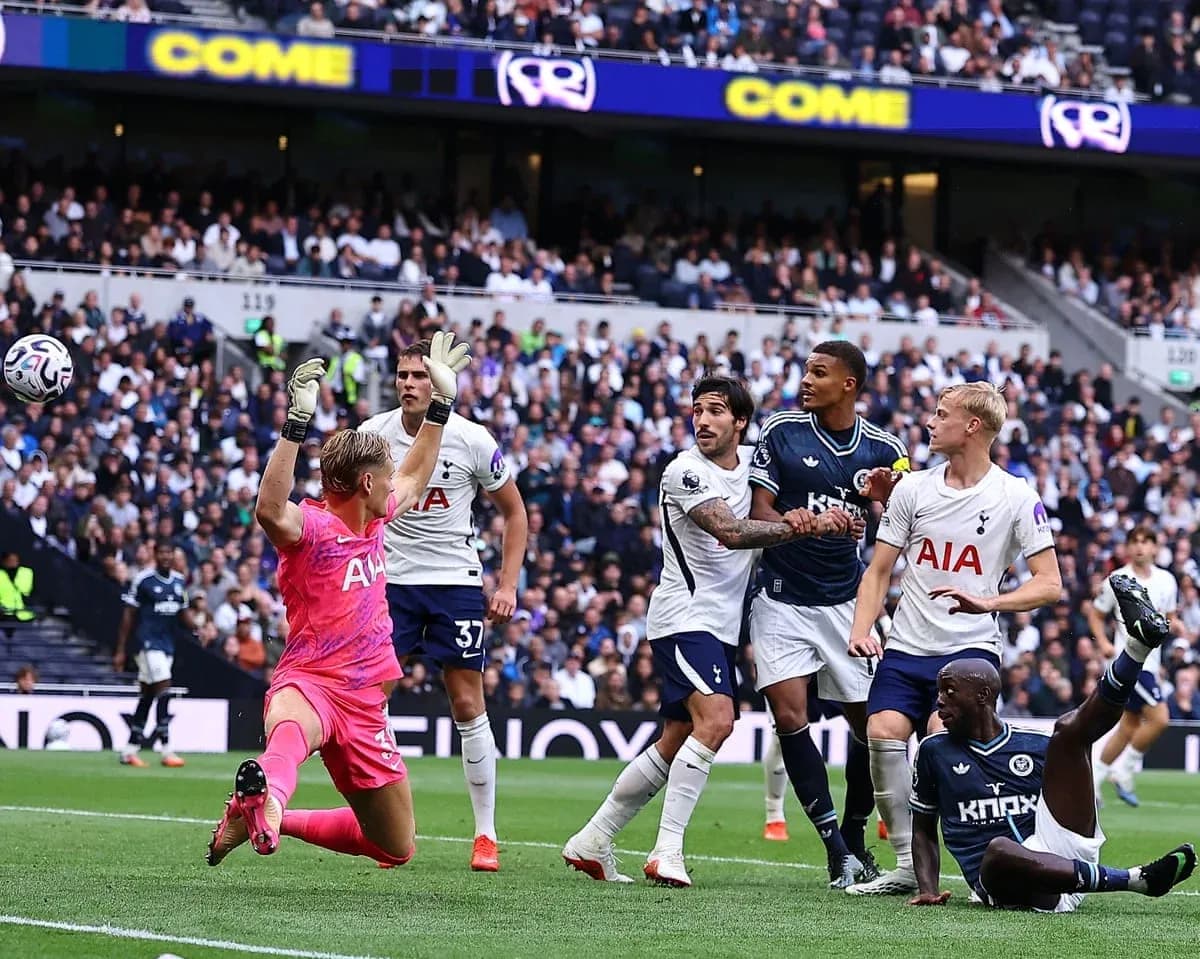
Newcastle Dominates Tottenham in Premier League Clash
Under the grey London sky at Tottenham Hotspur Stadium, this was billed as a clash between two clubs moving in opposite early‑season directions. By full time, Newcastle’s 2–0 away win had simply underlined the story the table was already beginning to tell: a hardened, coherent visiting side against a Tottenham team still searching for its identity and incision.
I. The Big Picture – contrasting trajectories
Following this result, Tottenham remain rooted to 20th in the Premier League, with 0 points from 2 matches. Overall they have failed to score in either outing and conceded 5 times, leaving them with a goal difference of -5 (0 goals for, 5 against). At home, the picture is equally stark: 1 game, 0 goals scored, 2 conceded, 0 points.
Newcastle, by contrast, leave north London sitting 5th, with 4 points from their opening 2 fixtures. Overall they have scored 4 and conceded 2, for a goal difference of +2 (4 minus 2). On their travels they now boast a perfect early record: 1 away match, 1 win, 2 goals scored, none conceded.
Both managers leaned into the same structural language, naming a 4‑2‑3‑1. But while Roberto De Zerbi’s Tottenham looked like a system still in translation, Matthias Jaissle’s Newcastle played like a side already fluent in its script.
Tottenham’s shape saw A. Kinsky behind a back four of A. Robertson, M. van de Ven, J. P. van Hecke and A. Gray. The double pivot of S. Tonali and R. Bentancur was tasked with knitting defence to attack, with an advanced trio of M. Tel, M. Fernandes and P. Porro operating behind lone forward O. Marmoush. On paper it offered balance; on the pitch it produced little penetration.
Newcastle mirrored the formation but not the execution. L. Hornicek marshalled a back line of L. Hall, S. Botman, M. Thiaw and A. Dedic. In front, the young axis of L. Miley and Nico protected and progressed in equal measure, freeing an aggressive band of three – H. Barnes off the left, J. Willock centrally, A. Elanga off the right – to support Y. Wissa as the nominal striker.
II. Tactical Voids – absences and discipline
The context of who was missing mattered. Tottenham were stripped of a creative spine: D. Kulusevski (knee injury), J. Maddison (knock), W. Odobert (knee injury), P. M. Sarr (injury) and X. Simons (knee injury) were all unavailable. That is a cluster of ball‑carriers and line‑breaking passers removed from the squad, forcing De Zerbi to lean heavily on M. Tel’s improvisation between the lines and M. Fernandes’ ability to link play.
Newcastle had their own absentees – D. Burn (ankle injury), Joelinton (injury), V. Livramento (hamstring injury) and W. Osula (injury) – but crucially their current creative and pressing core was intact. The visitors’ early‑season disciplinary record shows a controlled edge: across the campaign they have collected yellow cards fairly evenly, with a late‑game spike of 28.57% of their bookings arriving between 76–90 minutes. It is a sign of a side willing to foul tactically to protect leads.
Tottenham’s card profile is thinner but telling. All of their yellows so far have arrived before half-time, split 50.00% in the opening 15 minutes and 50.00% from 31–45. That hints at early frustration and reactive defending rather than late‑game game‑management.
III. Key Matchups – Hunter vs Shield, Engine Room battles
Hunter vs Shield was always going to revolve around Newcastle’s right flank. A. Elanga arrived here as one of the league’s form attackers: 2 goals in 2 appearances, 4 shots with 3 on target, and a sharp 7.75 average rating. His directness, supported by A. Dedic overlapping from right‑back, was set against Tottenham’s left‑side pairing of A. Robertson and M. van de Ven.
Dedic’s season numbers underline how dangerous that corridor can be. He has already delivered 1 assist, played 2 key passes and completed 89% of his passes, while winning 10 of 19 duels and blocking 2 shots. Elanga, meanwhile, has won 9 of 14 duels and completed 2 of 3 dribbles. Together they form a high‑energy channel of progression and chance creation.
Tottenham’s shield on that side – Robertson’s experience and van de Ven’s recovery pace – had to manage those repeated overloads without the usual help from a naturally defensive winger. With M. Tel inclined to drift inside, the hosts were repeatedly forced into emergency defending rather than proactive control of the flank.
In the central “Engine Room”, the contrast was equally stark. For Newcastle, L. Miley and Nico formed a disciplined screen, giving licence to J. Willock to surge. Willock’s early‑season output – 1 goal from 4 shots, 100% pass accuracy from 28 passes, and a willingness to break lines – made him the ideal third‑man runner behind Wissa.
Wissa himself has been Newcastle’s multi‑tool forward. Across the campaign he has 1 goal and 1 assist, 6 shots (2 on target), 2 key passes and a relentless duel volume: 32 duels contested, 18 won. He also draws 8 fouls and has already picked up a yellow card, a profile that screams pressing trigger and counter‑attack outlet. Against a Tottenham side that, overall, concedes an average of 2.5 goals per match and 3.0 on their travels, his movement between van Hecke and van de Ven was always likely to pry open space.
For Tottenham, the intended counterweight was the double pivot of Tonali and Bentancur feeding M. Fernandes between the lines and Marmoush up front. But with no goals in total this season and 2 consecutive matches failing to score, the home side’s attacking patterns never crystallised into high‑quality chances. Their overall average of 0.0 goals for both at home and away encapsulates the lack of cutting edge.
IV. Statistical Prognosis – what this result tells us
Newcastle’s early‑season metrics paint a picture of controlled aggression. Overall they average 2.0 goals for per match, with 2.0 at home and 2.0 away. Defensively, they concede 1.0 goals per match overall, but crucially 0.0 on their travels. One away match is a small sample, but the clean sheet at Tottenham extends a pattern: they have already recorded 1 clean sheet in total, and have yet to fail to score in any fixture.
Tottenham, conversely, are defined by absence: 0 wins from 2, 0 goals scored in total, 5 conceded. At home they concede 2.0 goals per game, away 3.0, and have failed to score in both fixtures. Their most‑used formation, 4‑2‑3‑1, has been deployed in both matches, suggesting the issue is not structural novelty but execution and personnel.
If we overlay the tactical and statistical layers, the narrative is clear. Newcastle’s right‑sided Hunter unit of Elanga and Dedic is already among the league’s most productive channels, backed by a forward in Wissa who combines end product with relentless pressing. Behind them, a young but disciplined midfield and a centre‑back pairing of Botman and Thiaw are providing enough stability for Jaissle’s side to attack with numbers.
Tottenham, stripped of Kulusevski, Maddison, Sarr, Odobert and Simons, are trying to play a possession‑dominant 4‑2‑3‑1 without their natural creators and carriers. The result is sterile control, early‑match bookings born of frustration, and an attack that has yet to register a single league goal.
Following this result, the prognosis is that Newcastle’s blend of vertical threat and controlled aggression is sustainable, especially away from home. Tottenham, meanwhile, face an urgent task: either accelerate the integration of players like M. Tel, M. Fernandes and O. Marmoush into a coherent attacking unit, or adapt the game plan to better protect a defence already under siege in a season that has barely begun.