Newcastle's Striker Dilemma: Mateta Shines as Wissa Fades
The black-and-white number nine shirt took the applause at full-time, arms aloft, soaking in the noise. But the hero of Selhurst Park wasn’t a Newcastle United striker. It was Crystal Palace’s Jean-Philippe Mateta.
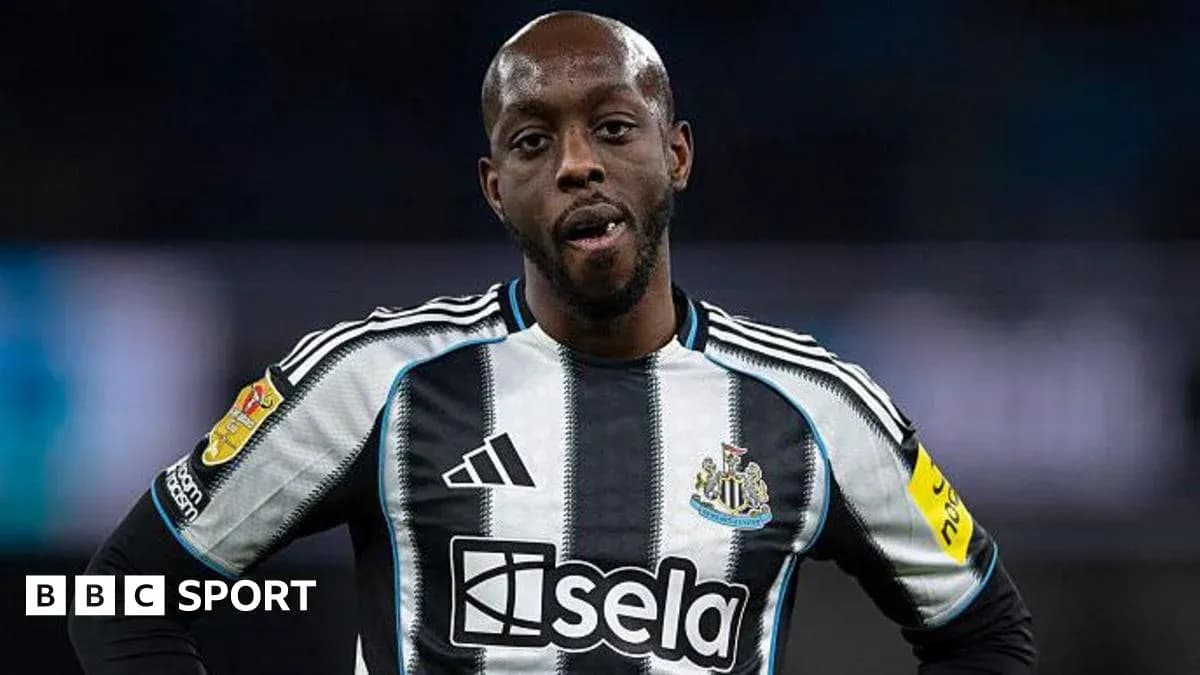
He walked off with Newcastle’s iconic jersey on his back, having just ripped the game away from Eddie Howe’s side with a ruthless late double in a 2-1 Palace win. The symbolism was hard to miss. Newcastle’s famous number nine, worn by Yoane Wissa, had barely had a kick. Palace’s own centre-forward, once a team-mate of Wissa at Chateauroux, had decided the contest.
A tale of two cameos
This was a story written from the bench. Mateta came on and transformed the game. Wissa came on and never even touched the ball.
By the time Wissa was thrown on, deep into stoppage time and straight after his friend’s second goal, the damage was done. His introduction felt less like a tactical move and more like a roll of the dice after the winning numbers had already come up.
Nick Woltemade, another of Newcastle’s big attacking investments, had only slightly longer to make an impression. He arrived in the 84th minute, a rare outing up front, but with almost no time or rhythm to work with.
Between them, Wissa and Woltemade cost £124m last summer. They watched the match slip away from the fringes.
Eddie Howe’s response was pointed. He stressed he does not pick teams “based on transfer fees” but on what he sees in training. Those words framed the biggest surprise of the afternoon: a starting place for William Osula.
Osula’s chance and the Isak shadow
Osula’s recall up front was the latest turn in Newcastle’s long search for a new focal point in attack, seven months on from Alexander Isak’s painful departure.
Isak had pushed to join Liverpool for a British-record £125m fee. Inside the club, replacing him like-for-like was considered “impossible”. That reality has hung over every decision since.
Howe’s solution was to spread the responsibility, bringing in two strikers after Callum Wilson also moved on. Woltemade arrived with pedigree and options, having previously attracted interest from Bayern Munich. Newcastle had already swung and missed on Joao Pedro, Hugo Ekitike and Benjamin Sesko. When the £69m deal for Woltemade finally landed, it felt like a signing with a clear purpose.
Early on, it looked that way on the pitch too. Five goals in his first six starts suggested Newcastle had unearthed a powerful new spearhead. His numbers still back that up: among players with at least 30 shots in the Premier League this season, Woltemade has one of the best conversion rates at 23%.
Yet in recent weeks, especially with captain Bruno Guimaraes injured, the tall German has been dragged away from the penalty area. Howe has used him more frequently in midfield, a technical presence in the centre rather than a finisher at the tip.
It frustrated the coaching staff. They knew there was more to squeeze from him in the final third but felt the schedule, and the injury issues, left little room to refine that side of his game. As the calendar eases, that excuse disappears. Newcastle will have time to work. They will also have decisions to make.
Because Howe’s system, when it has really purred, has always leaned on a very specific type of striker: quick enough to run in behind, relentless enough to lead the press. Woltemade has had to adapt to a more intense, more physical league since leaving Stuttgart. Newcastle, in turn, must decide whether they truly want to play to his strengths.
Wissa’s stutter and a costly window
The other man brought in to share the burden was supposed to be the safer bet. Premier League-proven, direct, dangerous: Wissa looked like a ready-made solution.
His build-up to life on Tyneside was anything but smooth. He forced his way out of Brentford and missed a proper pre-season. Days after joining Newcastle, he suffered a knee injury on international duty with DR Congo. The momentum he hoped to carry into a new chapter vanished almost instantly.
Even so, he started brightly, scoring twice in his first two starts. Since then, just one goal. The early edge has dulled.
Anthony Gordon was even moved inside and given an extended run through the middle ahead of Wissa. Then came Osula’s chance. The pecking order up front has shifted more than once, and none of the answers have felt definitive.
Under Howe, Newcastle’s recruitment record has largely been a strength. This time, the numbers tell a different story. The £55m outlay on Wissa looks desperate rather than decisive. The overall net spend of more than £100m last summer has yet to reshape the side in the way the club had hoped.
It was a chaotic window. Newcastle missed out on several first-choice targets, operated without a sporting director and chief executive, and made most of their signings with the season already under way. Howe was deeply involved in that process, but the end product at Selhurst Park was stark: of the five outfield signings, only Malick Thiaw started.
Decisions on the touchline
On the bench, there was no shortage of options. Jacob Ramsey and Anthony Elanga sat alongside Woltemade and Wissa, all of them candidates to change the game. All of them waited.
Even when Palace rattled the crossbar through Jefferson Lerma in the second half, a clear warning shot, Howe held back. The pattern stayed the same. The initiative stayed with the home side.
On the opposite bench, Oliver Glasner read the flow and acted. His substitutions injected tempo, belief and, in Mateta, the ruthless edge that Newcastle are still trying to buy, coach or coax back into their team.
By the final whistle, Mateta was wearing Newcastle’s most famous shirt. Wissa had barely broken sweat. For a club that once defined itself by its number nine, that image will linger.
Newcastle have spent heavily to solve their striker problem. The question now is whether they have bought the right forwards – or built the right team for them to lead.