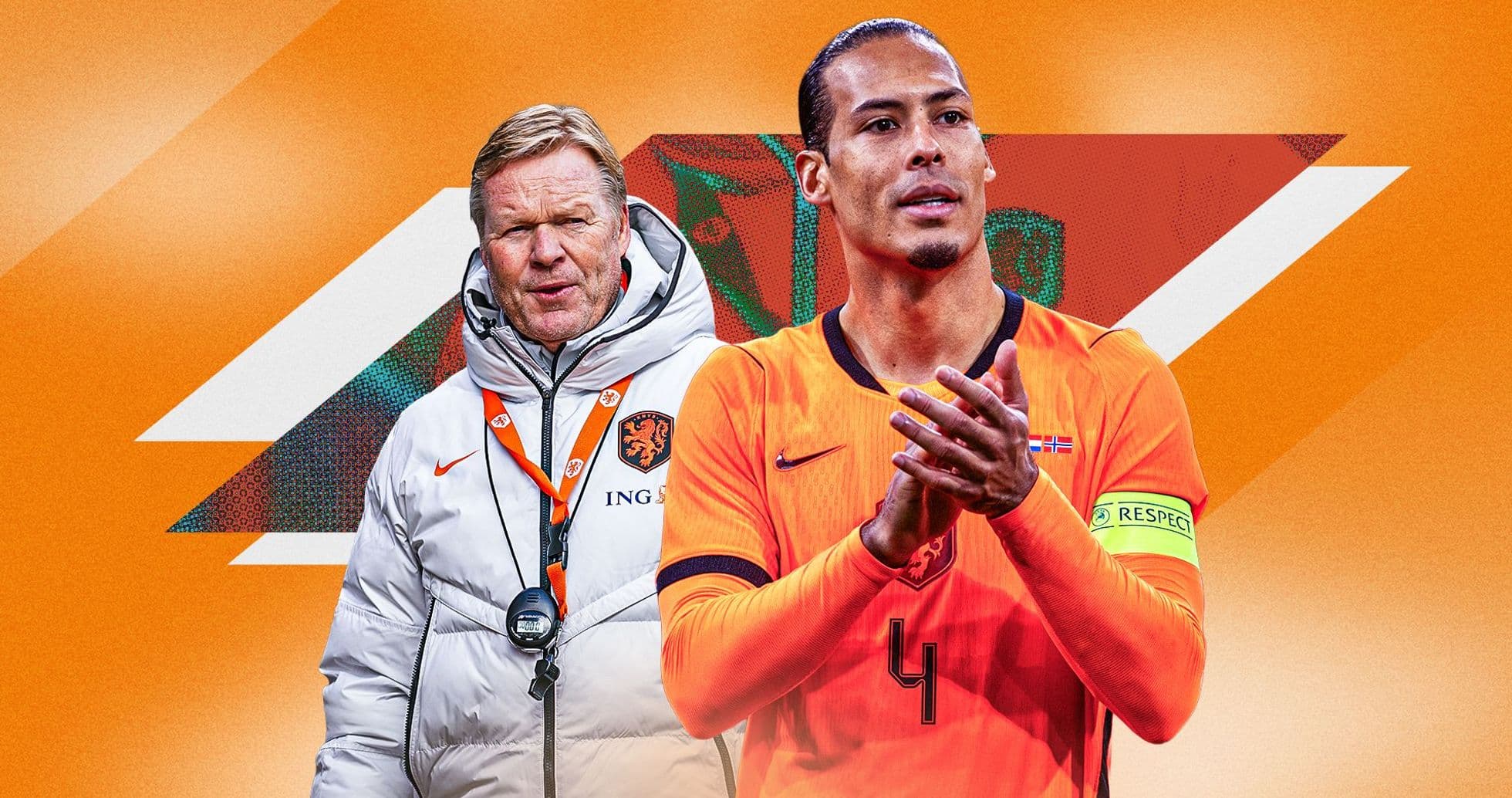
The Netherlands: A Dark Horse in the Tournament
The Netherlands arrive as the team nobody quite dares to write off, yet few are bold enough to back outright. Not one of the headline favourites, not this time, but a looming presence in the shadows – a dark horse with teeth sharp enough to rip through the knockout rounds if the pieces fall into place.
A Brutal Group, A Backline of Steel
The draw has done them no favours. Japan, Sweden and Tunisia form a group with no soft centre, three opponents capable of turning a bad half-hour into a crisis. Even so, the Oranje walk into it as favourites to finish top. They have the kind of spine most coaches would happily build a tournament around.
Virgil van Dijk still anchors the defence with that familiar mix of authority and calm, the figure everyone looks to when the game starts to shake. In front of him, Frenkie de Jong remains the metronome and the risk-taker, the one who dares to carry the ball through the press and open the pitch. Higher up, Memphis Depay and Cody Gakpo give Ronald Koeman a front line that can hurt anyone in a heartbeat.
Yet this is no complete, untouched squad. The absentees bite.
Xavi Simons, Jurrien Timber and Matthijs de Ligt are all ruled out through injury, stripping Koeman of creativity, versatility and defensive depth in one cruel sweep. Jeremie Frimpong’s omission raised eyebrows, as did the decision to leave out gifted midfielder Kees Smit. In a tournament defined by fine margins, those calls will follow Koeman into every press conference.
The warning signs did not end with the team sheet. A shock defeat to Algeria in the first warm-up game rattled confidence, and the narrow, unconvincing win over Uzbekistan did little to calm the nerves. This is a side still searching for its true tournament rhythm.
Koeman’s Second Act
Koeman’s relationship with the national team has always felt like unfinished business.
He first stepped into the role in 2018, signing a four-year deal after Dick Advocaat’s exit. He quickly restored order, guiding the Netherlands to the 2019 UEFA Nations League final and steering them safely to Euro 2020. Then Barcelona called, and he walked away, leaving a sense of momentum interrupted rather than completed.
Two-and-a-half years later, in 2023, he came back. Louis van Gaal departed, Koeman returned to the Oranje bench, and the second chapter began. Since then, the Netherlands have reached two more semi-finals – in the 2023 Nations League and at Euro 2024 – proof that this is a team consistently operating in the upper bracket, even if it has not yet crossed the final threshold.
Still, his work divides opinion at home. Koeman wins praise for trusting and integrating a new wave of young talent, refreshing a squad that could easily have grown stale. At the same time, he faces criticism for a style that does not always echo the attacking ideals of the Dutch school, the philosophy of Rinus Michels and Johan Cruyff that still hangs over every Oranje side like a tactical manifesto.
This is a more pragmatic Netherlands. Some see maturity. Others see compromise.
Memphis, Still the Reference Point
For all the debate, one thing remains constant: this is still Memphis Depay’s team.
He no longer plays in Europe and is likely approaching his final major tournament in orange, yet his influence has not dimmed. As the all-time leading scorer in Dutch national team history, Depay has moved past Robin van Persie, Dennis Bergkamp, Arjen Robben and Ruud van Nistelrooy, names that define entire eras of Dutch football. His 55 international goals are not just numbers; they are a body of work that has carried the Netherlands through qualifying campaigns and tight knockout nights.
In an era when the country lacks a classic, world-class centre-forward, Koeman’s plan again leans heavily on Depay’s ability to decide games. The Corinthians forward drove the team through qualification and maintains a strike rate of almost a goal every two matches at international level. The caveat is clear: only six of those goals have come at major tournaments. That statistic hangs over him, and over this campaign.
If the Netherlands are to punch above their perceived weight, Depay must turn that steady accumulation into decisive, high-stage moments.
The Rise of ‘Brobbeast’
Alongside him, a different kind of story is taking shape.
Brian Brobbey, once the Ajax academy product who seemed to stall at RB Leipzig, has rebuilt his career the hard way. His time in Germany never truly ignited, and the “flop” label came too quickly, too easily. He left with questions hanging over his ceiling.
Now, at 24, he has found his stride in England with Sunderland. The nickname ‘Brobbeast’ fits. He scored seven goals in 31 Premier League appearances last season, numbers that only tell part of the story. His presence, his movement, his willingness to do the ugly work up front helped propel the Black Cats to a remarkable qualification for next season’s Europa League. That achievement alone has shifted the conversation around him.
Brobbey is not just a battering ram. He fuses power with real pace, can operate as a lone striker and has rediscovered his decisiveness in front of goal. A few years ago, people lazily tagged him as “the new Romelu Lukaku”. That comparison feels dated now. He has stepped out of that shadow and become a reference point for younger forwards on his own terms.
For Koeman, he offers something the squad has sorely missed: a true line-leader who can stretch defences, occupy centre-backs and create the space that Depay and Gakpo crave.
If Depay represents the legacy and Van Dijk the authority, Brobbey might just be the symbol of where this Netherlands side is heading. Put it all together, and the picture is clear: they may not start this tournament as favourites, but if their key figures catch fire at the right time, nobody will enjoy facing them once the knockout lights come on.