
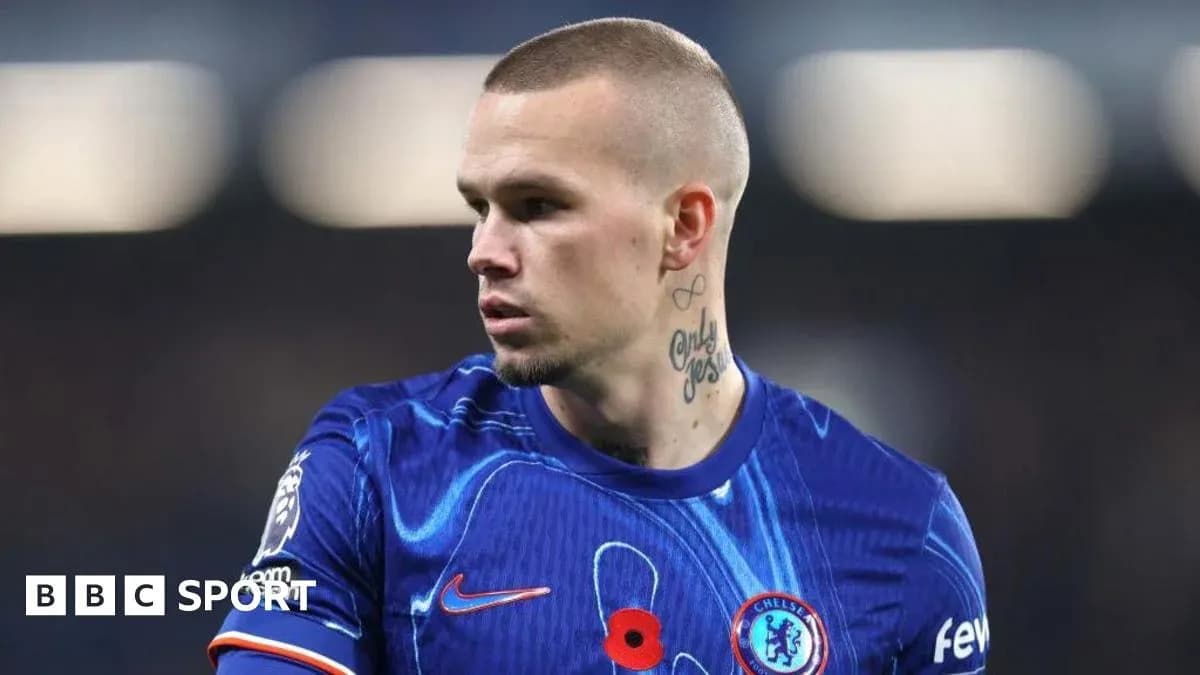
Mykhailo Mudryk Cleared to Return to Football After Doping Case
Mykhailo Mudryk’s long exile from football is over. The Chelsea winger has been cleared to play again with immediate effect after reaching an agreement with the Football Association over his doping case, drawing a line under what he called “the most difficult period” of his career.
The 25-year-old has not played a competitive game since November 2024. An out-of-competition test while on international duty with Ukraine in October that year produced an adverse finding for meldonium, a banned cardiovascular medication that can boost stamina and respiratory capacity. The FA provisionally suspended him, then handed down the maximum four-year ban in January 2025, a punishment that would have ruled him out until around December 2028.
Mudryk fought it. He appealed to the Court of Arbitration for Sport, insisting he had “never knowingly or intentionally taken any banned substance”. For months, the case played out in the shadows, shielded by the FA’s strict anti-doping confidentiality rules. His suspension only became public in April, when the appeal to CAS brought the story into the open.
Now the picture has flipped. The FA has confirmed that disciplinary proceedings are resolved and that Mudryk can return to competition “with immediate effect”, after he accepted that he had broken anti-doping rules but agreed to a suspension equal to the time he has already served. The governing body described the level of meldonium in his sample as “a low concentration” and highlighted a crucial development: changes to the World Anti-Doping Agency’s technical document on meldonium.
Those changes do not apply retrospectively. Yet they matter. The FA noted that if Mudryk’s test had been carried out under today’s guidelines, “the concentration of meldonium in the sample would not have been reported” and no adverse finding would have been recorded at all. With WADA’s agreement, the FA and Mudryk have now settled the appeal, clearing the way for his return.
Chelsea, who never walked away from their £61m investment, moved quickly to welcome him back. The club said it is “pleased that the matter has now reached a conclusion which allows him to return to football with immediate effect” and stressed that it had “always supported Misha throughout this process while fully respecting the integrity of the anti-doping system and the legal process”.
They also pointed firmly to the context: under current testing standards, “no anti-doping rule violation would have resulted” from his sample. For Chelsea, that nuance matters. It allows the club, the player and the authorities to move on without undermining the system that sidelined him in the first place.
Mudryk, contracted to Stamford Bridge until 2031 as part of Chelsea’s long-term amortisation strategy on major signings, now faces a very different challenge: turning 20 months of lonely work into match sharpness. During his suspension he could not set foot in the club’s training ground or work with Chelsea staff. He effectively became a Premier League star without a team.
He refused to let his fitness drift. Mudryk paid for private coaches, hired goalkeepers for finishing drills and used facilities at non-league Uxbridge FC in London. He even organised a training camp in Austria, where footage showed him sprinting, shooting and working through attacking patterns with the intensity of a man trying to hold on to a career, not just a contract.
Those close to him acknowledge that no private programme can truly replicate the pace and pressure of elite football. They also insist he is ready for the fight, convinced that the physical base he has built gives him a platform to recover his best form. Throughout, Chelsea staff offered support from a distance, careful not to breach the strict limits of his suspension, but present enough to make sure he did not feel abandoned.
Now comes the football question. Chelsea will take him on their pre-season tour and say they are looking forward to helping him “return to full fitness, back into the squad and back onto the pitch”. What that looks like in practice is still open. A direct route into the first team is one option. A loan, potentially involving sister club Strasbourg, is another. A permanent move cannot be ruled out.
For Mudryk, this is not just a legal victory or an administrative update. It is a career reset. When he arrived from Shakhtar Donetsk in one of the most closely watched transfer sagas of 2023, he was billed as a flagship signing for a new era at Stamford Bridge. Since then, his story has been defined as much by uncertainty and absence as by anything he has done on the pitch.
That changes now. The ban that threatened to freeze his prime years has gone. The contract still runs to 2031. The door to Chelsea’s dressing room is open again. What he does with that second chance will decide whether his time in west London becomes a cautionary tale—or the comeback that finally matches the hype of his arrival.



