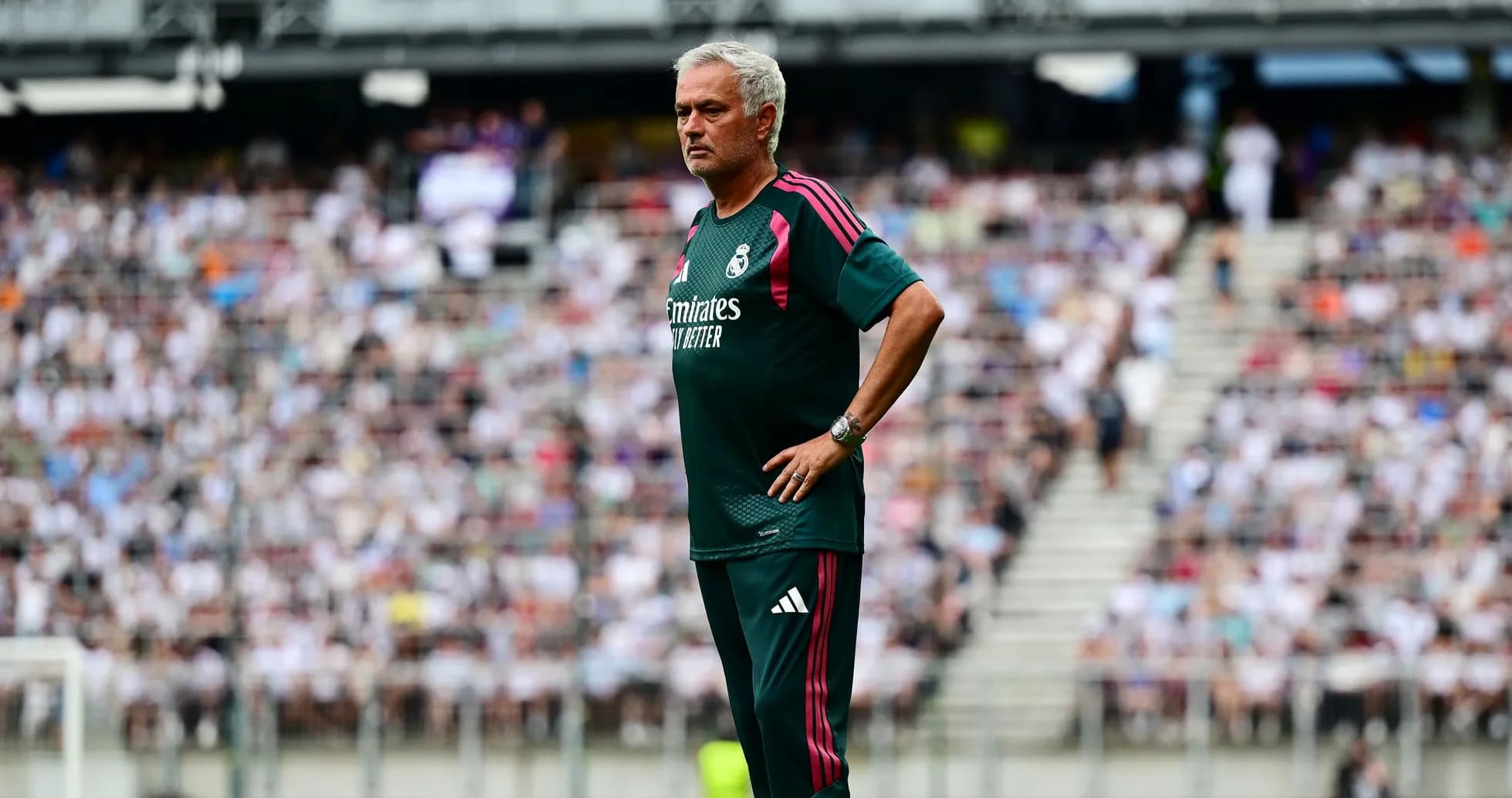
Jose Mourinho's New Plan for Real Madrid: Building Around Bernardo Silva
Jose Mourinho has lost his Rodri gamble. Now he wants to rebuild the heart of Real Madrid around Bernardo Silva.
Rodri, long viewed inside the Bernabéu as the perfect anchor for Mourinho’s new project, picked up the phone this week and delivered the answer Florentino Pérez did not want to hear. After ten days of meetings, calls and even a face‑to‑face sit‑down, the Manchester City midfielder chose Barcelona instead. No late drama, no hidden twist. Just a clear decision Madrid had to swallow.
The response in Valdebebas was swift. With the rejection confirmed at the start of the week, the club went back to the blueprint drawn up with Mourinho when he walked through the door: assess the squad, identify reinforcements, and reshape the midfield from inside as much as from the market.
At the centre of that plan stands Bernardo Silva.
Mourinho’s Plan B: Bernardo Goes Deep
From the first conversations between Mourinho and the Madrid hierarchy, one name sat at the top of the coach’s list: Bernardo. Not as a winger, not as a pure No 10, but as a hybrid organiser, dropping closer to the base of midfield.
On paper, it sounds like a gamble. Bernardo is no specialist holding midfielder and he does not mirror Rodri’s profile. He is a player who loves to glide in off the right, find pockets near the edge of the box and stitch attacks together. Yet Mourinho sees something else: a footballer willing to work, to press, to track back, and to bring order to a team’s passing rhythm when the game starts to fray.
The idea is clear. With Bernardo sliding into a deeper role alongside Aurelien Tchouameni, Madrid believe they can construct a new starting point for their play. Not a like‑for‑like Rodri replacement, but a different way of controlling matches, with more brains on the ball and more legs than last season in that crucial zone in front of the defence.
It is no coincidence that the club moved decisively to bring in the former Manchester City man at Mourinho’s explicit request. The Portuguese coach wants someone he trusts to interpret his instructions, to knit together the transitions between defence and attack, and to set the tempo when Madrid build from the back. Bernardo, in his eyes, can be that conduit.
Market Still Open, but the Hierarchy Is Set
None of this means Madrid will shut the door on new arrivals. There are still more than three weeks left in the window, and movement is expected in both directions. The club know the market well enough to understand that opportunities can appear late, especially for young midfielders whose clubs suddenly need to sell or whose roles change overnight.
Inside the offices, though, there is also realism. There is no other Rodri out there. Not with his exact blend of positional discipline, aerial presence and passing range. If another option emerges, it will be a different type of organiser, not a clone.
That is why the internal solution carries so much weight. The concept of pushing Bernardo into a deeper role was not a panicked reaction to Rodri’s refusal. It had been on the table even before pre‑season work began, part of a broader discussion about how to give Mourinho more technical quality in the first phase of build‑up.
Young Names on the Radar
Scouts have not downed tools. Over recent months, several names have circulated through Madrid’s recruitment meetings.
- Adam Wharton, 22, at Crystal Palace.
- Kees Smit, 20, at AZ Alkmaar.
- Ayyoub Bouaddi, just 18, at Lille.
All three have been monitored, all three fit the profile of young midfielders who can grow into larger roles over time rather than walk straight into the starting XI.
None of them, for now, are absolute priorities. They sit on the radar, options to revisit if the market shifts or if Mourinho feels he needs a different piece in his puzzle later in the season. For the moment, the club’s energy is directed towards making the Bernardo‑Tchouameni axis work.
The Weight on Bernardo’s Shoulders
That places a heavy responsibility on Bernardo Silva. He arrives not only as a high‑profile signing from Manchester City, but as the man Mourinho expects to help drive the Madrid engine room at a time of structural change.
He will be asked to sacrifice some of the freedom he enjoyed higher up the pitch in England. To think first about balance, distances, and passing lines rather than the final flourish in the attacking third. To drop in, to show for the ball under pressure, to help Madrid escape the press and then accelerate play once they cross halfway.
It is a new challenge, and a demanding one, in a club where the midfield has defined eras. From the days of Xabi Alonso and Luka Modric dictating tempo to the more recent evolution around younger legs, the standard is unforgiving.
Rodri chose Barcelona. Madrid moved on. Now the question is simple and brutal in its clarity: can Bernardo Silva turn that disappointment into the foundation of Mourinho’s new Madrid, or will the club be forced back into the market sooner than they planned?