Frosinone's Tactical Mastery Secures 2–0 Win Over Como
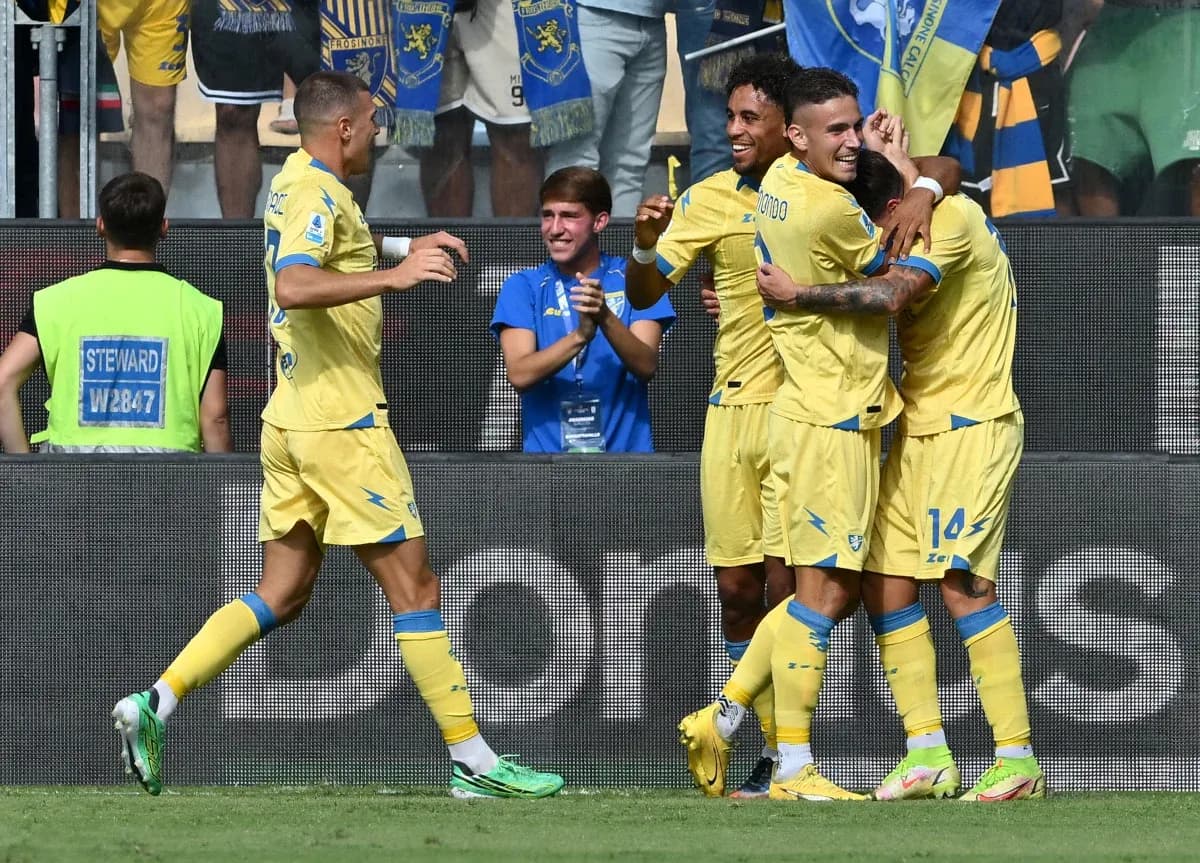
The afternoon at Stadio Benito Stirpe told a story of a young side growing into its Serie A skin. Under a bright Frosinone sun and the watch of Daniele Chiffi, Massimiliano Alvini’s team delivered a controlled, almost mature 2–0 win over Como that said as much about structure and balance as it did about individual talent.
I. The Big Picture – A young contender finds its shape
Heading into this game, Frosinone were already one of the early-season revelations. They sat 6th with 10 points from 5 matches, their overall goal difference +5, built from 9 goals scored and 4 conceded. At home they had been proactive and slightly chaotic: 5 goals for and 3 against in 3 games, an average of 1.7 goals scored and 1.0 conceded. On their travels they were even more efficient, averaging 2.0 goals scored and 0.5 conceded.
Como arrived as equals on paper, also on 10 points but 8th in the table, with an overall goal difference of +3 from 9 scored and 6 conceded. Their identity under Cesc Fabregas was clear: a possession‑leaning, technically driven side, comfortable away where they had already taken 7 goals from 4 matches, averaging 1.8 scored and 1.3 conceded on their travels.
Both coaches mirrored each other on the tactical board with a 4‑2‑3‑1, but the systems behaved very differently once the whistle blew.
For Frosinone, the spine that has carried their early charge was all present: L. Palmisani in goal; a back four anchored by G. Calvani and G. Bracaglia; a double pivot of G. Calo and P. Masini; and a three‑man creative band of F. Ghedjemis, R. Schmid and G. Kvernadze behind the in‑form striker A. Raimondo.
Como’s answer was equally technical: J. Butez in goal; a back line of Y. Couto, J. Ramon, T. Chalobah and A. Valle; L. Milla and L. Da Cunha as the first build‑up station; and a fluid attacking quartet of A. Diao, N. Paz, M. Baturina and A. Douvikas.
II. Tactical Voids – Absences and discipline
Frosinone’s only listed absentee was F. Grillitsch, out with a thigh injury. On paper, his absence might have removed a layer of experience and control in front of the defence, but Alvini has built a coherent block without him. The double pivot of Calo and Masini has quietly become a functional replacement, offering vertical passing and aggressive counter‑pressing rather than a pure holding specialist.
Disciplinary trends for both sides framed the risk zones. Frosinone’s yellow cards are spread, but 25.00% of their cautions come between 46–60 minutes and another 16.67% between 61–75, a sign of how aggressively they contest the early phases of the second half. Como, by contrast, have a more scattered profile: 25.00% of their yellows arrive in each of the 31–45, 46–60, 76–90 and 91–105 minute ranges, suggesting that their intensity – or desperation – spikes at several points rather than one clear window.
On the individual level, G. Bracaglia is a walking warning sign and a weapon in equal measure. He leads the league’s card charts with 3 yellows in 5 games, but those numbers sit alongside 7 successful blocks and 5 interceptions. He plays on the edge, and Alvini has clearly decided that the upside – front‑foot defending, aggressive stepping out of the line – is worth the risk.
III. Key Matchups – Hunter vs Shield, Engine Room vs Orchestrator
The headline duel was always going to be A. Raimondo against the Como back four. With 4 goals in 5 appearances and 10 shots (6 on target) this season, Raimondo is a classic penalty‑box hunter who thrives when the ball is worked into the half‑spaces around him. His partnership with G. Kvernadze and R. Schmid is the core of Frosinone’s attacking identity.
Kvernadze, one of Serie A’s early breakout stars, came into the game with 3 goals and 1 assist, plus 30 dribble attempts with 16 successful. Operating from the left in the 4‑2‑3‑1, he constantly looks to isolate full‑backs, drive inside and either shoot or slip passes into Raimondo’s runs. Against Como’s right‑back Y. Couto, this was a duel of pure tempo: Kvernadze’s directness against Couto’s attacking instincts and occasional defensive looseness.
Behind them, Schmid is the quiet conductor. With 3 assists already and 130 completed passes at 70% accuracy, he is the link that turns Frosinone’s possession into penetration. His positioning between the lines, often drifting into the right half‑space, forces opposition pivots to choose between stepping out or protecting the centre.
On the other side, Como’s creative axis runs through M. Baturina and A. Diao. Baturina combines 2 goals and 1 assist with 140 passes at 89% accuracy, a high‑volume, high‑precision profile that Fabregas clearly trusts as a primary playmaker. Diao, with 2 goals, 1 assist and 11 successful dribbles from 22 attempts, offers the vertical threat from the flank, mirroring Kvernadze’s role but from a Como perspective.
The “engine room” battle therefore pitted Frosinone’s double pivot and centre‑backs against this technical core. Calo and Masini had to screen Baturina’s pockets between the lines while also tracking Diao’s inside movements. Behind them, Calvani and Bracaglia were tasked with stepping into midfield when needed – something Bracaglia excels at, as his 7 blocks and 5 interceptions underline.
IV. Statistical Prognosis – Why Frosinone’s structure prevailed
Overall this season, both teams had identical attacking output heading into the fixture: 9 goals scored each, averaging 1.8 per game. The difference lay in defensive solidity. Frosinone had conceded only 4 overall (0.8 per match), while Como had allowed 6 (1.2 per match). On their travels, Como’s average of 1.3 goals conceded hinted at vulnerability once their midfield press is bypassed.
Alvini’s decision to lean into his preferred 4‑2‑3‑1 – used in all 5 league matches – gave Frosinone continuity. The team’s clean‑sheet profile (2 overall, split evenly home and away) and their ability to fail to score only once overall suggested a stable floor on both ends. Como, by contrast, had yet to keep a clean sheet in any venue, and had already experienced a 2–0 away defeat, the exact scoreline that unfolded here.
The 2–0 win ultimately felt like the logical expression of the numbers. Frosinone’s superior defensive record, combined with the individual form of Raimondo and Kvernadze and the creative weight of Schmid, tilted the balance. Como’s technical quality in Baturina and Diao was evident, but against a compact, well‑drilled block anchored by Calvani and Bracaglia, their usual passing lanes were narrower, their shots more contested.
Following this result, Frosinone’s early‑season narrative hardens: this is no longer a plucky outsider but a structured, tactically coherent side with real top‑half, even European play‑off, ambitions. Como, meanwhile, are reminded that in Serie A, artistry in possession must be matched by resilience without the ball – especially on their travels.