Mauricio Pochettino's Frustration After U.S. Loss to Turkey
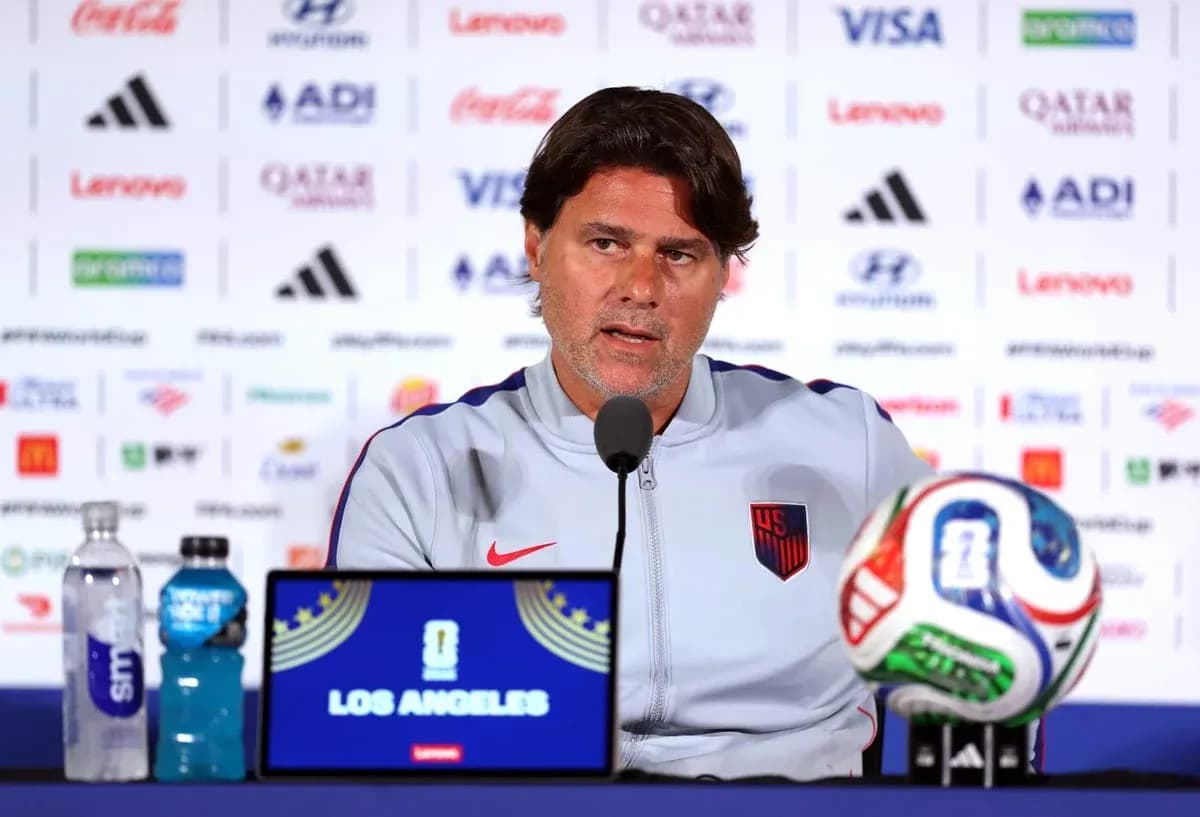
INGLEWOOD, Calif. — Mauricio Pochettino walked into the press room as a group winner and walked out as a man visibly irritated that nobody seemed to care.
Minutes after a 3-2 defeat to Turkey at SoFi Stadium, the U.S. men’s national team head coach snapped the lid shut on his post-match press conference, bristling at the line of questioning that focused on the loss, the performance and the team’s momentum — and not on the bigger picture.
“It cannot be possible that Turkey celebrates three points, Australia celebrates getting through, Paraguay celebrates getting through… for you to not say congratulations for winning the group, it’s a little bit sad,” he said, his voice tightening.
“I need to remind everyone we won the group, sorry guys, we won,” he added, then stood up and strode out, ending the conversation on his own terms.
A dead-rubber sting at the death
The match itself carried no real jeopardy for the U.S. Their place atop Group D had been secured after two games, which gave Pochettino the freedom to overhaul his XI. He took it. Only Ricardo Pepi and Weston McKennie kept their starting spots from the win over Australia.
The gamble was clear: protect legs, protect suspensions, accept whatever came on the night.
Turkey, though, treated it as a lifeline. They stole all three points with the final kick of the game, striking in the eighth minute of stoppage time to turn a lively but largely experimental U.S. performance into the team’s first defeat of the tournament.
Pochettino, repeatedly, circled back to the same point: the table hadn’t changed.
“I’m happy, maybe I’m not showing because your questions are a little bit weird,” he told reporters just before his abrupt exit. “But I’m happy, the players are happy because we are first. I’m confused, maybe the vibes are like we go home tonight and Turkey stays (in the World Cup), no?”
Rotation, risk and a manager on edge
This was rotation in capital letters. No Tyler Adams, no Folarin Balogun, no Chris Richards, no Antonee Robinson. All four, sitting on yellow cards, watched from the sidelines, safe from suspension with bookings wiped after the group stage. McKennie lasted 86 minutes before Malik Tillman replaced him. Pepi, who had started against Australia in place of the injured Christian Pulisic, led the line again.
The price of that sweeping change was cohesion. The U.S. mixed sharp moments with soft ones. Auston Trusty opened the scoring, only for Turkey to respond and then seize control through a man-of-the-match display from Arda Guler, who scored and orchestrated most of his side’s best attacks. Sebastian Berhalter dragged the U.S. level early in the second half, but the late Turkish winner cut through any sense of a comfortable, consequence-free evening.
So when questions turned to “momentum,” Pochettino bristled.
“Explain what you mean in momentum — I don’t understand,” he shot back. “To play with the same team we played against Australia to take a risk? To receive a yellow card (suspension)? To risk players who maybe have problems? I don’t understand. Germany lost momentum too and they played with (mostly) the same team (in their loss to Ecuador on Thursday).”
For him, this was a calculated trade-off: rhythm sacrificed for freshness and security.
Pulisic returns — and lights up the pitch
One major box, at least, was ticked.
Pulisic, who had limped out at halftime against Paraguay with a calf issue, returned in the 58th minute. He replaced Tim Weah on the left and immediately shifted the temperature of the game. He moved freely, drove at defenders, and instantly became the most dangerous American attacker on the field.
The U.S. may have lost the match, but they regained their star.
“The objective was not just to win, but to get Christian 30-40 minutes,” Pochettino said. “He finished well and he made an impact on the pitch.”
There was one sour note: Pulisic was nutmegged by Guler in the buildup to Turkey’s stoppage-time winner. It was a small humiliation on an otherwise reassuring night for his fitness, and the kind of detail that lingers only until the next knockout game kicks off.
Best-ever group haul, thin applause
Strip away the noise of the late defeat, and the numbers tell a different story. With six points, this U.S. side has matched the country’s best-ever group-stage return, equaling the 1930 team — though wins back then were worth two points, not three.
That context barely surfaced in the room. Pochettino noticed.
“No one congratulated us for finishing first in a very difficult group,” he said in another exchange, seizing the chance to reshape the narrative. “I congratulate the players, staff and fans. Now I’ll answer your question. You always learn when you are in a World Cup.”
He wanted recognition, not for a dead-rubber defeat, but for a group navigated with authority, for a squad rotated with an eye on the long road rather than the last scoreline.
Bosnia and Herzegovina await
There is no time left to argue about tone. The round of 32 is set. Bosnia and Herzegovina await in Santa Clara next Wednesday, a knockout tie that will define whether this group-stage campaign becomes a platform or a footnote.
“We’re a much better team now than we were before,” Pochettino said. “That will be put to the test next game.”
The debate over momentum can rage on talk shows and timelines. For Pochettino, the only answer that counts now will come under the lights in California, with no rotation, no safety net — and no room left for reminders about who finished first.