Matt Crocker Leaves U.S. Soccer for Saudi Arabia Role
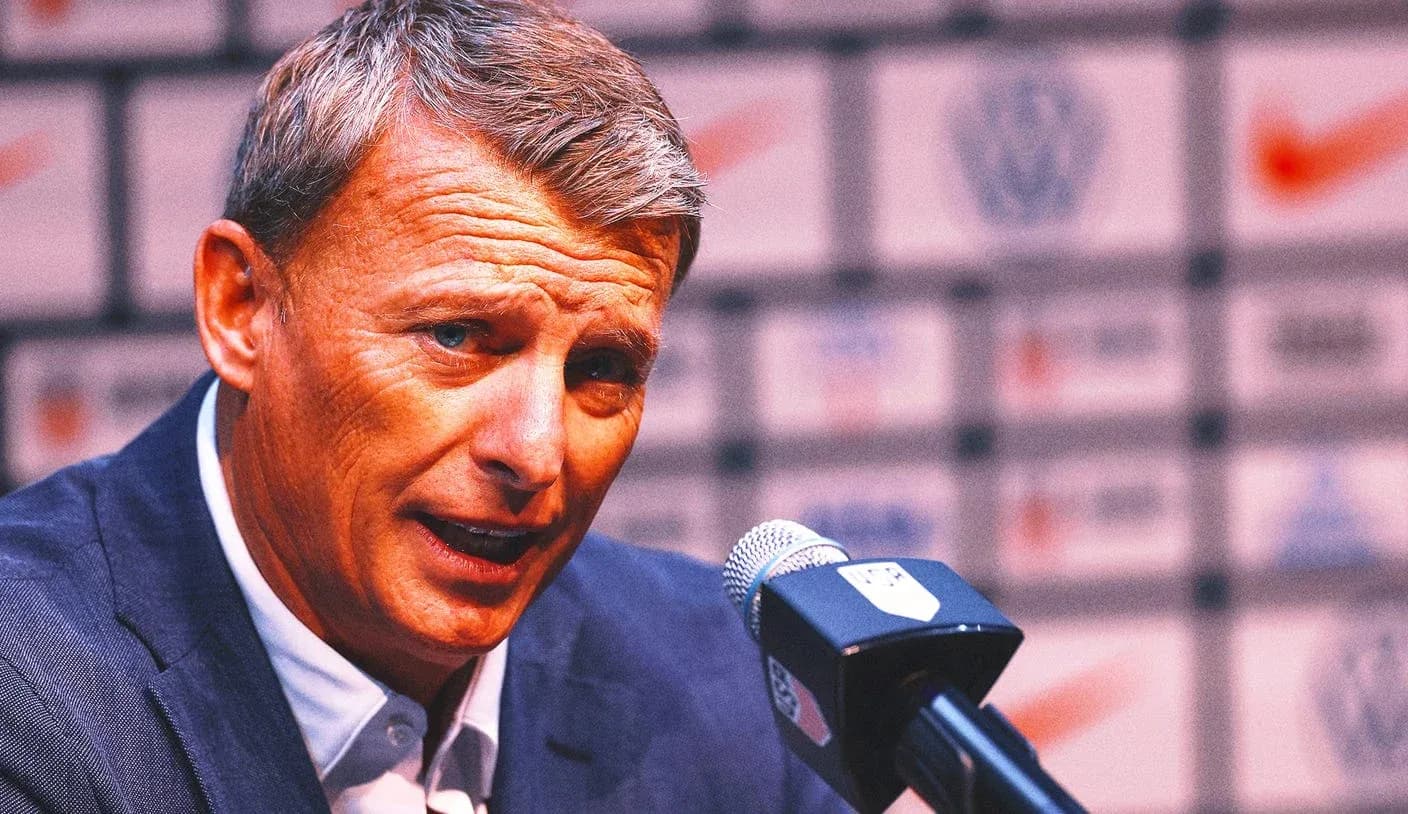
Matt Crocker’s abrupt exit from U.S. Soccer drops just months before a home World Cup, but the man who built the federation’s modern sporting structure is already headed toward the game’s next financial superpower.
The sporting director is leaving his post with immediate effect to take a similar role with Saudi Arabia, multiple sources confirmed Monday, stepping away from a project he has helped shape since 2023 and into the orbit of the 2034 World Cup hosts.
A Power Broker Walks Away
Crocker arrived from Southampton in 2023 with a clear brief: modernize U.S. Soccer’s on‑field operation and set up the men’s and women’s national teams for a defining three-year stretch. He delivered two of the most high-profile coaching appointments in the federation’s history.
He hired Emma Hayes to rescue the U.S. women’s program after its bruising exit from the 2023 Women’s World Cup. She did more than steady the ship. In just her 10th match in charge, Hayes led the USWNT to a fifth Olympic gold medal, beating Brazil in Paris and snapping the sense of drift that had surrounded the team.
On the men’s side, Crocker navigated one of the messiest coaching sagas in U.S. Soccer history. With Gregg Berhalter in limbo after the public fallout involving Gio Reyna’s family, the men’s team drifted without a permanent coach. Crocker first brought Berhalter back, then, a year later, dismissed him in July 2024, days after the U.S. became the first Copa América host not to escape the group stage.
He then landed Mauricio Pochettino, a coach with Chelsea and Paris Saint‑Germain on his résumé and a reputation as one of the elite managers in the game. Pochettino took over in September 2024, tasked with leading a golden generation into a World Cup on home soil.
That is the project Crocker now leaves behind.
“Zero Impact” on World Cup Plans
The timing is jarring: the U.S. men open their World Cup campaign on June 12 against Paraguay in Los Angeles. Yet inside the federation, the message is blunt—nothing changes.
"I anticipate zero impact on World Cup preparation as a result of Matt's decision," COO Dan Helfrich said Monday. "Mauricio and his staff have full control of the preparations for this summer's tournament, and we have full confidence in them. This transition in no way impacts those plans, which have been long-established."
Crocker’s duties will be spread across familiar faces. Assistant sporting director Oguchi Onyewu, head of women’s development Tracey Kevins and Helfrich himself will collectively carry the sporting load in the run‑up to 2026.
Helfrich insisted the search for a full‑time successor has already started and will be broad.
U.S. Soccer has begun "a thoughtful and comprehensive search for a successor," he said, noting the federation will look "both domestically and globally." Onyewu, a veteran of the 2006 and 2010 World Cups, was a serious candidate for the sporting director role before Crocker’s appointment three years ago. His name will inevitably resurface now.
From Cardiff to Atlanta to Riyadh
Crocker, a Cardiff native, stepped into the U.S. job after Earnie Stewart left in early 2023 to join PSV Eindhoven. He did not ease in. He took over with the men’s team leaderless and the women’s program reeling from an early World Cup exit. He also inherited a federation racing against the clock to build infrastructure worthy of a World Cup co‑host.
One of Crocker’s key legacies will sit just outside Atlanta. He played a major role in the planning and design of the Arthur M. Blank U.S. Soccer National Training Center, a $228 million facility that opens next month. It will become the base for the U.S. men ahead of their final two World Cup tune‑ups, against Senegal on May 31 and four‑time world champion Germany on June 6.
That body of work, plus his earlier spell as head of development at England’s Football Association, has not gone unnoticed abroad. Saudi Arabia, armed with vast resources and guaranteed host status for the 2034 World Cup, has been building a long‑term football blueprint. Crocker fits that profile.
Moroccan Nasser Larguet, Saudi Arabia’s technical director since 2002, is expected to leave his post this month, according to multiple reports. Crocker now steps into a system with a clear target date and the means to chase it.
"If you're going to compete at the highest levels in the sporting world, you expect that team members will have other opportunities," Helfrich said. "Soccer in our country and the federation overall are in a better place than several years ago when Matt joined, and we're grateful to him for those contributions."
A World Cup Collision Course?
The twist in all of this? Crocker may not have to wait long to see his old employers across the pitch.
Ranked 16th in the world, the U.S. men could face No. 61 Saudi Arabia in several different World Cup scenarios this summer. The paths are tangled, but the possibilities are very real.
If Pochettino’s side wins Group D and advances to the round of 16, a meeting with the Saudis could arrive in Seattle on July 6. If both nations finish second in their groups and then win their round‑of‑32 matches, they would meet in Atlanta on July 7. Should both scrape through as third‑place group finishers and win their first knockout game, the matchup would land on July 4 in Philadelphia.
There is an even more glamorous route. If both teams win their groups, they would be on track to collide in a quarterfinal in Los Angeles on July 10. In theory, they could go deeper still, meeting in a semifinal or even the World Cup final on July 19 in East Rutherford, New Jersey.
Saudi Arabia has only reached the knockout rounds once in six previous World Cups, back in 1994—the last time the United States hosted the tournament. The Green Falcons are chasing a second breakthrough on American soil. The U.S. is hunting something bigger: a landmark run that justifies years of investment and ambition.
Crocker helped lay the foundation for that push. Now he’ll be on the other side of the draw, building a rival. The question for U.S. Soccer is no longer what he brought, but how far the structure he left behind can carry them without him.