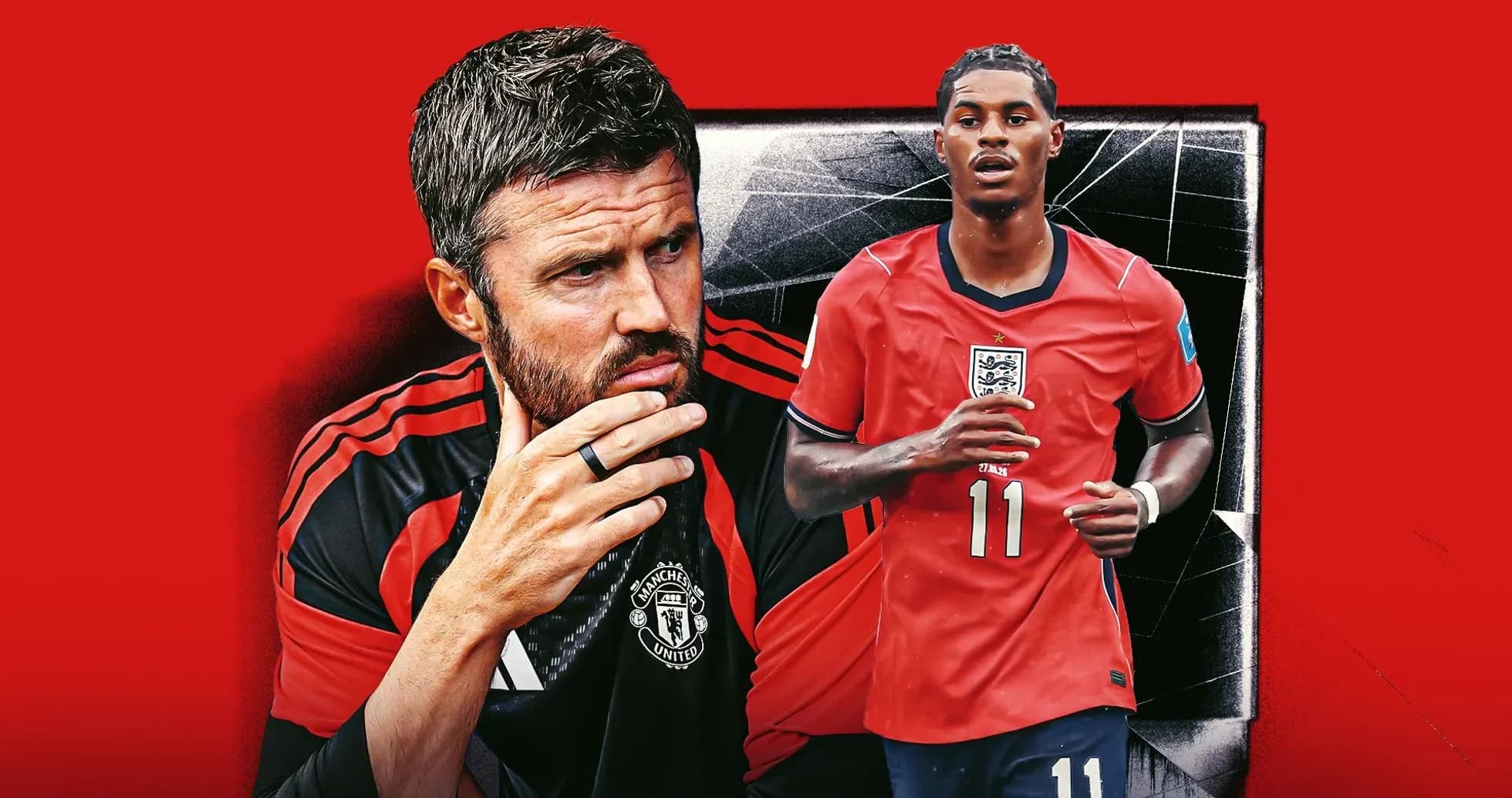
Marcus Rashford's World Cup Journey: A Diminished Opportunity
Marcus Rashford went to the 2026 World Cup needing a shop window. He came back with the shutters half‑down.
England’s campaign in North America offered him a stage, but also a rival. Anthony Gordon had already arrived as the new face on the left flank, both for club and country, and that theme followed Rashford all the way from Barcelona to the Three Lions.
A World Cup that closed doors
In the build-up to the tournament, Thomas Tuchel had a straight choice on the left: Gordon or Rashford. Gordon started slowly, Rashford struck a composed finish to seal the opening win over Croatia, and for a brief moment it felt like the old story might return – the academy star grabbing his chance when it mattered.
Then the momentum died.
After two flat, unconvincing victories over Panama and DR Congo, Tuchel made his call. Rashford was dropped, Gordon promoted, and from that point the Barcelona winger became a central attacking figure in England’s run through the knockouts. Rashford’s World Cup ended with a modest line: one goal, one assist – the latter coming in a third-place play-off against a French defence that barely turned up.
All of it unfolded against a far more damaging backdrop: while Rashford was trying to relaunch himself on the pitch, his options off it were quietly evaporating.
Barcelona, his loan club, had already moved on before a ball was kicked, paying £69m ($92m) to take Gordon from Newcastle. That single deal effectively killed any realistic hope of the Catalans triggering the buy option in Rashford’s loan. United’s clause expired on June 15, four days into the World Cup, and the message from Old Trafford was blunt – they would not renegotiate the figure and they would not send him back to Camp Nou on loan.
A month later, the £40m ($53m) exit clause in Rashford’s contract disappeared as well, expiring the day after England’s semi-final defeat to Argentina. From now on, any deal would have to be thrashed out the old-fashioned way. The irony is that United’s internal valuation is far lower: Barcelona’s former £26m option is understood to reflect the realistic asking price.
Wages, clauses and closed doors
Rashford’s hope that Barcelona might circle back later in the summer took another hit with news that Karim Adeyemi had completed his move to Borussia Dortmund. At the same time, he has turned down overtures from Fenerbahce and Galatasaray, holding out for a leading Champions League club rather than a lucrative detour.
The stalemate is not just his problem. United’s own recruitment plans have frayed. They had weighed up a move for West Ham winger Crysencio Summerville, but the Netherlands international is now on course for Al-Hilal in a £60m ($80m) deal. For a club trying to be leaner under Sir Jim Ratcliffe and INEOS, and with limited sales so far, the left wing looks thin and the budget even thinner.
Inside England, the picture is no kinder. According to The i Paper, United have no intention of selling Rashford to another Premier League side, even though Tottenham were ready to trigger his now-defunct £40m clause. The fear is clear: the club hierarchy do not want to be “humiliated” by an academy graduate rediscovering his scoring touch for a domestic rival. Internally, that scenario has been branded a potential “PR disaster”.
Arsenal and Xabi Alonso’s Chelsea have monitored the situation, but both are seen as unlikely destinations now, particularly with Chelsea having already committed £117m ($156.5m) to Aston Villa’s Morgan Rogers. The circle keeps tightening.
At the heart of the stalemate sits Rashford’s contract. He earns around £325,000 per week, one of the highest salaries at Old Trafford, and that figure is strangling the market. No serious suitor is prepared to get close to those wages. Reports suggest he has even turned down bigger offers, almost certainly from less glamorous clubs, or he would already be gone.
For United, it’s a financial knot. The remaining two years of his deal are projected to cost around £39m ($52m), excluding bonuses. Ratcliffe and INEOS want the wage bill trimmed, and Rashford was earmarked for departure as far back as January 2025, when then-head coach Ruben Amorim – backed by the board – pushed him out on loan.
Carrick’s olive branch
Yet the mood around Old Trafford has shifted slightly under Michael Carrick. While the board’s stance on costs is unlikely to have softened, there is at least an openness on the manager’s part to bring Rashford back into the fold.
Rashford is expected to link up with the squad in Dublin for the remainder of pre-season after his post-World Cup break. Despite being banished to the “bomb squad” under Amorim, he is said to hold no grudge against the club. The return of Champions League football only sharpens the need for depth and proven quality in attack.
Transfer specialist Fabrizio Romano recently outlined the mutual willingness on his YouTube channel: Rashford is keen to work under Carrick, and Carrick, for his part, is “genuinely excited” by the prospect of reviving the forward’s United career. Both sides are ready to give it another go before deciding whether to continue together or part ways later in the window.
Carrick himself, speaking back in April about Rashford’s future, kept the door open: decisions would come “in time”, nothing had been settled, and his approach was simple – whoever is at the club, he wants to work with and improve.
The most realistic outcome, according to The i Paper, is that Rashford is handed a chance to resurrect his United career, largely because the alternatives are so underwhelming and the Summerville deal has slipped away. A wage cut has been floated in some quarters as a potential compromise, but that scenario is widely viewed as unlikely.
Fans, scars and a fragile truce
There is another layer to this: the supporters. By the time Rashford left on loan in January 2025, his relationship with sections of the fanbase had deteriorated badly. He had become a lightning rod for frustration, criticised for his body language and work-rate, and cast as a symbol of United’s wider malaise. Many felt Amorim used him as a convenient scapegoat, but the damage was done.
Any return to Old Trafford will demand more than a few neat finishes in pre-season. Rashford will need visible fight, intensity, and early-season end product to win back a crowd that had grown tired of excuses. If his form stutters and United start poorly, the atmosphere could sour quickly.
That risk hangs over every meeting in the boardroom. There is an old warning in football – never go back. Yet United may have boxed themselves into a corner where going back is the least bad option.
The loan that might suit everyone
Strip it all down and United are living with a dilemma of their own making. They want to move Rashford on, but his wages and their public desire to sell have depressed his market. Few clubs will touch £26m, even fewer will match £325,000 a week, and the player has every right to turn down offers that don’t fit his ambitions.
So the most workable solution might be another loan.
If United can replicate the Barcelona model, a new club would take Rashford on a temporary deal, cover his salary – or a significant portion of it – and potentially negotiate a pay cut with him to make the move sustainable. A 40/60 wage split, rather than full coverage, may be more realistic this time, given United’s desperation to ease the burden without writing off his value entirely.
Any club watching this saga unfold knows one thing: the longer the window drags on, the stronger their bargaining position becomes. Rashford is being selective, United are under pressure, and any serious bidder will fancy their chances of forcing a better loan structure late in the market, especially if United push ahead with signing a new winger.
Where does that leave him? In limbo, for now. An England international, still shy of 30, trapped between a contract that flatters his bank account and a marketplace that no longer does. The next move – whether it’s a reluctant return to Old Trafford or a late, carefully chosen escape route – will say a lot about what Marcus Rashford wants the final act of his United story to be.